Accessibility Assessment for Home in Wake Forest: Your Guide to Safe Independent Living
What if the secret to staying in the home you love isn't a medical prescription, but a strategic design plan? With the population of adults over 65 in Wake County projected to double to 319,097 by 2041, the way we view our living spaces is changing. As of January 1, 2026, Medicare now covers professional evaluations, which means scheduling an accessibility assessment for home Wake Forest properties is a smart, proactive way to protect your future.
We understand the anxiety. You shouldn't have to choose between a beautiful interior and your own safety, or worry that your home will eventually feel like a clinical hospital ward. This article provides a clear roadmap to help you manage these changes with confidence and style. You'll discover how a professional assessment offers peace of mind for the whole-family while ensuring your home remains a place of dignity and independence. We'll explore exactly how to future-proof your space so it stays both accessible and stunning for years to come.
Key Takeaways
- Understand the difference between a clinical test and a professional, room-by-room evaluation of your home’s physical safety and mobility barriers.
- Identify specific mobility risks unique to local neighborhoods, from the narrow doorways of the Historic District to the oversized garden tubs in Heritage and Wakefield.
- Discover how an accessibility assessment for home Wake Forest residents creates a strategic roadmap for long-term independence and safety.
- Learn how to apply "beautiful, not institutional" design principles that enhance your home's aesthetic while removing daily obstacles and future-proofing your space.
- See how a whole-family training approach empowers both seniors and their adult children to navigate home modifications with total confidence and peace of mind.
Table of Contents
What is a Residential Accessibility Assessment for Home in Wake Forest?
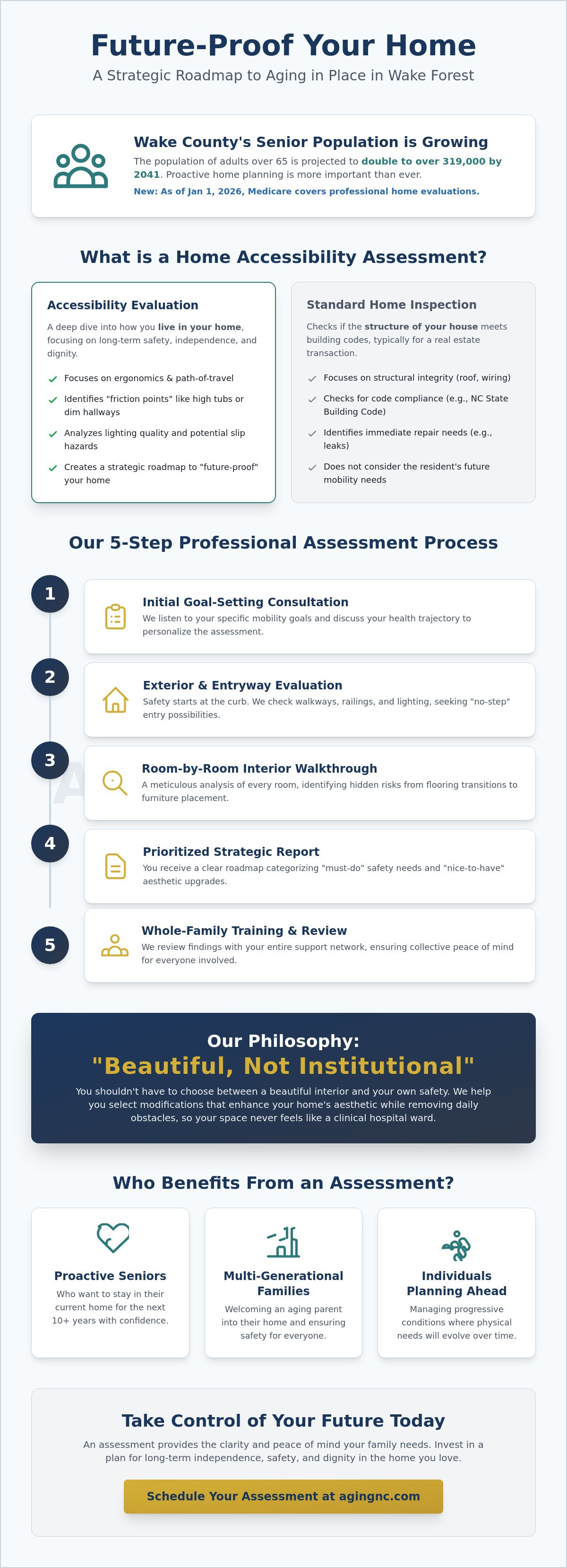
A residential accessibility assessment for home Wake Forest properties is a specialized, room-by-room evaluation designed to identify physical barriers that threaten your independence. While a quick search for "assessments" in our town often pulls up clinical or psychological testing for children, this service is entirely different. We focus on the physical environment of your living space. We look for "friction points," those small daily obstacles like a high bathtub edge or a dim hallway that can slowly erode your confidence or lead to a life-changing fall.
The ultimate goal is to move from a reactive mindset to a proactive one. Instead of waiting for a crisis or a hospital stay, a professional assessment allows you to "future-proof" your home while you are still healthy and active. It's about dignity. By identifying risks early, you can make choices that feel like lifestyle upgrades rather than medical necessities. This proactive approach ensures you stay in control of your surroundings rather than your surroundings controlling you. It provides a strategic roadmap that balances your current needs with the physical changes that naturally occur as we age.
The Difference Between a General Inspection and an Accessibility Evaluation
Most homeowners are familiar with standard home inspections required during a real estate sale. These inspectors check if your roof is leaking or if your wiring meets the 2018 North Carolina State Building Code. An accessibility expert goes much deeper into functional longevity. We analyze ergonomics, lighting quality, and the "path-of-travel" throughout your home. A standard contractor might see a beautiful tile floor; we see a potential slip hazard or a transition strip that could trip someone using a walker. We focus on the small details that ensure your home works for you for a lifetime, looking far beyond simple code compliance.
Who Needs a Home Safety Assessment?
This service isn't just for people currently experiencing mobility challenges. It's a vital tool for several groups in our community:
- Seniors who want to stay in their current home for the next 10 years or more.
- Families in neighborhoods like Heritage or Wakefield who are welcoming an aging parent into a multi-generational household.
- Individuals managing progressive conditions like Parkinson’s or multiple sclerosis, where physical needs will evolve over time.
By understanding the core principles of Accessible housing, we help you create a space that supports everyone's safety without losing the aesthetic charm of your home. Whether you live in a historic property near downtown or a newer build, an accessibility assessment for home Wake Forest provides the clarity you need to live safely and independently. It's about creating a home that is both beautiful and functional for every member of the family.
The 5-Step Professional Assessment Process
Our journey begins with a detailed initial consultation where we listen to your specific mobility goals and discuss your health trajectory. We don't just look at the house; we look at how you live in it. This evidence-based professional assessment process ensures that every recommendation is grounded in safety science rather than guesswork. When conducting an accessibility assessment for home Wake Forest families, we follow a meticulous five-step path: the initial goal-setting, an exterior evaluation, a room-by-room interior walkthrough, the delivery of a prioritized strategic report, and finally, whole-family training to ensure everyone is on the same page.
The final strategic report acts as your roadmap. We categorize findings into "must-do" safety requirements and "nice-to-have" aesthetic upgrades, allowing you to plan your budget effectively. Because we believe in a holistic approach, the process concludes with reviewing these findings with your entire support network. This provides collective peace of mind for adult children and caregivers who want to ensure their loved ones are safe. If you're starting to think about the future, you can explore our strategic planning services to see how we help families stay ahead of the curve.
Step 1: The Exterior and Entryway Review
Safety starts at the curb. We evaluate the journey from your driveway to the front door, checking for stable railings and the slip-resistance of your walkways. In many Wake Forest porch designs, we look for "no-step" entry possibilities that eliminate tripping hazards entirely. Lighting is another critical focus; we assess brightness levels at the entryway to ensure nighttime arrivals are safe and confident. These small exterior adjustments are the first line of defense in maintaining your independence.
Step 2: Kitchen and Bathroom Deep-Dives
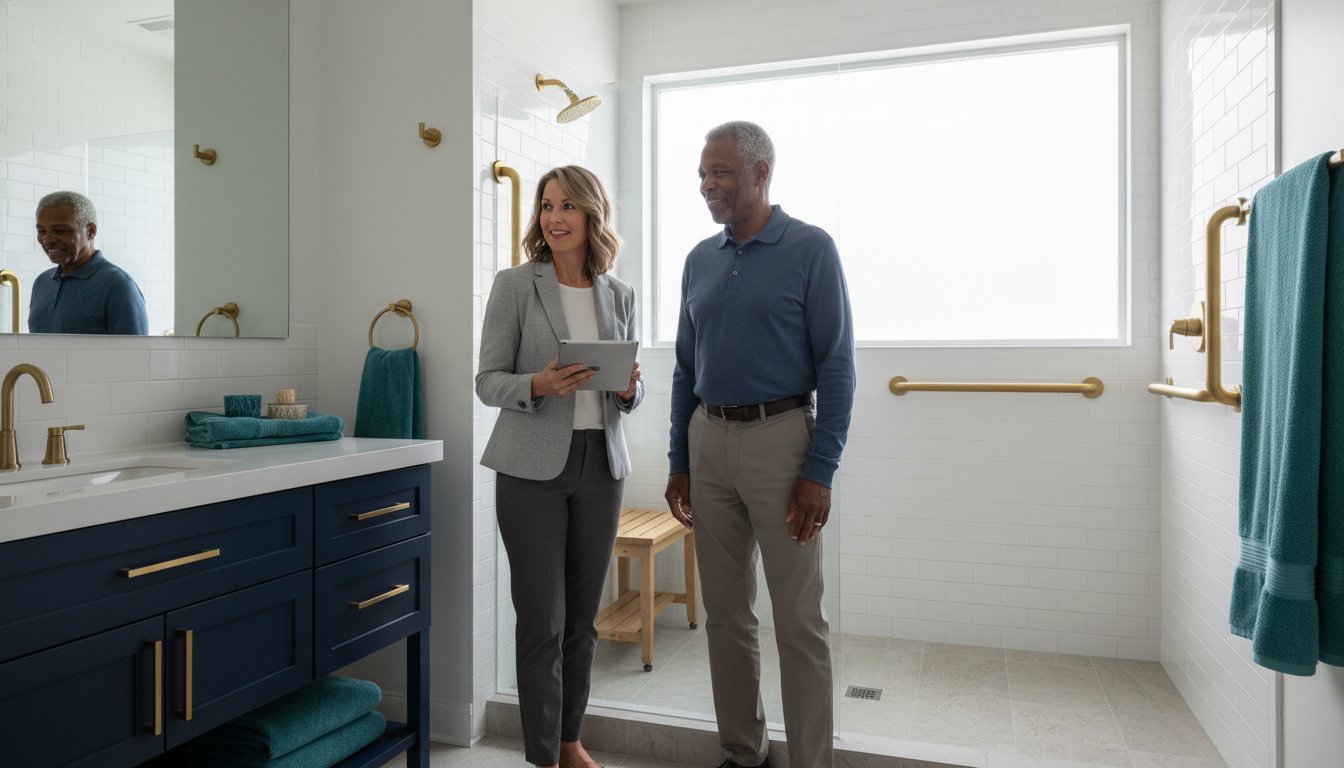
We pay special attention to the kitchen and bathroom because these are the primary "danger zones" where roughly 80% of senior falls occur. In the kitchen, we evaluate cabinet reachability and the potential for seamless pull-out shelving that reduces the need for precarious reaching or bending. During the bathroom walkthrough, we analyze shower entry heights and check for reinforced blocking behind the walls. This blocking is essential for securely mounting grab bars that look like high-end fixtures rather than institutional hardware. By addressing these high-risk areas during an accessibility assessment for home Wake Forest properties, we significantly reduce the daily friction that leads to accidents.
Common Accessibility Challenges in Wake Forest Homes
Wake Forest is a town of architectural contrasts. While the Town of Wake Forest maintains accessibility for public spaces like Taylor Street Park, private residences require a more specialized touch. Our local housing stock ranges from century-old gems to modern subdivisions, and each requires a different strategy during an accessibility assessment for home Wake Forest. We look for hidden hazards that standard contractors often overlook, ensuring your modifications feel like a natural extension of your home's character. We believe your home should remain a sanctuary, not a series of obstacles.
Every neighborhood presents its own set of hurdles. Whether you live in a 1920s cottage near South Main Street or a sprawling 2005 build in Heritage, the goal remains the same: preserving your dignity and independence. Identifying these "friction points" early allows for proactive planning rather than reactive repairs after a fall occurs. By understanding the specific needs of your property, you can make informed decisions that future-proof your living space without compromising on style.
Historic Homes and Narrow Transitions
If you live in the Wake Forest Historic District, you likely face the challenge of narrow doorways and uneven flooring transitions. Widening a doorway in a classic home requires a delicate touch to preserve architectural integrity. We often recommend "swing-clear" hinges as a first step; these can add nearly two inches of clearance without structural changes. For multi-story living where a bedroom can't move downstairs, we explore discreet lift options that blend into the decor. These older homes are beautiful, but their original designs didn't account for modern mobility aids. Managing these transitions is key to staying in the home you love.
Modern Builds and the "Institutional" Trap
In newer developments like Heritage or Wakefield, the challenges are different but equally significant. Many 1990s and 2000s builds feature massive master bathrooms centered around oversized garden tubs. While luxurious, these tubs are major fall risks. We specialize in replacing these with stunning, curbless walk-in showers that look like a spa upgrade rather than a medical necessity. Another common issue in these larger, open-concept homes is the lack of hand-hold points. We solve this by strategically placing designer grab bars that double as towel racks or soap dishes. We also ensure that smart home technology, like voice-controlled lighting, is actually user-friendly for all ages.
Beyond the walls, North Carolina's humidity presents a unique set of problems. Outdoor wooden ramps and stairs can become incredibly slick or rot prematurely if not maintained. We often suggest composite materials or specific non-slip coatings to keep your exterior pathways safe year-round. If you're also considering property in nearby areas, our guide to aging in place services in Raleigh offers additional insights into navigating these regional environmental factors. Proactive planning today prevents the anxiety of a move tomorrow.
The "Beautiful, Not Institutional" Philosophy
Many homeowners hesitate to schedule an accessibility assessment for home Wake Forest because they fear their sanctuary will start looking like a clinical facility. We believe the opposite should be true. A home that's safe for a lifetime should also be one you're proud to show off to your neighbors. By focusing on high-quality craftsmanship and lifestyle enhancement, we ensure every modification is beautiful, not institutional. We use designer grab bars that look like luxury bathroom fixtures and seamless flooring transitions that enhance the flow of your home rather than interrupting it. This approach preserves the aesthetic and emotional integrity of your personal space.
One of the biggest mistakes families make is "panic-buying" after a minor injury or a close call. When you're in a rush, you often end up with temporary, clunky medical equipment that clutters the home and feels depressing. A professional accessibility assessment for home Wake Forest prevents this by providing a strategic roadmap. We help you choose permanent, stylish solutions that are built into the home's fabric. This proactive approach saves you money and emotional stress by avoiding the need for "quick fixes" that don't actually solve the long-term problem or match your decor.
Universal Design: A Home for All Generations
Universal Design isn't just for seniors; it's a design standard that makes life easier for everyone. Lever-style door handles are a perfect example. They're easier for a child with a handful of toys to open, just as they're more comfortable for a grandparent with arthritis. Curbless showers are another favorite, often seen in high-end hotels. They provide a sleek, modern look while eliminating trip hazards, which significantly increases home resale value. Integrating motion-sensor lighting under kitchen cabinets or along hallways provides a luxury hotel feel while ensuring no one is ever fumbling for a switch in the dark.
Strategic Planning vs. Crisis Modification
Strategic planning is the key to a stress-free transition. Instead of a massive, overwhelming renovation, a professional roadmap allows for phased improvements over time. You might start with lighting and handles this year and plan for a curbless shower in two years. This phased approach is much easier on the family budget and allows you to live through the changes comfortably. For more details on executing these plans, you can review home modifications for elderly residents to see how we bring these designs to life. If you're ready to start your journey toward a safer, more beautiful home, you can schedule your comprehensive assessment today.
Why Choose Aging in Place North Carolina for Your Wake Forest Assessment?
Choosing the right partner for your home’s safety is a deeply personal decision. Chris and Amy Gaddy founded Aging in Place North Carolina with a commitment to serving their neighbors right here in our community. As local experts with deep Wake Forest roots, they understand the specific architectural styles of our area and the unique needs of families who want to stay in the home they love. When you schedule an accessibility assessment for home Wake Forest properties with our team, you aren't just getting a checklist; you're gaining a pair of trusted advisors who treat your safety with the same meticulous care they would for their own parents.
One of the most significant benefits we provide is our total independence. We don't sell construction services or expensive remodels, which means our recommendations are never biased by a desire to increase a project's bottom line. We provide an objective, professional evaluation focused solely on what you actually need to remain safe and independent. This transparency allows us to act as your advocate, helping you navigate the often-confusing world of home modifications with total confidence. We believe in finding the most efficient, "beautiful, not institutional" solutions that respect both your budget and your home's aesthetic integrity.
Our "Whole-Family" approach sets us apart from standard home inspectors. We recognize that aging at home affects everyone, from the senior resident to their adult children and caregivers. Because of this, we include training for the entire support network as part of our process. We help families understand how to use new modifications safely and how to identify potential risks before they become emergencies. This collective education provides a layer of peace of mind that a simple report can't match. We also offer a specialized "Fix-It Technician" service to handle ongoing maintenance, ensuring that small safety issues are addressed before they compromise your independence.
The Value of CAPS Certification
The "Certified Aging-in-Place Specialist" (CAPS) designation is more than just a title. It represents specialized training in the technical, business, and clinical aspects of home modifications. While a general contractor might understand how to build a ramp, a CAPS-certified expert understands the physiology of aging. We know how changes in vision, balance, and grip strength affect how you interact with your environment. This specialized knowledge allows us to design spaces that are truly functional for the long term. Our ethical commitment is always to the homeowner, ensuring every recommendation supports your dignity and quality of life.
Your Local Wake Forest Safety Partners
We act as a vital liaison between you and the technical world of home repair. If our assessment identifies a need for structural changes, we help you communicate those requirements to contractors to ensure the work is done correctly the first time. For smaller, more immediate safety fixes, we often recommend our handyman services for seniors. This ensures that even minor adjustments, like tightening a loose railing or upgrading to LED lighting, are handled by professionals who prioritize senior safety. We are here to be your long-term partners in creating a future-proof home that serves you beautifully for years to come.
Secure Your Independence and Peace of Mind
Your home is more than just a building; it's the foundation of your lifestyle and the place where your favorite memories live. By choosing a professional accessibility assessment for home Wake Forest, you're taking a proactive step toward a future where safety and beauty coexist seamlessly. You've seen how our specialized evaluations identify hidden risks in both historic gems and modern builds, allowing for strategic, phased improvements that avoid the clinical "institutional" look. This process isn't about making simple repairs. It's about a holistic investment in your long-term dignity and autonomy.
Aging in Place North Carolina has served as a trusted, family-owned and operated partner since 2021. Our CAPS-certified experts are dedicated to the "beautiful, not institutional" design philosophy, ensuring your modifications enhance your home's aesthetic while providing total safety. Don't wait for a medical crisis to dictate how you live. Take control of your surroundings and move forward with confidence. Schedule Your Comprehensive Home Safety Assessment in Wake Forest Today . We are ready to help you future-proof your space so you can stay exactly where you belong.
Frequently Asked Questions
Is a home accessibility assessment covered by insurance in North Carolina?
Yes, coverage for these services has expanded significantly. As of January 1, 2026, Medicare covers home accessibility assessments when they are conducted by qualified professionals like doctors or occupational therapists. Some private insurance plans in North Carolina also provide reimbursement for safety evaluations. It's a good idea to check with your specific provider to confirm your benefits before you schedule your visit.
How long does a typical home safety evaluation take in Wake Forest?
A thorough evaluation usually takes between 2 and 3 hours to complete. This timeframe allows for a meticulous, room by room walkthrough to identify specific friction points in your living environment. We also spend time discussing your personal mobility goals and health trajectory. Larger properties or historic homes near downtown may require a bit more time for a comprehensive analysis of the structure.
Can I do my own accessibility assessment with a checklist?
You can use a basic checklist for simple fixes, but it often misses the subtle environmental hazards that a professional identifies. An accessibility assessment for home Wake Forest properties performed by a CAPS expert includes a deep understanding of aging physiology. We look for lighting glare, specific floor transitions, and reinforced blocking for grab bars that a standard DIY list simply won't cover.
What is the most important modification to start with?
Improving bathroom safety and lighting are almost always the highest priorities. Statistics show that 80% of senior falls occur in the bathroom, making curbless showers or reinforced grab bars essential first steps. Upgrading to bright, motion-sensor LED lighting throughout your primary walkways is another critical move. These changes provide the highest immediate impact on your daily safety and confidence at home.
Do you provide the contractors to do the work after the assessment?
We act as your independent project manager and advisor rather than a general contractor. This independence ensures our recommendations stay unbiased and focused entirely on your safety needs. We provide a clear roadmap and can act as a liaison with local builders to ensure the work meets our high standards. For smaller safety fixes, our "Fix-It Technician" handles the maintenance and minor repairs directly.
What happens if my home is too old to be made fully accessible?
Older homes often require creative solutions rather than standard ADA compliance. The North Carolina Rehab Code provides flexibility for historic properties, allowing us to widen doorways or adjust transitions without destroying the home's character. Even if a house can't be perfectly accessible by modern standards, we can significantly improve its functional longevity. We focus on making the home work for you for as long as possible.
How much do accessibility assessments for homes in Wake Forest usually cost?
As of May 2026, prices for these professional evaluations vary based on the depth of the report. A full assessment from Capable At Home Specialists currently costs $250. The North Carolina Assistive Technology Program offers assessments for $575, plus an additional $50 hourly travel fee. These professional reports provide a prioritized written roadmap that helps your family budget for future modifications effectively and without guesswork.
Is an assessment necessary if I am not currently using a wheelchair?
Yes, proactive planning is the best way to protect your long term independence. By 2025, 20% of the population in North Carolina will be aged 65 or older. Scheduling an accessibility assessment for home Wake Forest residents now allows you to make "beautiful, not institutional" upgrades while you are healthy and active. This prevents the stress and high costs of making rushed, unattractive changes during a medical crisis.