The Adult Child’s Guide to Supporting Aging Parents in Raleigh, NC
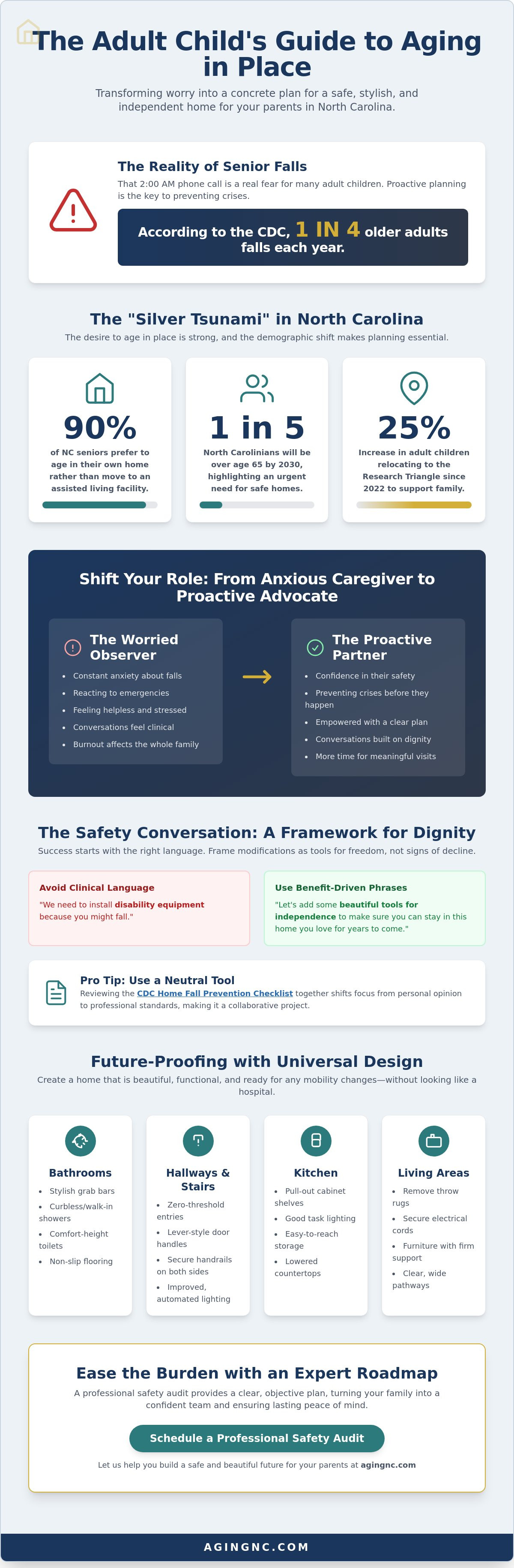
Imagine it is 2:00 AM on a Tuesday in Raleigh, and your phone rings. Your heart drops because you immediately think of your mother or father falling in the hallway. According to the CDC, one out of four older adults falls each year, and that reality often leaves you feeling caught between a desire for their safety and a respect for their independence. As an adult child , you likely spend more time worrying about their mobility than enjoying your visits together. You want them to stay in the home they love, but you don't want their living room to look like a sterile hospital wing.
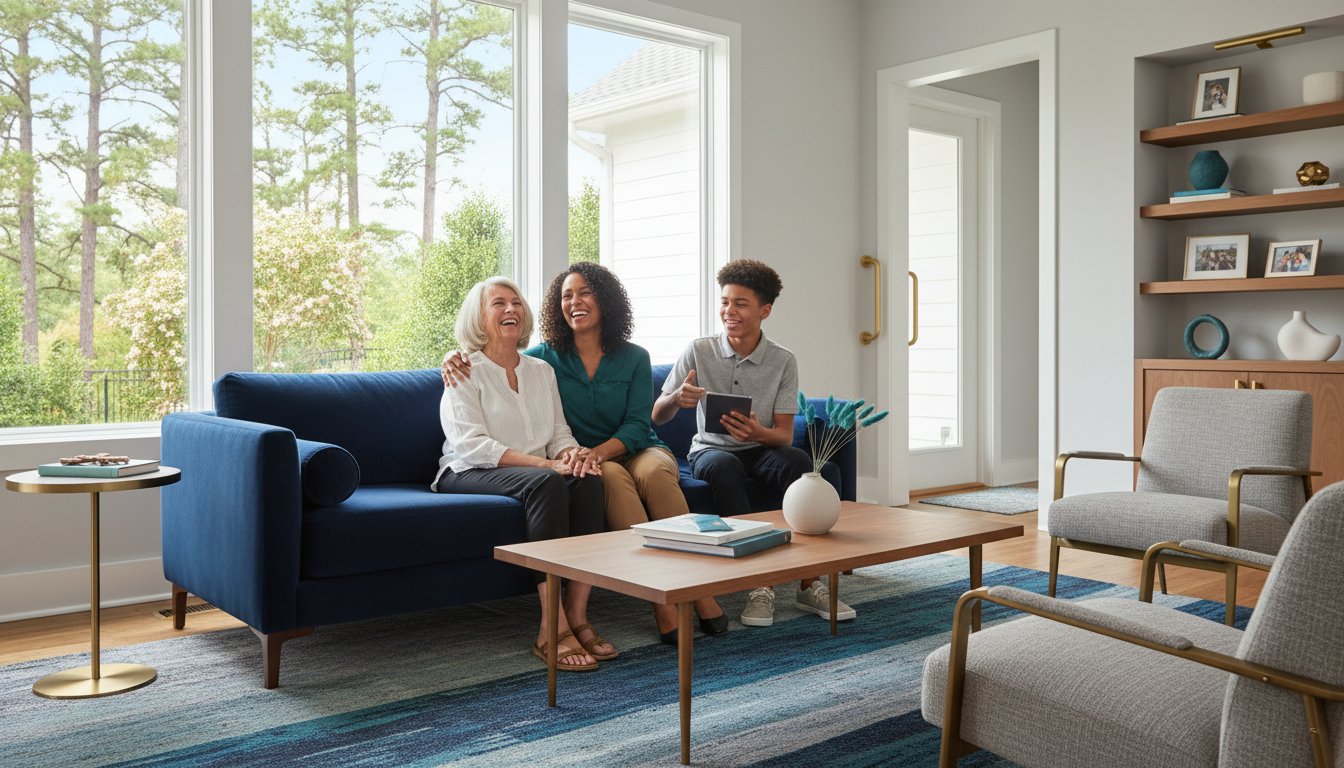
We believe your parents deserve a home that is both safe and stylish. This guide will show you how to transform that constant anxiety into a concrete plan for home safety that preserves their dignity and keeps their house looking beautiful. We will explore how to future-proof their North Carolina home with seamless modifications and proactive assessments that provide your whole family with lasting peace of mind. You'll learn how to identify hidden risks and implement changes that feel like a natural part of the home rather than a clinical necessity.
Key Takeaways
- Transition from a worried observer to a strategic partner by understanding your evolving role in your parents' aging-in-place journey.
- Master the art of the "safety conversation" to address home modifications without compromising your parents' dignity or sense of independence.
- Identify the specific architectural hazards common in Raleigh and Cary homes that frequently lead to preventable falls.
- Explore "future-proofing" techniques that use Universal Design to keep the family home beautiful, functional, and ready for any mobility changes.
- Discover how a professional safety audit can ease the burden on the adult child by providing a clear, expert roadmap for home maintenance and safety.
Understanding the Role: What Does "Adult Child" Mean in 2026?
In 2026, the term adult child describes more than just a family connection; it identifies a strategic partner in a parent’s journey to remain at home. This role has evolved from a psychological stage into a demographic reality often called the Sandwich Generation. You're likely managing a high-pressure career and raising your own children while simultaneously coordinating elderly care for your parents. It's a heavy emotional load that requires a blend of logistics and empathy. Balancing your parents’ fierce desire for independence with your own need for their safety is a delicate act. You aren't just a helper; you're an advocate for their long-term quality of life.
In Raleigh and the surrounding Wake County area, we've seen a 25% increase since 2022 in adult children relocating to the Research Triangle specifically to support aging relatives. This trend reflects a local commitment to keeping families close while leveraging our region's world-class healthcare infrastructure. Choosing to be a proactive adult child means looking ahead to prevent crises before they happen, ensuring your parents stay in the home they love without sacrificing their dignity.
The "Silver Tsunami" in the Research Triangle
The aging population in Raleigh and Greensboro is growing at an unprecedented rate. By 2030, state data projects that one in five North Carolinians will be over age 65. This demographic shift makes being proactive essential for every local family. Waiting for a fall or a sudden medical emergency to modify a home often leads to rushed, stressful decisions that feel forced rather than chosen. The Silver Tsunami is a demographic shift requiring immediate home safety planning.
From Anxious Caregiver to Proactive Advocate
Shifting your mindset from "managing" your parents to "empowering" them changes the entire family dynamic. It moves the conversation away from what they can no longer do and toward what they can achieve with the right modifications. Focusing on environmental safety is the most effective way to reduce caregiver burnout for the whole family. When a home is truly future-proof, you spend less time worrying about potential falls and more time enjoying meaningful visits.
Data from AARP confirms that 90% of North Carolina seniors prefer to age in place rather than move to a clinical assisted living facility. Our goal is to make that preference a sustainable reality through seamless, holistic changes. We believe home modifications should be beautiful, not institutional. By creating a space that supports mobility without looking like a hospital ward, you help your parents maintain their confidence and their joy. This proactive approach transforms the caregiving experience into a partnership built on respect and foresight.
The Emotional Landscape of Caring for Parents in North Carolina
Transitioning from being the cared-for to the caregiver is a profound shift that every adult child eventually faces. In Raleigh, where deep-rooted family values prioritize keeping loved ones close, this role reversal often feels like a delicate balancing act. You aren't just becoming a safety coordinator; you're becoming a guardian of your parents' legacy. This transition requires a move away from seeing home modifications as signs of decline. Instead, we use a "Peace of Mind" framework that centers on dignity. By focusing on independence rather than disability, you help your parents see that a few strategic changes are actually tools for freedom.
The biggest hurdle for most families is the fear of offending a parent by suggesting they need help. It's a valid concern. However, recent data from AARP shows that 77% of adults age 50 and older want to remain in their current homes for as long as possible. When you frame safety as a way to honor that wish, the conversation changes. You're no longer pointing out what they can't do. You're showing them how they can continue doing what they love. To make this process objective, many families start by reviewing the CDC Home Fall Prevention Checklist together. This shifts the focus from your personal opinion to a set of professional standards, making the discussion feel less like a critique and more like a collaborative project.
Communication Strategies for Hard Conversations
Success starts with the right language. Avoid clinical terms and stick to benefit-driven phrases. Instead of talking about "disability equipment," talk about "staying in the home you love." If you have siblings, involve them early to ensure a unified front. Conflict often stems from a lack of transparency, so keep everyone in the loop regarding goals and timelines. We recommend a whole-family approach to safety training. When everyone learns how to use new smart home features or lighting systems together, it feels like a collective upgrade for the household rather than a forced change for one person.
Maintaining the Home’s Emotional Integrity
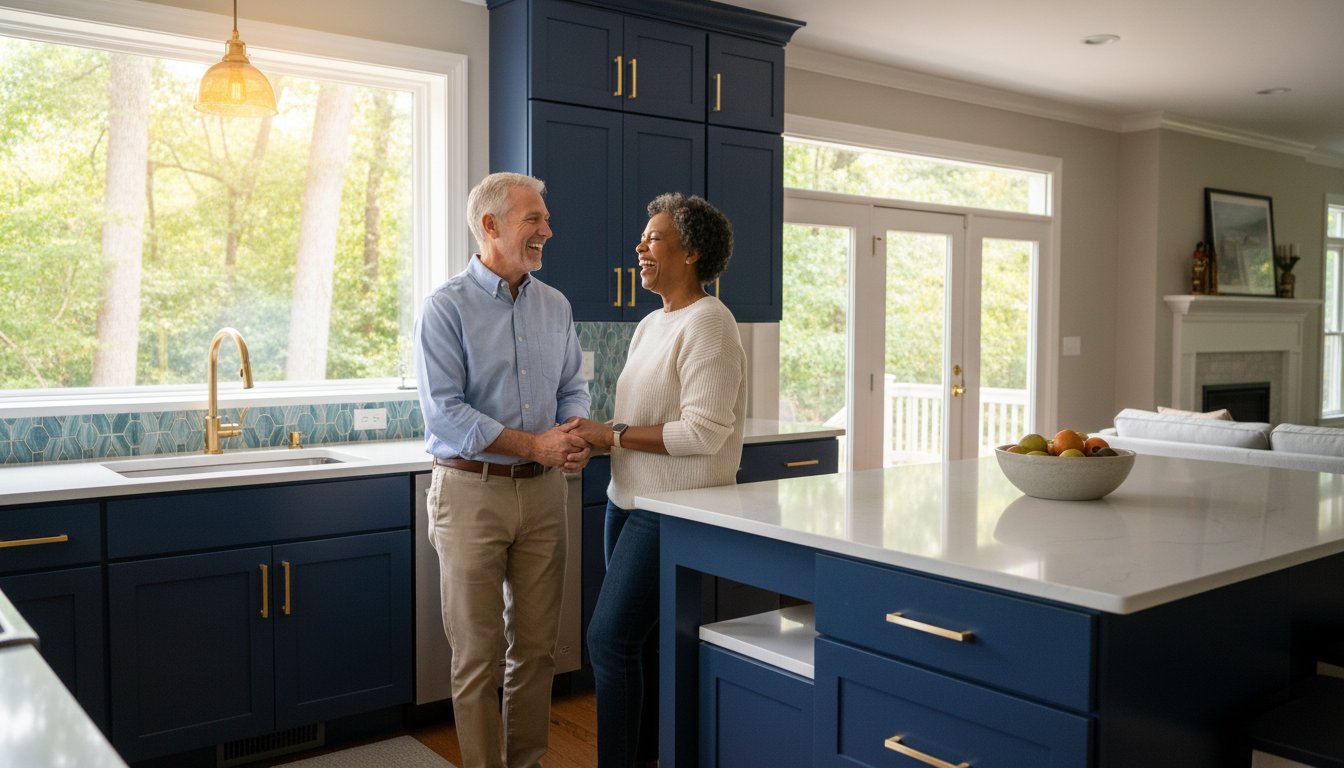
A home is a collection of memories, not just a structure. The key to getting parent buy-in is ensuring modifications are beautiful, not institutional. You don't have to sacrifice style for safety. High-quality craftsmanship allows you to preserve the aesthetic of a Raleigh craftsman or a suburban ranch while removing physical barriers. This approach ensures that your parents still feel like they're living in their home, not a facility. You can explore how these changes fit into modern family dynamics by reading about Intergenerational Living in Raleigh. If you're ready to start making these vital updates, you can connect with a specialist to discuss a tailored plan for your family.
A Local Safety Audit: Common Hazards in Raleigh and Cary Homes
Raleigh and Cary neighborhoods feature charming homes, but their architecture often presents unique obstacles for aging residents. Many houses in the Research Triangle are split-levels or have multiple floor transitions that become difficult over time. As an adult child looking out for your parents, you need to look past the aesthetics to find hidden risks. Standard home inspections focus on a building's structure for a sale, but a professional safety assessment analyzes how a specific person interacts with their environment. This distinction is vital for creating a home that remains safe for decades.
North Carolina's environment adds another layer of complexity. High humidity levels can lead to mold in crawlspaces, which eventually weakens floorboards and creates uneven walking surfaces. Outdoor entryways are also high-risk zones. Frequent rain and humidity make wooden porch steps slick, while driveway transitions often shift due to our clay-heavy soil. These aren't just maintenance issues; they're significant fall hazards that require proactive solutions. We focus on making these areas future-proof, ensuring the home stays functional regardless of the weather or the season.
The High-Risk Zones: Stairs and Bathrooms
Older Raleigh bungalows often have narrow staircases with handrails that are either too thin or stop before the final step. You should ensure handrails are continuous and securely bolted into studs. In the bathroom, avoid "suction-cup" grab bars at all costs. They aren't designed to support a person's full weight and provide a false sense of security. We recommend beautiful, weight-bearing fixtures that blend into your decor rather than looking institutional. Lighting is the final piece of the puzzle. For ranch-style homes in Cary and Greensboro, adding recessed LED lighting and motion-sensor path lights helps aging eyes navigate rooms safely at night.
The "Fix-It" Checklist for Adult Children
Small changes prevent major life disruptions. According to the CDC, 1 in 4 seniors falls every year, making environmental checks a critical priority for every family. As an adult child , you can start by walking through the home and looking for these specific issues:
- Floor Transitions: Secure loose rugs with non-slip backing or remove them entirely to prevent trips.
- Exterior Safety: Check for cracked pavement on walkways and ensure porch steps have high-contrast edges for better visibility.
- Lighting Maintenance: Replace every burnt-out bulb with high-lumen LEDs to eliminate dark pockets in hallways and closets.
- Hardware Updates: Ensure every door handle is a lever style rather than a knob to accommodate those with arthritis.
Taking these steps ensures your parents' home remains a place of joy and independence. By being proactive and meticulous, you're not just fixing a house; you're providing your family with lasting peace of mind and confidence in the future.
Strategic Planning: Future-Proofing the Family Home
Future-proofing a home involves more than just reacting to a recent fall. It's a proactive strategy that anticipates physical and cognitive changes before they become crises. As an adult child , you're often the primary advocate for your parent's long-term independence. Strategic planning uses Universal Design to make the home safer for everyone, from visiting grandchildren to seniors. This philosophy includes wider doorways, lever-style door handles, and rocker light switches that are easier for arthritic hands to operate.
The difference between a quick fix and a strategic plan is longevity. A temporary solution, like a plastic chair in a bathtub, doesn't address the underlying risk of stepping over a high tub wall. A long-term plan might involve a full wet-room conversion that adds value to the property while ensuring safety for years. Because these projects involve complex structural changes, having a dedicated project manager is essential. An adult child shouldn't have to spend their weekends vetting contractors or verifying if a grab bar is properly anchored into a wall stud. Professional oversight ensures the work is done right the first time, preventing the stress of failed inspections or sub-par craftsmanship.
Beautiful, Not Institutional: The Design Philosophy
Safety doesn't have to look clinical. Modern accessibility features focus on high-end aesthetics that feel like a luxury spa rather than a hospital. High-end bathroom remodels now feature curb-less showers with linear drains and designer tile. Smart home integration plays a vital role here, using automated lighting paths and voice-controlled thermostats to provide security without being intrusive. For flooring, we select materials with high slip-resistance, ensuring that beauty and stability coexist in every room of the house.
The Role of a CAPS-Certified Specialist
A Certified Aging-in-Place Specialist (CAPS) brings a unique set of skills to the renovation process. This designation, awarded by the National Association of Home Builders, ensures the professional understands the technical and medical requirements of aging-related modifications. Their expertise helps prevent the common 30% "do-over" rate seen in standard renovations where accessibility was an afterthought. Beyond the technical work, a CAPS professional acts as a neutral third-party mediator. They help families reach a consensus on safety upgrades, moving the conversation away from "parental decline" and toward "home optimization."
How Aging in Place North Carolina Supports the Adult Child
Taking on the responsibility of a parent's safety is a significant emotional transition. You shouldn't have to be a structural engineer, a general contractor, or a safety inspector to ensure your parents are secure. As an adult child , your primary role is to provide love and emotional support, not to manage a never-ending list of home repairs. Aging in Place North Carolina steps in as your professional partner to handle the technical details of home longevity.
Our Comprehensive Home Safety Assessments in Raleigh and the surrounding Research Triangle go beyond simple checklists. Our CAPS-certified experts evaluate over 240 points of contact within the home, from floor transitions to lighting levels. We provide a roadmap that ensures modifications are beautiful, not institutional, preserving the dignity of the home while maximizing safety. Beyond the initial assessment, we offer specialized services designed to take the weight off your shoulders:
- The Fix-It Technician: We handle the "honey-do" list that often clutters your weekend visits. From tightening loose handrails to installing high-visibility LED lighting, our technicians keep the home maintained so you can focus on your relationship.
- Whole-Family Training: Safety is a collective effort. We provide hands-on training for both you and your parents, ensuring everyone knows how to use new home features or smart technology with total confidence.
- Professional Project Management: For larger renovations, we act as your advocate. We vet the contractors, manage the timelines, and oversee the quality of work. You stay informed as a family member, not a foreman.
Our Local Service Area and Expertise
We are deeply rooted in the North Carolina community, serving families in Raleigh, Wake Forest, Cary, Greensboro, and throughout the Research Triangle. Our team understands the unique architectural challenges of local homes, whether it is a historic property in downtown Raleigh or a modern ranch in Cary. We've dedicated our careers to keeping North Carolina seniors in the homes they love. To begin this journey, you can book a strategic planning session to discuss your family's specific goals and concerns.
Next Steps for the Concerned Adult Child
Proactive planning is the most effective way to prevent a crisis. According to data from the CDC, one in four Americans aged 65 and older falls each year, yet many of these incidents are preventable with the right home modifications. The best time to future-proof a home is before a mobility change occurs. During our "Safety First" consultation, we'll walk through the home with you to identify immediate risks and long-term opportunities for improvement. This visit provides the clarity you need to make informed decisions without the pressure of an emergency. Take the first step toward peace of mind and Schedule a Home Safety Assessment with Aging in Place NC today.
Secure Peace of Mind for Your Family’s Future
The National Institute on Aging highlights that strategic home modifications significantly reduce accident risks while helping seniors maintain their autonomy. By identifying common hazards in Raleigh and Cary homes, you've already taken the first step toward creating a safer environment for your loved ones. Transitioning into the role of a supportive adult child means looking ahead to 2026 with a clear, proactive plan for home longevity. You don't have to choose between safety and style. Our CAPS-certified experts provide whole-family solutions that are beautiful, not institutional. As a family-owned and operated North Carolina business, we focus on meticulous, future-proof modifications that preserve dignity and independence. Taking these steps today prevents the stress of a reactive crisis tomorrow. It's about ensuring your parents stay in the home they love while giving you the confidence that they're protected. We're here to help you navigate every step of this journey with expertise and empathy. You've got this, and your family's future is bright.
Frequently Asked Questions
What is the first thing an adult child should do if they are worried about a parent falling?
Schedule a professional home safety assessment to identify immediate environmental risks. This proactive step helps an adult child move from constant worry to a concrete plan of action. According to the CDC, 25% of Americans aged 65 and older fall every year, so early intervention is essential. We focus on identifying trip hazards like loose rugs or poor lighting to ensure your parents feel secure in their own space.
How do I talk to my parents about home modifications without making them feel old?
Frame the conversation around maintaining independence and "future-proofing" the home rather than addressing physical limitations. You can suggest that these updates are about luxury and convenience, like a spa-style walk-in shower or smart lighting. Remind them that 90% of seniors want to stay in their homes as they age, according to AARP research. This approach makes modifications feel like a home improvement project rather than a medical necessity.
Does Aging in Place NC provide in-home medical care or nursing?
Aging in Place NC doesn't provide medical or nursing services. We specialize in the physical environment, ensuring the home itself is safe and accessible. Our role is to provide the structural foundation for independence through assessments and modifications. If your family requires clinical support, we can recommend local Raleigh home health agencies that pair well with our environmental safety solutions and holistic approach.
What are the most common home safety hazards in older Raleigh homes?
Older Raleigh homes often feature high door thresholds and narrow hallways that restrict mobility. Many residences built before the 1991 Americans with Disabilities Act weren't designed with aging in mind. We frequently find that 60% of fall risks in these homes come from inadequate bathroom lighting and slippery floor surfaces. Addressing these specific architectural gaps is the first step toward creating a "future-proof" and seamless living space.
Can home modifications be done without making the house look like a nursing home?
We believe modifications should be beautiful, not institutional. Our designs use high-end materials like decorative grab bars that double as towel racks and seamless curbless showers. You don't have to sacrifice your home's aesthetic for safety. Every update is designed to blend into your existing decor, ensuring the house continues to feel like a warm, personal sanctuary for the adult child and their parents.
What is a CAPS certification and why should I look for it in a consultant?
CAPS stands for Certified Aging-in-Place Specialist, a designation from the National Association of Home Builders. It means a consultant has undergone specific training to understand the unique needs of seniors. They know how to balance technical code requirements with the emotional needs of the family. Choosing a CAPS professional ensures your home modifications are backed by 3 levels of rigorous educational training and industry best practices.
Are there local NC resources or grants for senior home repairs?
North Carolina offers several programs, such as the Urgent Repair Program managed by the NC Housing Finance Agency. This program provides up to $12,000 in assistance for eligible homeowners to address life safety goals. Additionally, the Raleigh Housing Rehabilitation Program offers loans for essential repairs. These resources help families manage the costs of making a home safer and more accessible for long-term living without financial strain.
How much does a professional home safety assessment in Raleigh typically cost?
A professional home safety assessment in the Raleigh area typically ranges from $250 to $600 depending on the home's size and complexity. This investment covers a detailed walkthrough and a comprehensive report of recommended "future-proof" updates. While costs vary, the National Age in Place Council notes that this proactive checkup is significantly more affordable than the average $30,000 cost of a single fall-related hospital stay.