Aging in Place Readiness Check Raleigh: A 2026 Home Safety Checklist
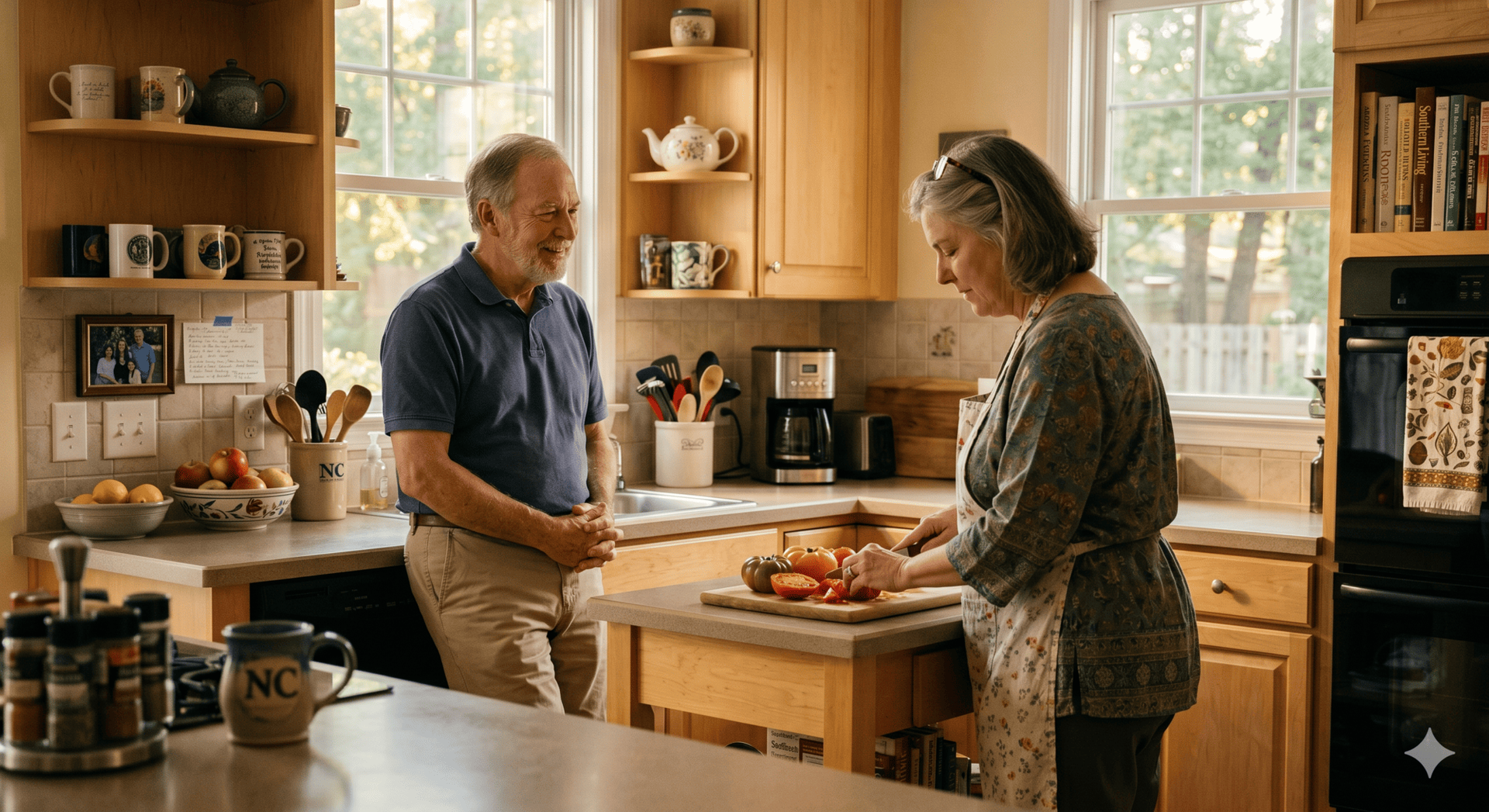
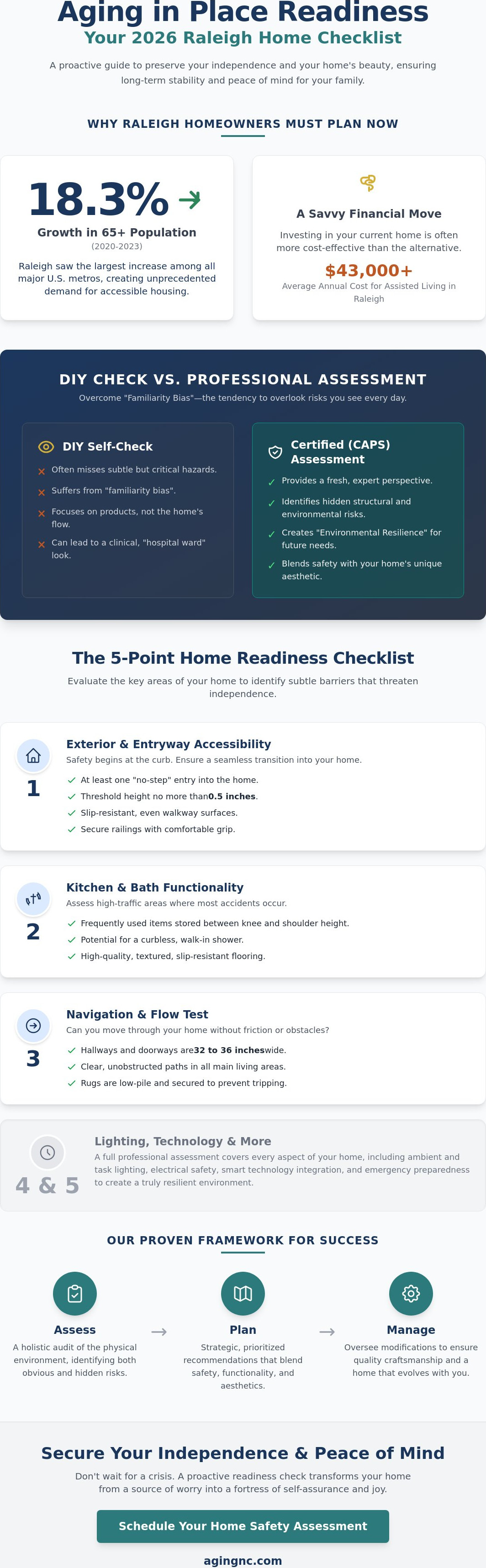
Raleigh's 65+ population grew by 18.3% between 2020 and 2023, the largest increase among all major U.S. metros. You've spent years turning your house into a home, and the thought of leaving it for a clinical facility is likely unsettling. Most homeowners feel a deep desire to stay in their own environment, yet they worry that safety modifications will make their living room look like a hospital ward. An aging in place readiness check Raleigh isn't about admitting weakness; it's a proactive strategy to preserve your independence and your home's beauty.
You deserve a home that evolves with you without compromising on craftsmanship or comfort. This article provides a detailed 2026 readiness checklist and professional assessment guide to help you plan for long term stability. We'll walk through how to identify subtle risks, the benefits of strategic planning, and ways to ensure your residence remains a place of joy for years to come. By the end, you'll have a clear roadmap to secure your future and provide your family with lasting peace of mind.
Key Takeaways
- Understand why a holistic environmental audit is the foundation of long-term independence rather than a simple home walkthrough.
- Learn how to conduct an aging in place readiness check Raleigh to identify hidden risks in your home’s entryways and main living areas.
- Discover the critical differences between a DIY self-check and a professional assessment from a Certified Aging-in-Place Specialist.
- Explore how strategic planning helps Raleigh families navigate the local senior living landscape and avoid the stress of a forced move.
- Master the "Assess-Plan-Manage" framework to ensure your home modifications maintain their beauty while providing total safety for the whole family.
Table of Contents
What is an Aging in Place Readiness Check?
An aging in place readiness check Raleigh is more than a simple inspection; it's a comprehensive environmental audit of your living space. This process evaluates how well your home supports your changing needs, focusing on safety, accessibility, and long-term comfort. It's essential to clarify that this assessment focuses strictly on the physical environment and structural integrity of the home. We don't provide in-home medical care. Instead, we ensure the stage is set for you to live with dignity and independence in the house you love. By the year 2026, the industry has shifted away from reactive, "crisis-mode" repairs. Homeowners now prioritize proactive planning to avoid the stress of a forced move.
While many people try a DIY walkthrough, they often suffer from "familiarity bias." You've lived in your home so long that you no longer see the loose rug or the dim lighting in the hallway as a risk. A professional evaluation by a Certified Aging-in-Place Specialist (CAPS) offers a fresh, expert perspective. These specialists identify subtle hazards that the untrained eye misses. Aging in place successfully requires a home that is technically sound and aesthetically pleasing, moving far beyond the clinical look of institutional care.
The Goal: Environmental Resilience
The ultimate objective of a readiness check is to create environmental resilience. This means your home "evolves" alongside you. When a house is resilient, it can accommodate temporary mobility changes or permanent lifestyle shifts without requiring a total overhaul. This proactive approach eliminates the anxiety of the unknown. There is a profound psychological benefit to knowing your home is ready for the future. It transforms your living space from a source of potential worry into a fortress of self-assurance and joy. You shouldn't have to choose between safety and style; a resilient home provides both.
Why Raleigh Homeowners are Checking Readiness Now
Raleigh is currently experiencing a "Silver Tsunami." Between 2020 and 2023, the city's 65+ population grew by 18.3%, the largest increase among large U.S. metro areas. With North Carolina's population reaching 11.2 million in 2025, the demand for accessible housing in the Research Triangle is at an all-time high. Local property values make an aging in place readiness check Raleigh a savvy financial move. Investing in your current home is often more cost-effective than the average $43,000 annual cost for assisted living in our area. Beyond the numbers, Raleigh residents want to stay near the places that define their lives. Whether it's a weekend stroll through the North Carolina Museum of Art or a quiet afternoon at Umstead Park, staying in your own home keeps these local treasures within reach.
The 5-Point Aging in Place Readiness Checklist for Raleigh Homes
Conducting a thorough aging in place readiness check Raleigh means looking beyond the obvious. It's not just about counting the stairs; it's about understanding how your home's layout interacts with your daily routine. Many people focus on equipment, but the real key to longevity is the environment itself. A safe home should feel like a sanctuary, not a medical facility. By evaluating your space through a professional lens, you can identify the subtle barriers that might eventually threaten your independence.
Exterior and Entryway Accessibility
Your home's first line of safety begins at the curb. Check for at least one "no-step" entry with a threshold height of no more than half an inch. Raleigh's humid summers and occasional winter ice mean walkway surfaces must be slip-resistant and perfectly even. Evaluate your porch railings and stairs for structural integrity and grip comfort. While you're looking at your property, consider Assessing your community for walkability and proximity to the local resources that keep you connected.
Kitchen and Bath Functionality
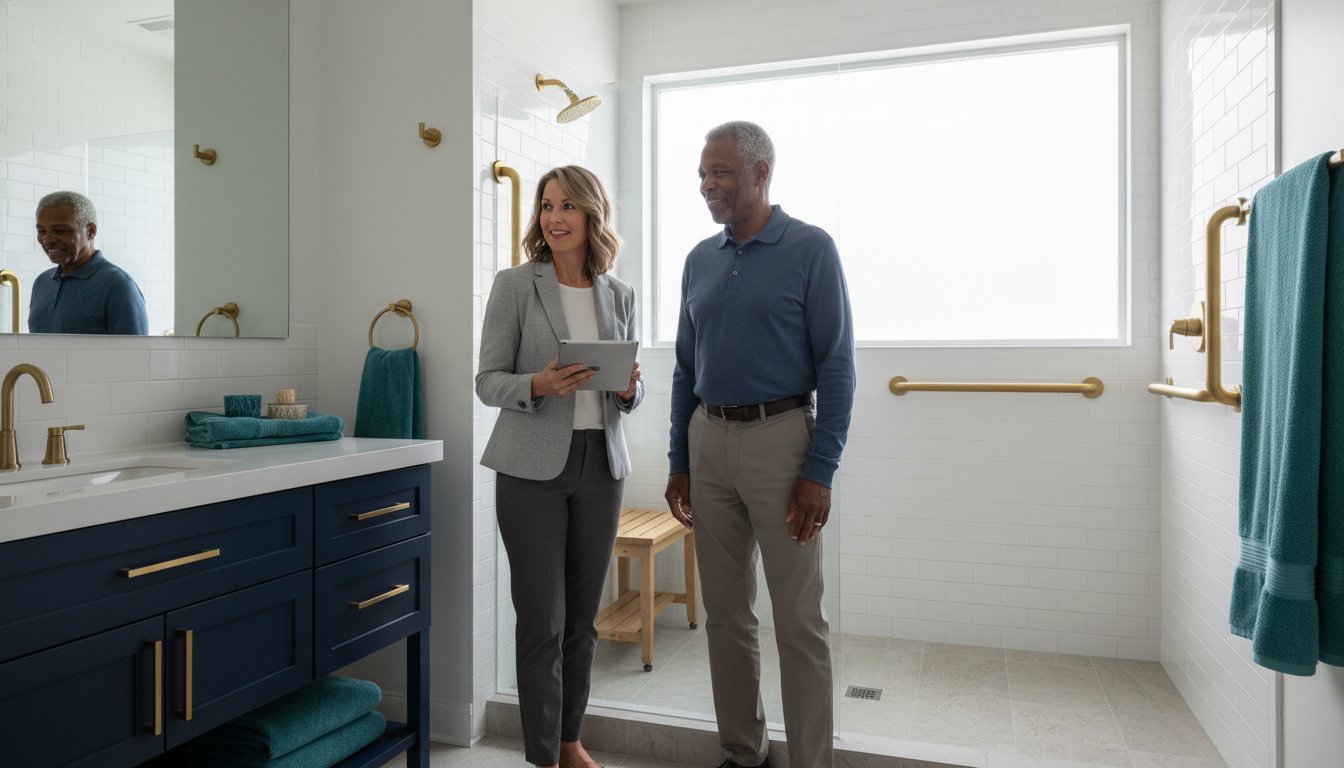
These are the most high-traffic areas and the most common sites for accidents. Identify "reach" hazards by checking if frequently used items are stored between knee and shoulder height. In the bathroom, evaluate the potential for a curbless, walk-in shower to replace high-walled tubs that become difficult to navigate over time. Slip-resistance isn't just about rubber mats; it's about the actual texture and quality of your flooring. If these changes feel overwhelming, a Comprehensive Home Safety Assessment can provide a clear priority list for your specific needs.
The Navigation and Flow Test
Can you move through your home without friction? Measure your hallways and doorways; a width of 32 to 36 inches is ideal for accommodating future mobility aids without damaging your walls. Identify trip hazards like thick carpeting or decorative transition strips that catch the toe. Universal Design is a design standard for 2026 Raleigh homes that ensures every space is inherently accessible and beautiful for everyone, regardless of their physical ability. This approach prioritizes a seamless look that avoids the clinical feel of traditional modifications.
Lighting and visibility serve as your home's hidden fall-prevention tools. Ensure every transition point, such as the top of the stairs or the kitchen island, has shadow-free, glare-free illumination. Finally, don't ignore the role of ongoing home maintenance. A home that is deteriorating around you creates new risks every day. From leaky faucets that create slip hazards to loose floorboards, keeping up with small repairs ensures your environment remains a stable foundation for your independence. It's about protecting your investment while securing your future comfort.
DIY Self-Check vs. Professional CAPS Assessment
It's natural to feel a sense of pride and agency when evaluating your own home. Many Raleigh homeowners begin with a DIY walkthrough, using tools like the Safe At Home Checklist to spot obvious hazards. While these tools are excellent starting points, they often fall short due to "familiarity bias." You've lived in your space for decades; your brain automatically filters out the loose transition strip or the dim corner in the hallway. An aging in place readiness check Raleigh conducted by an expert removes these blind spots, providing a level of meticulous detail that ensures your home remains a sanctuary rather than a source of hidden risk.
Professional assessments are fundamentally about strategic planning. A DIY check usually reacts to the present, while a professional evaluation anticipates the future. This proactive approach saves families significant stress and money by avoiding unnecessary or poorly timed modifications. You don't want to invest in a temporary fix today only to realize it doesn't meet your needs two years from now. By identifying the right modifications early, you ensure every dollar spent is an investment in your home's long-term environmental resilience and beauty.
The Value of a Certified Aging-in-Place Specialist
A Certified Aging-in-Place Specialist (CAPS) brings a unique blend of architectural knowledge and empathy to your doorstep. This certification ensures the specialist understands the specific needs of Triangle families, from the structural nuances of local home styles to the latest in integrated safety technology. They don't just see a staircase; they see a potential mobility challenge and offer a solution that preserves the aesthetic integrity of your home. This meticulous guidance focuses on both your current lifestyle and your future requirements, ensuring every recommendation feels like a natural enhancement rather than a clinical addition.
When to Call a Professional
There are specific moments when a DIY check is no longer sufficient. If you or a loved one has experienced a "close call" or a near-fall, it's time for an expert perspective. Often, it's difficult for adult children to discuss home safety with their parents without it feeling like a loss of independence. A third-party expert acts as a compassionate advocate, turning a difficult conversation into a collaborative project. Our comprehensive home safety assessments provide a neutral, evidence-based roadmap for the whole family. This clarity reduces anxiety and allows everyone to focus on what matters most: maintaining a high quality of life in the environment you love.
Navigating the Raleigh 'Silver Tsunami': Strategic Planning
Raleigh's demographic landscape is shifting rapidly. With the 65+ population growing by 18.3% between 2020 and 2023, the demand for senior living in Wake and Durham County has reached a fever pitch. Assisted living facilities in our area now average $43,000 per year, while nursing facilities can cost upwards of $91,000 annually. These rising costs and limited availability make strategic planning the most critical service for the adult child supporting their parents. It moves the conversation away from "what if" and toward a concrete roadmap for environmental resilience.
Many families hesitate, claiming they don't need this yet. However, waiting for a crisis often leads to forced moves into institutional settings. In the current Raleigh market, modifying an existing home is a far more stable financial investment than trying to secure a spot in a crowded facility. Whether you live in a classic ITB ranch or a multi-story home in North Hills, an aging in place readiness check Raleigh provides the data needed to make informed choices before a crisis strikes. This is about protecting your legacy while ensuring your parents stay in the community they love.
Proactive Planning vs. Crisis Management
Imagine the stress of a sudden hospital discharge. Without a plan, you're left scrambling to install ramps or grab bars in a 48 hour window. This reactive approach often results in clinical additions that detract from the home's beauty and emotional warmth. Strategic planning acts as an insurance policy for independence. Our process includes Whole-Family Training, which ensures everyone knows how to use new features safely and effectively. By preparing today, you preserve your right to choose your environment tomorrow rather than having a medical emergency dictate your living situation.
Local Resources and Maintenance
A readiness check is only as valid as the home's current condition. Ongoing handyman services for seniors are vital for managing Raleigh's specific environmental challenges. Our local humidity can warp wooden entryways, while winter ice makes non-slip surfaces a non-negotiable requirement. Leveraging local Triangle networks for vetted contractors ensures that modifications meet our high standards for craftsmanship. We notice the small details, like a loose floorboard or a flickering light, that could become major hazards if left unaddressed.
Don't wait for a fall to change your family's future. Start your journey toward lasting security today by scheduling a Strategic Planning session with our expert team.
Secure Your Independence with Aging in Place North Carolina
Choosing to stay in your home is a powerful decision that honors your history and secures your future. At Aging in Place North Carolina, the Gaddy family brings a unique blend of professional expertise and deep empathy to every Raleigh household. We understand that your home is more than just a structure; it's a collection of memories and a symbol of your independence. Our aging in place readiness check Raleigh is designed to protect that independence through our signature 'Assess-Plan-Manage' framework. This total solution ensures that every modification is intentional, beautiful, and perfectly suited to your specific lifestyle.
We don't just identify risks; we provide a clear path forward. Our process begins with a Comprehensive Home Safety Assessment, where we meticulously evaluate your environment for subtle hazards that others often miss. From there, we move into Strategic Planning for Aging in Place, creating a roadmap that anticipates your needs years in advance. Finally, we handle the Project Management for Home Modifications, ensuring that every update meets our rigorous standards for quality and design. This holistic approach removes the burden from your family and replaces it with a sense of security and self-assurance.
Our Holistic Approach to Home Safety
Many homeowners worry that safety updates will make their house look like a medical facility. We reject that clinical aesthetic entirely. Our focus is on home modifications for elderly residents that blend seamlessly with your existing decor. Whether it's a custom-crafted railing or high-end non-slip flooring, we prioritize craftsmanship that enhances your home's value and beauty. Our ongoing Home Maintenance services and Whole-Family Training further establish a lasting partnership, ensuring your environment remains resilient against the passage of time and the changing seasons in North Carolina.
Get Started Today
Taking the first step toward a safer future shouldn't feel high-pressure or overwhelming. We invite you to reach out for an initial consultation to discuss your goals and concerns with a specialist who truly listens. Our team proudly serves families across Raleigh, Cary, Wake Forest, and the surrounding Triangle communities. You've worked hard to build a life in the home you love, and you deserve a knowledgeable guide who advocates for your right to stay there. Contact us today to book your Comprehensive Home Safety Assessment and discover the peace of mind that comes from being truly prepared for the years ahead.
Your Future in the Home You Love Starts Today
Staying in your own environment is a choice that preserves your dignity and quality of life. We've explored how a proactive approach, rooted in strategic planning rather than reactive repairs, protects both your safety and your home's aesthetic beauty. By choosing a comprehensive aging in place readiness check Raleigh , you're investing in a future where your home evolves with you. This process ensures that every modification is a seamless addition to your lifestyle rather than a clinical necessity.
As a family-owned and operated business, Chris and Amy Gaddy are dedicated to serving families across Raleigh, Durham, and the Research Triangle. Our CAPS Certified Specialists provide the meticulous guidance needed to turn your current residence into a lifelong sanctuary. You don't have to navigate these changes alone. Take control of your environment now to ensure it remains a place of joy and security for years to come.
Schedule Your Professional Home Safety Assessment Today and secure the independence you deserve. We look forward to helping you stay right where you belong.
Frequently Asked Questions
What is included in a professional aging-in-place readiness check?
A professional check includes a room-by-room audit of your entire living environment. This evaluation covers entryway accessibility, lighting quality, flooring stability, and bathroom safety features. We also look at the home's maintenance needs and how the layout supports your daily routines. It's a holistic look at the physical space to ensure it can evolve with your future needs.
How much does a home safety assessment cost in Raleigh, NC?
The cost of a professional evaluation in the Research Triangle depends on the size of your home and the depth of the strategic planning required. You should contact local providers directly to get specific pricing for their services. Investing in a professional assessment early often prevents the much higher costs associated with emergency modifications or moving to an assisted living facility.
Do I need to remodel my whole house to age in place safely?
No, you don't need a total home overhaul to achieve a safe environment. Many of the most effective modifications are subtle and focus on high-risk areas like the bathroom or main entryways. We often prioritize a "main floor living" strategy that ensures you have access to all your essential needs on one level, which avoids the need for massive structural changes.
What is a Certified Aging-in-Place Specialist (CAPS)?
A CAPS professional is an expert trained to address the unique housing needs of the aging population. They understand the technical requirements of home modifications and the emotional desire to maintain a beautiful, non-clinical home. This specialized training ensures they can provide a reliable aging in place readiness check Raleigh families can use to make informed decisions about their future.
Can an aging-in-place check help if my parent has dementia?
Yes, an environmental audit is particularly helpful for families managing cognitive changes. We look for ways to reduce confusion, such as improving visual contrast between floors and walls or simplifying kitchen layouts. While we don't provide medical care, we focus on creating a calm, predictable environment that reduces the risk of wandering and helps your loved one feel more secure.
How long does a typical home safety evaluation take?
A comprehensive on-site assessment usually takes between two and four hours to complete. This timeframe allows the specialist to meticulously inspect every room and discuss your specific long-term goals. Larger homes or properties with complex layouts might require more time to ensure no detail is missed during the evaluation. You'll receive a clear roadmap for action following the visit.
Will home modifications for safety decrease my Raleigh home's resale value?
Most modern modifications actually enhance or maintain resale value when they are completed with high-quality craftsmanship. Features like curbless showers, wider doorways, and improved lighting are highly desirable for buyers of all ages. By avoiding a clinical look and focusing on universal design, we ensure your home remains an attractive asset in the competitive Raleigh real estate market.
What are the most common fall hazards found in North Carolina homes?
Loose transition strips and inadequate lighting are the most frequent risks we identify during an aging in place readiness check Raleigh. Our local climate also contributes to specific hazards, such as slippery porch surfaces caused by high humidity or seasonal ice. Subtle trip hazards like thick area rugs or cluttered pathways also rank high on the list of avoidable dangers we find.