Hiring Aging in Place Contractors Raleigh NC
What if the modifications meant to keep you safe at home actually made you fall in love with your space all over again? Many homeowners in Wake County worry that hiring aging-in-place contractors will turn their carefully built home into something cold and clinical. You've spent years creating a space that reflects your taste and your life, and the thought of compromising that for safety is a real concern.
It doesn't have to be a tradeoff. This guide walks you through how to find the right specialists in the Research Triangle, professionals who understand that safety and beauty aren't opposites. You'll learn the difference between a general contractor and a CAPS-certified specialist, what to look for when vetting candidates, and how smart modifications can protect both your independence and your home's character for years to come.
Finding the Right Aging in Place Contractors in Raleigh
Staying in the home you love takes more than a standard renovation. It requires a partner who understands that your house is a sanctuary and that every change needs to work within the life you've already built there.
Aging-in-place contractors do more than handle construction. They bring a genuine understanding of how people move through their homes as they age. They know the reach range of someone using a walker. They understand the lighting needs of someone with low vision. They think about floor transitions, door clearances, and pivot space in ways a standard builder simply isn't trained to consider.
Aging in place means living in your own home safely and comfortably, regardless of age or ability. The goal is to get ahead of risks before a fall forces a crisis decision. That starts with finding a team that takes both safety and craftsmanship seriously.
The Shift Happening Across Wake and Durham Counties
By 2038, the NC Office of State Budget and Management projects that one in five North Carolina residents will be over 65. In Raleigh and Cary, where inventory remains tight, and many homeowners have deep roots in their communities, modifying a current property is increasingly the preferred path over moving to a facility.
Triangle-area seniors also expect more from their homes: smart lighting, fall-detection sensors, tech-integrated safety features that fit a modern lifestyle. A good aging-in-place contractor knows how to weave all of that in without making a home feel like it's been retrofitted.
General Contractors vs. Aging in Place Specialists
Standard building codes are designed for the average, able-bodied adult. They're a floor, not a ceiling, and they leave a lot of ground uncovered when it comes to the specific needs of older adults. A contractor without specialized training might follow every code requirement perfectly and still install features that create new hazards: a ramp at the wrong angle, tile that looks great but performs poorly when wet, and grab bars mounted without proper wall blocking.
Aging-in-place specialists use universal design principles, building for people across a range of abilities and life stages. The result is a home that works better for everyone: safer for older adults, easier for anyone dealing with a temporary injury. That's the practical value of specialized expertise, and it's why it matters who you hire.
Why a CAPS Certification Actually Matters
The Certified Aging-in-Place Specialist (CAPS) designation was developed by the National Association of Home Builders (NAHB) in collaboration with AARP. It's not a marketing badge. It's a training program that teaches contractors how to identify and address the technical, sensory, and cognitive needs of older adults in the home.
In North Carolina, where the 65-plus population grew by 30% between 2010 and 2020, CAPS professionals have become increasingly important. They catch things general builders miss: poor contrast between floor levels that creates visual confusion, inadequate lighting in transition zones, and hardware that's code-compliant but impossible to grip with arthritic hands. They look at a room as a whole, considering how lighting, flooring, hardware, and layout interact rather than evaluating each piece in isolation.
Modifications That Don't Look Like Modifications
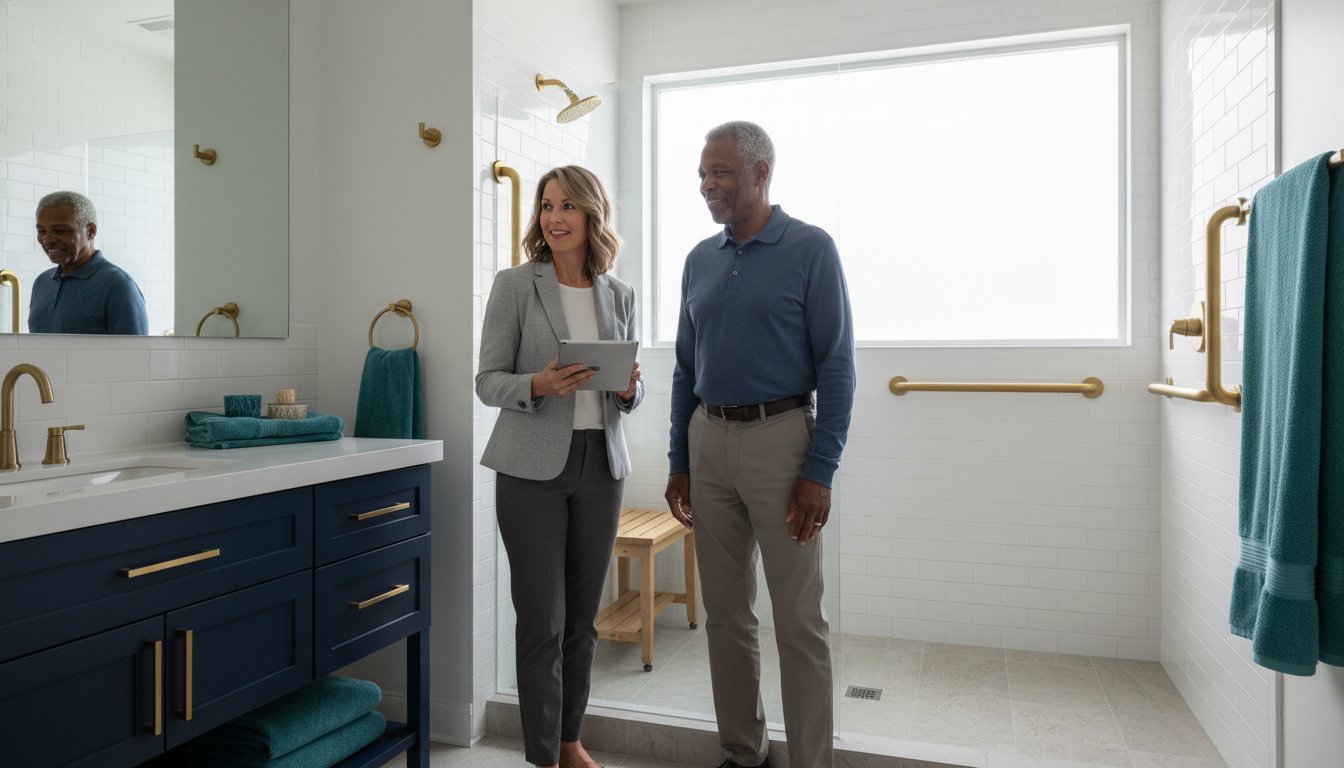
The hesitation most homeowners feel about safety projects comes down to aesthetics. Nobody wants their home to look like a hospital. A good CAPS professional approaches this head-on: modern grab bars come in brushed gold, matte black, and polished nickel. They can double as towel bars or decorative accents. Zero-entry thresholds and curbless showers look like high-end spa design because, increasingly, they are. These features show up regularly in luxury renovation reports precisely because they're beautiful, functional, and what discerning buyers want.
Preserving the feel of your home isn't a luxury request. It's a real part of what makes aging in place work. When your home still feels like yours, you feel more confident and more willing to use the features that keep you safe.
Planning Before a Crisis
Research indicates that environmental modifications can reduce fall risk by approximately 26% in high-risk populations. The difference between doing that work proactively versus after a fall is enormous, in cost, in stress, and in outcome. Aging in Place North Carolina works with families to make these plans before urgency takes over, creating space for thoughtful decisions.
The ROI of Home Modifications vs. Assisted Living Costs in North Carolina
The financial case for staying home is strong and often underestimated.
By 2026, the average cost of assisted living in the Raleigh-Durham area is projected to reach approximately $6,150 per month, or more than $73,000 annually. That figure doesn't include moving costs, real estate commissions, the toll of downsizing, or the loss of community connections built over decades.
Compare that to a one-time bathroom remodel. A curbless shower conversion typically runs between $10,000 and $18,000. A modular ramp installation ranges from $1,500 to $5,000. These are capital improvements to your most significant financial asset, not recurring monthly expenses.
The CDC reports the average medical cost of a fall-related injury is approximately $30,000. A hip fracture with surgery and rehabilitation can exceed $50,000. Investing in prevention now is significantly less expensive than reacting to an emergency later.
Budgeting for Modifications
Costs vary by home and scope. A professional safety assessment is the right starting point. It tells you what's most urgent, what can be phased over time, and where your dollars will have the most impact. Spreading the work over two or three years lets you manage cash flow while steadily building a safer home.
Vetting Checklist: 5 Questions to Ask Before Hiring
Finding the right contractor is about more than construction competence. You're looking for someone you trust to work in your home, understand your needs, and stand behind their work. These five questions will help you tell the difference between a good fit and a costly mistake.
1. Are you licensed by the NC Licensing Board for General Contractors?
Coordinating a home modification project can feel like a second job: multiple contractors, permits, scheduling conflicts, and no guarantee anyone understands the specific requirements of accessibility work. Aging in Place North Carolina takes that burden off your plate.
The team connects you with vetted professionals who understand that your home is someone's sanctuary, not a job site. From the initial consultation through the final walkthrough, they serve as your single point of contact, handling the details that typically fall through the cracks.
2. What is your specific experience with universal design?
Ask whether they hold a CAPS or Universal Design Certified Professional (UDCP) designation. These credentials confirm they know how to integrate safety features in ways that work with your home's existing aesthetic rather than against it.
3. Can you provide three references from recent local projects?
References from Cary, Apex, Morrisville, or elsewhere in Wake County confirm they know local building codes and have a track record in your community. Follow up and actually call them.
4. Who is my point of contact day to day?
You should always know who is entering your home and who is accountable for the project timeline. Clear communication is one of the biggest differences between a smooth renovation and a stressful one.
5. Are you willing to collaborate with a third-party safety evaluator?
A contractor worth hiring will welcome this. It shows they're focused on the right outcome for you, not just completing a punch list.
Verifying Credentials
When reviewing a contractor's portfolio, look for CAPS or UDCP badges and ask to see examples of completed accessible bathrooms and entryways. Do the modifications blend in, or do they stand out as afterthoughts? Also, check the Better Business Bureau of Eastern North Carolina for their dispute resolution history over the past 12 months.
What Good Project Management Looks Like
A clear timeline matters, particularly for seniors who rely on consistent daily routines. The right contractor provides a schedule, a single point of contact for subcontractor coordination, and a plan to minimize disruption. Ask upfront about post-project support. The best teams don't disappear after the final walkthrough.
Ready to take the first step?
Schedule a professional home safety assessment to identify the right modifications for your specific needs.
How Aging in Place North Carolina Manages the Process
Aging in Place North Carolina was founded by Del Scheitler, and his approach to this work is shaped by lived experience, not just professional training.
Del brings over 15 years of experience in marketing, home services, and construction, including his role as President and co-owner of Investment Heroes Roofing. But the reason this business exists goes deeper than a resume.
Growing up as the youngest of three, with two older brothers with developmental disabilities, Del learned early what caregiving really means. His mother, who immigrated from Thailand, raised their family here in America and taught Del what it looks like to show up for the people you love, consistently and without reservation.
After Del's father passed away, his mother moved to North Carolina to be closer to family. What followed were years of serious challenges: a stroke, heart failure, recovery during the pandemic, and a fall that resulted in a broken hip. Del navigated all of it while running a business and raising his son, Theo, with his wife, Kim. He knows firsthand what it costs a family, emotionally and financially, when a home isn't set up to support an aging loved one.
That experience revealed a gap that Aging in Place North Carolina was built to close. Too many families are left trying to figure this out alone, without trusted professionals to help them plan ahead before a crisis arrives.
Del is joined by
Jessica Cunningham (Business Development Director), a CAPS-certified professional with a JD and deep background in estate planning, financial services, and long-term care, and by
Mary Pruter (Marketing Director), also CAPS-certified, who spent years as her own mother's primary caregiver before channeling that experience into this work.
From Assessment to Strategic Plan
The process starts with a Comprehensive Home Safety Assessment, a room-by-room evaluation that identifies hazards a general contractor would never flag: half-inch floor transitions, lighting gaps in high-traffic corridors, and hardware that looks fine but fails under real conditions. The assessment produces a prioritized plan that tells families exactly where to start and what can wait.
From there, Aging in Place North Carolina manages the full project: vetting and coordinating contractors, handling permits and inspections, and ensuring every modification meets CAPS and ADA standards. You have a single point of contact throughout.
Whole-Family Training
The work doesn't end when construction does. Del's team spends time with seniors and their caregivers to make sure everyone is confident using new features, whether that's a modified entryway, a smart lighting system, or updated bathroom hardware. No one gets left to figure it out alone after the crew leaves.
Data from the Family Caregiver Alliance shows that 40-70% of caregivers experience clinically significant symptoms of depression. Having real support and a home environment that genuinely works changes that picture.
You deserve a home that supports your life without compromising what makes it yours. Del and his team are ready to help.
Frequently Asked Questions
How do I find a CAPS-certified contractor near Raleigh, NC?
The National Association of Home Builders (NAHB) maintains an online directory you can filter by zip code to find CAPS-certified professionals in the Raleigh-Durham area. This credential confirms the contractor has specific training in universal design and senior safety, and it's a meaningful filter when comparing candidates.
What is the average cost of an aging in place home modification?
Costs vary by scope. Grab bar installation might run $100-$500, while larger projects like walk-in tub conversions or curbless shower remodels typically range from $10,000 to $18,000. A professional assessment helps you prioritize so your budget goes toward the changes that matter most first.
Do I need a permit for a wheelchair ramp or walk-in tub in Wake County?
Yes. Wake County requires building permits for permanent wheelchair ramps and plumbing permits for walk-in tub installations. Any project involving structural changes or new plumbing must be inspected. A qualified contractor handles all of this, but it's worth confirming upfront that they will.
Can aging in place modifications increase my home's value?
They can, particularly as the buyer pool ages. The National Association of Realtors notes that features like curbless showers and first-floor primary suites are increasingly desirable across age groups. When modifications are done well and integrate naturally with the home's design, they add genuine market value.
What's the difference between a home safety assessment and a standard home inspection?
A home inspection evaluates structural integrity: roof, foundation, wiring, plumbing. A home safety assessment evaluates how you interact with your environment. It's personalized to your mobility, your daily routines, and the specific risks in your space. The output is a roadmap for independence, not a structural report.
How long does a typical bathroom modification take?
Simple updates like grab bar installation can be done in an afternoon. A full curbless shower conversion typically takes 5-15 business days, depending on the scope. A good contractor works efficiently to minimize disruption and gets your routine back to normal as quickly as possible.
Does Medicare cover aging in place modifications?
Traditional Medicare does not cover home modifications, as they're classified as home improvements rather than medical equipment. Some Medicare Advantage plans and long-term care insurance policies offer limited coverage for safety items. North Carolina's CAP/DA waiver program also provides financial assistance for eligible seniors.
How do I make my home safer without it looking clinical?
This is exactly what CAPS-certified specialists are trained to solve. Modern grab bars come in designer finishes that double as towel bars. Curbless showers and comfort-height vanities are standard in high-end bathroom design. Slip-resistant flooring can be beautiful tile. Done right, these modifications look like thoughtful upgrades, rather than medical equipment.