Granny Flats in Raleigh, NC: The 2026 Guide to Accessory Dwelling Units (ADUs)
Imagine the relief of knowing your parents are safe in a custom suite just steps from your back door, rather than living alone in an unmonitored house or a sterile facility. In 2026, many Raleigh families are choosing this path to avoid the rising costs of local assisted living, which often exceeds $70,000 annually. You want your loved ones to stay close, but the technical details of Raleigh’s Unified Development Ordinance and the $128 minimum permit fees can feel overwhelming. It's natural to worry about safety and zoning, but you don't have to choose between a clinical environment and your peace of mind.
This guide helps you master the process of building granny flats that provide a beautiful, independent lifestyle in the Research Triangle. You'll discover how the 2025 passage of Senate Bill 495 has simplified ADU rules and learn why a detached unit, typically costing between $180,000 and $320,000, is a strategic investment in family dignity. We'll preview the "Fast Track" program and show you how to create a future-proof living space that enhances your property value while keeping your family whole.
Key Takeaways
- Learn how to leverage Raleigh’s current Unified Development Ordinance (UDO) to build a self-contained residence that keeps your loved ones close while respecting everyone's privacy.
- Discover why granny flats serve as a "beautiful, not institutional" alternative to local assisted living, providing a high-quality sanctuary tailored to your family's unique needs.
- Understand how CAPS-certified design standards can future-proof your project, ensuring the space remains safe and accessible as your family's mobility needs evolve.
- Gain insights into the strategic planning and project management steps required to navigate complex zoning rules and permitting across Wake County and Cary.
- Explore how starting with a comprehensive home safety assessment creates a foundation for a successful, long-term aging-in-place strategy that protects your property value.
What is a Granny Flat? Understanding ADUs in Raleigh & the Research Triangle
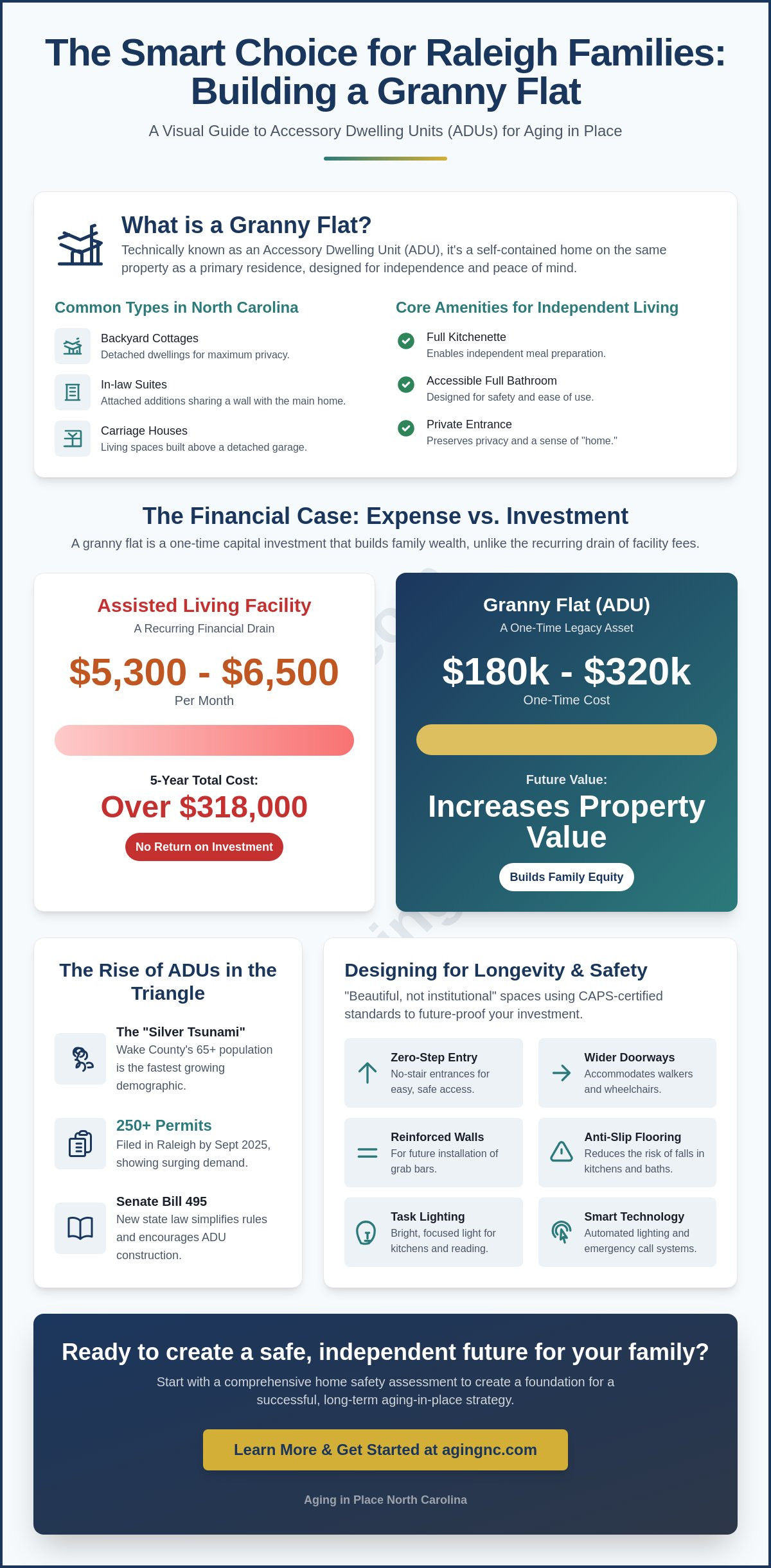
Stay in the home you love by creating a dedicated space for the people you care about most. A granny flat, technically known as an Accessory Dwelling Unit (ADU), is a self-contained residential unit located on the same lot as your primary single-family home. These structures are more than just additions; they are holistic solutions designed to provide independence for seniors and peace of mind for their families. By September 2025, over 250 permit applications had already been filed in Raleigh alone, signaling a massive shift in how our community approaches multi-generational living.
The demand for granny flats in the Research Triangle is surging as we face the "Silver Tsunami." In Wake County, the population of residents aged 65 and older is growing faster than any other demographic. This shift has pushed Raleigh and Cary homeowners to seek alternatives to institutional care. In 2025, North Carolina enacted Senate Bill 495, which requires local governments to allow at least one ADU per single-family home. This legislative support makes it easier for you to build a future-proof sanctuary right in your backyard. Depending on your neighborhood, you might hear these units called by several names:
- Backyard Cottages: Detached dwellings that offer maximum privacy.
- In-law Suites: Often attached to the main house with a shared wall.
- Casitas: A popular term for small, elegant guest houses.
- Carriage Houses: Living spaces typically built above a detached garage.
Common Types of Granny Flats in North Carolina
Selecting the right structure depends on your lot size and your family's specific mobility needs. Detached granny flats are standalone cottages that provide a distinct sense of "home" and separation. They are ideal for parents who want to maintain their own garden or porch. Attached ADUs are seamless additions that share a wall with your primary residence, making it easier for caregivers to provide support quickly. For those looking to work within an existing footprint, converting a garage, basement, or attic into a livable suite is often a practical, high-value way to utilize your current square footage.
The Core Amenities for Independent Living
To be functional and legal in Raleigh, these units must include a kitchenette, a full bathroom, and a private entrance. We believe these spaces should be beautiful, not institutional. This means incorporating high-quality craftsmanship that mirrors the aesthetic of your main home while hiding accessibility features in plain sight. Strategic planning also involves installing separate utility meters. This ensures the unit remains a versatile asset for your property's long-term value. Our safety-first approach balances the senior's desire for privacy with the caregiver's need for easy access, creating a seamless environment where everyone feels at home.
The Benefits of Building a Granny Flat for Aging in Place
Stay in the home you love while keeping your family close. Building a granny flat is a strategic investment in both family dignity and property equity. It's about maintaining proximity without intrusion. You can keep your parents just a few yards away while everyone keeps their own front door and private kitchen. This balance prevents the "helicopter" feeling that often strains relationships when parents move into a spare bedroom. Instead, you create a space that fosters independence and reduces the social isolation that often leads to cognitive decline. It's a way to preserve joy for the whole family.
Financial Advantages vs. Senior Living Facilities
In Cary and North Raleigh, the cost of assisted living is a recurring financial drain that never builds wealth. Monthly fees for high-quality facilities in the Research Triangle often range from $5,300 to over $6,500. Over five years, that's more than $318,000 paid to a corporation with no return on investment. Contrast this with the cost of granny flats . A detached unit in Raleigh typically ranges from $180,000 to $320,000. This is a one-time capital investment that stays in the family. It's a legacy asset. When the unit is no longer needed for a parent, it becomes a high-value rental or a guest suite, continuing to increase your property's equity in a competitive market.
Safety and Strategic Peace of Mind
Safety isn't just about grab bars; it's about response time. Living on the same lot allows you to respond to a fall or a medical emergency in seconds. By incorporating specific home modifications for elderly residents into the initial build, you create an environment that is inherently safe and future-proof. This proactive approach reduces the risk of injury and provides a level of confidence that a camera or a medical alert necklace simply cannot match. Daily check-ins become natural, brief interactions over coffee rather than stressful, scheduled visits across town. To ensure your property is ready for such a project, a comprehensive home safety assessment is the best way to identify the ideal location and layout for your new addition.
Caregiver burnout is a real risk for adult children in the Research Triangle who juggle full-time careers and family care. Having a parent in a beautiful, detached suite reduces the logistical stress of commuting for care. It allows you to be a son or daughter again, rather than just a driver or a nurse. This holistic approach to aging in place ensures that your loved ones don't just survive; they thrive in a space that feels like a sanctuary, not a clinic.
Designing for Longevity: 'Beautiful, Not Institutional' Granny Flat Features
Live the life you want in a space that reflects your personal style and preserves your dignity. When you begin the journey of building granny flats , the Certified Aging-in-Place Specialist (CAPS) standard is non-negotiable. A general contractor might understand the local building code, but a CAPS professional understands the nuances of human mobility and sensory changes. We ensure that every design choice is future-proof, meaning it anticipates needs before they become crises. This proactive mindset is what separates a standard backyard cottage from a true sanctuary.
Aesthetic integrity is vital for your peace of mind. Your addition should never look like a medical wing or a temporary fix. Instead, we focus on matching the architectural details, rooflines, and materials of your primary residence. This approach maintains the emotional integrity of your property, ensuring that your parents feel like they're moving into a high-end guest suite rather than an institution. We use universal design principles to create a layout that is intuitive for everyone, regardless of their physical abilities. By integrating smart home technology, we can provide safety monitoring through motion sensors and smart thermostats that protect your loved ones without the intrusive feel of cameras.
Accessibility Without the Hospital Look
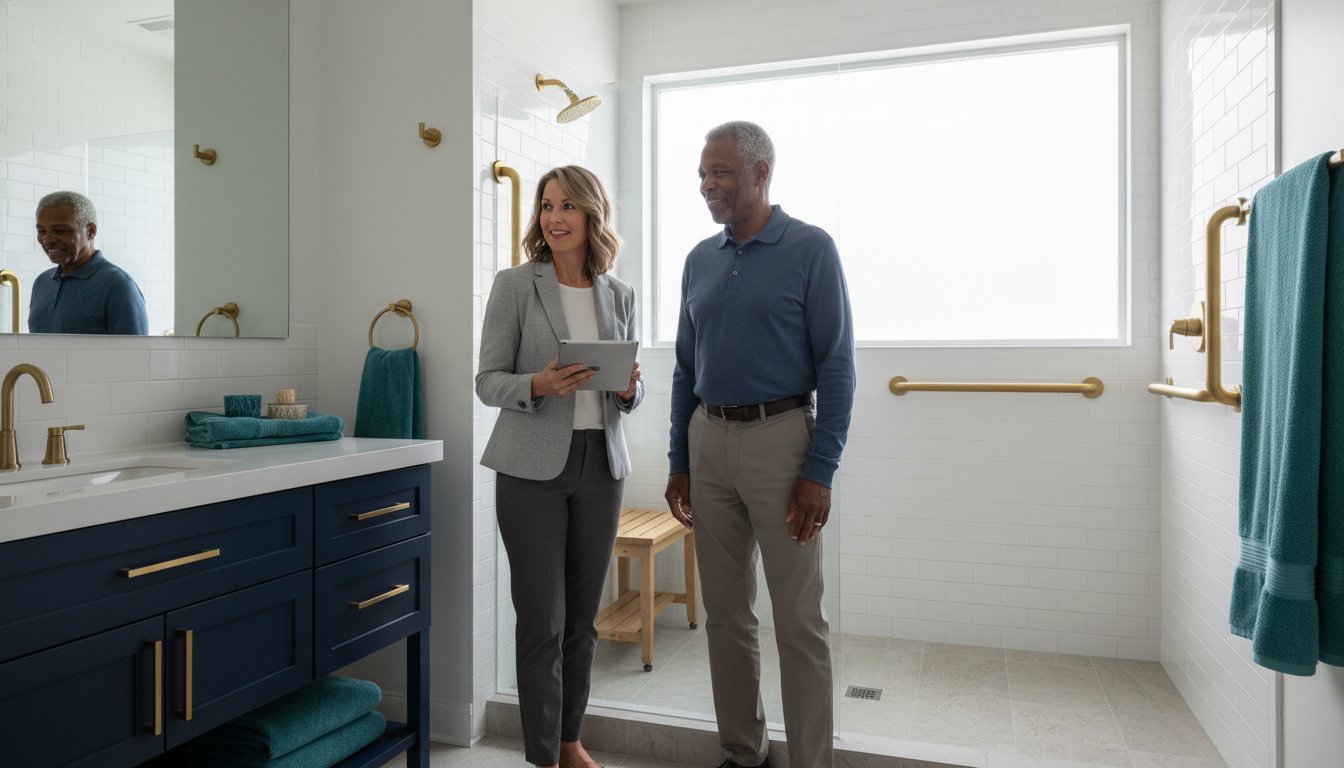
We believe safety features should be hidden in plain sight. Your bathroom can feature a curbless, zero-entry shower that feels more like a luxury spa than a clinical necessity. We install designer grab bars that serve as elegant towel racks, finished in brushed gold or matte black to match your fixtures. Wide doorways, with a 36-inch minimum clearance, provide the space needed for a walker or wheelchair while making the entire floor plan feel more expansive. We also select slip-resistant flooring that replicates the look of reclaimed hardwood or natural slate, providing essential traction without sacrificing the warmth of a traditional home.
Future-Proofing the Layout
Strategic lighting is a critical, yet often overlooked, safety feature. We eliminate dark corners by installing motion-activated LED paths that guide the way from the bedroom to the bathroom at night. In the kitchen, we prioritize ease of use with pull-down shelving and drawers instead of deep cabinets. This reduces the need for reaching or bending, which are common triggers for balance issues. When designing these granny flats , we also look ahead to the possibility of "live-in" assistance. By ensuring the layout is flexible enough to house a future nurse or family aide, we protect your family's ability to stay together through every transition. This level of meticulous detail ensures your investment remains functional and beautiful for decades.
Navigating Regulations: Zoning and Planning for ADUs in Wake County
Build with confidence by understanding the rules that govern your property. While the legal landscape for secondary dwellings used to be a maze of red tape, the 2025 passage of Senate Bill 495 has fundamentally changed the game. This state law mandates that local governments across North Carolina allow at least one Accessory Dwelling Unit per single-family home in residential zones. In Raleigh, the Unified Development Ordinance (UDO) now provides a clearer path for families looking to install granny flats , but you must still adhere to specific local standards to ensure your project is compliant and safe.
The permitting process in Raleigh has become more efficient through the "Fast Track" program, which offers pre-reviewed building plans to speed up approval. However, technical requirements remain strict. If your project valuation exceeds $40,000, you are legally required to hire a licensed North Carolina General Contractor. For the fiscal year 2026, the City of Raleigh has set a minimum fee of $128 for building and trade permits, which also includes a 4% technology surcharge. These regulations exist to protect your family's safety and your property's long-term value.
Raleigh ADU Size and Placement Rules
Your new addition must fit the character of your neighborhood while meeting Raleigh's specific density rules. In most zoning districts like R-1, R-4, and R-10, a detached unit is typically limited to 800 square feet, though certain sites allow up to 1,000 square feet. You don't need to worry about providing a dedicated new parking spot in most cases, as Raleigh has removed many of these requirements to support "missing middle" housing. Setback rules generally require the unit to be located in the side or rear yard, staying at least four feet from the property line, though these distances can vary based on the height of your structure.
Wake County Utility and Safety Inspections
Strategic planning for utilities is the foundation of a future-proof home. If you live in more rural parts of Wake County, your granny flats might face challenges with septic capacity. You'll need to verify that your existing system can handle the additional load of a new bathroom and kitchen. For electrical systems, it's vital to determine if your current panel can support a secondary dwelling. We often recommend a professional aging in place services assessment to evaluate your home's electrical load and fire safety readiness before construction begins. This ensures your secondary dwelling meets all North Carolina fire codes, including interconnected smoke alarms between the two buildings.
Even with state and city approval, neighborhood-specific hurdles can remain. If you live in a community with a Homeowners Association (HOA), such as Brier Creek or North Hills, you must review your restrictive covenants. Some HOAs have rules regarding exterior materials or roof pitches that are more restrictive than the city's UDO. We advocate for our clients by helping them present their plans to boards, showing that a well-designed unit is an asset to the entire street. To begin your journey with a clear roadmap, consider our Strategic Planning for Aging in Place to identify any potential regulatory roadblocks early in the process.
Future-Proofing Your Project: How Aging in Place North Carolina Coordinates the Process
Stay in the home you love by ensuring the transition is as seamless as the construction itself. While a general contractor is essential for meeting structural codes, a senior living project requires a specialized lens that looks beyond the blueprints. Building granny flats is a complex undertaking that involves balancing architectural integrity with the evolving physical needs of your loved ones. Aging in Place North Carolina acts as your advocate, bridging the gap between technical construction and the human experience of aging. Our goal is to remove the logistical weight from your shoulders so you can focus on being a family again.
A general contractor focuses on the "what," but we focus on the "how" and the "who." We understand that a successful ADU project in the Research Triangle isn't just about passing an inspection; it's about creating a sanctuary that supports a senior's dignity for a decade or more. By acting as a liaison between you, the architect, and the build team, Aging in Place North Carolina ensures that the "beautiful, not institutional" promise is kept in every corner of the new home. This meticulous coordination prevents costly mid-construction changes and ensures the final result is truly future-proof.
The Aging in Place North Carolina Roadmap
Our process is designed to eliminate the anxiety of the unknown through a structured, three-phase approach. We begin with Phase 1: Strategic Planning and Assessment. This isn't just a walkthrough; it's a deep dive into current mobility and future health projections to ensure the site and layout are viable. Phase 2 moves into Project Management. We coordinate with builders to ensure high-end finishes hide essential safety features. Finally, Phase 3 provides longevity through our ongoing handyman services for seniors. This ensures that the environment stays safe, the grab bars remain secure, and the home's systems function perfectly long after the initial build is complete.
Empowering the Support Network
Success in multi-generational living depends on more than just a new building; it requires a prepared family unit. Aging in Place North Carolina focuses heavily on the adult child, providing the whole-family training and tools needed to manage this new chapter without burnout. By creating a "Care Circle" within your property lines, we help you establish boundaries that protect everyone's privacy while ensuring immediate support is available. This holistic coordination allows your parents to move into their new granny flats with a sense of triumph. You gain the confidence that comes from knowing every detail has been managed by experts who care about your family's joy as much as your home's safety.
Start Your Journey Toward a Future-Proof Home
Choosing to build a secondary residence is a profound act of love and a savvy financial decision. With Raleigh’s 2026 development fees starting at $128 and the state's continued support through Senate Bill 495, the opportunity to create a sanctuary for your parents has never been more accessible. You've seen how granny flats can protect family equity while providing the proximity needed for immediate safety. By prioritizing "beautiful, not institutional" design, you ensure that your loved ones maintain their dignity in a space that feels like a high-end retreat rather than a clinical facility.
As CAPS-certified experts and a family-owned business based right here in Raleigh, we specialize in navigating the complex UDO regulations so you don't have to. We treat every project as a holistic investment in your family's long-term peace of mind. Our team is ready to guide you through the strategic planning and assessments required to turn your backyard into a safe, independent haven.
Take the first step toward a seamless, intergenerational lifestyle today. Your family deserves the confidence that comes from a home designed for a lifetime of joy.
Frequently Asked Questions
Are granny flats legal in Raleigh, NC?
Yes, granny flats are fully legal in Raleigh following the ordinance adopted on July 22, 2020. Since that date, the city has actively encouraged these units to address the "missing middle" housing gap. In 2025, North Carolina Senate Bill 495 further solidified this by requiring all local governments to permit at least one ADU per single-family dwelling. This ensures you can build a safe, beautiful home for your loved ones without fear of zoning violations.
How much does it cost to build an ADU in Wake County?
Construction costs in 2026 vary based on the type of unit you select. According to current estimates, a detached ADU in Raleigh typically ranges from $180,000 to $320,000 or more. If you choose an attached unit, costs generally fall between $120,000 and $250,000, while garage conversions are the most budget-friendly option at $80,000 to $180,000. These figures reflect the high-quality craftsmanship required to create a "beautiful, not institutional" living environment.
Can a granny flat increase my property taxes?
Yes, adding a permanent structure to your lot will likely increase your property taxes because it increases your home's total assessed value. Wake County tax assessors will view the ADU as a significant improvement to the property. While this results in a higher annual tax bill, the long-term benefit is a substantial boost in property equity. Many homeowners find this tax increase is far lower than the cost of local assisted living facilities.
What is the maximum size for a backyard cottage in Cary?
In Raleigh, the maximum size for a detached unit is typically 800 square feet, though up to 1,000 square feet may be permitted on specific sites. While Cary and Wake Forest maintain their own distinct square footage limits and setback requirements, most local ordinances align with the state's goal of providing functional, compact housing. We recommend a strategic planning session to verify the exact dimensions allowed for your specific street and zoning district.
Do I need a separate permit for an attached in-law suite?
You must obtain a building permit and separate trade permits for any suite addition. For the 2026 fiscal year, Raleigh requires a minimum fee of $128 for the building permit and for each trade permit, including electrical, plumbing, and mechanical. There is also a 4% technology surcharge applied to these fees. Navigating this paperwork is a core part of our project management service, ensuring every safety code is met before construction begins.
How do I handle plumbing for a detached granny flat?
Plumbing for a detached unit usually involves running new lines from the primary residence or connecting directly to the city's sewer main. If you are in a rural part of Wake County on a septic system, you must verify that your current tank has the capacity for an additional bathroom. A professional assessment is vital here. It ensures your waste management system is future-proof and compliant with North Carolina health department standards.
Can I rent out my granny flat to a non-family member in Raleigh?
Yes, you can rent out your unit to non-family members in Raleigh. The city does not require owner-occupancy for granny flats built by a licensed general contractor. This flexibility allows the unit to serve as a rental property once it's no longer needed for a parent. However, if you build the unit yourself under the NC Owner/Builder exemption, the law prohibits you from renting it out.
How long does the ADU construction process typically take in the Research Triangle?
The timeline for an ADU project in the Research Triangle typically spans six to ten months from planning to completion. The "Fast Track" program in Raleigh can expedite the permitting phase, but the actual build requires meticulous attention to detail. This includes site preparation, utility connections, and interior finishing. We manage the entire schedule to minimize disruption to your daily life while ensuring the final sanctuary is built to our high standards.