Bridging the Gap: How to Support Aging Parents in Raleigh & the Research Triangle
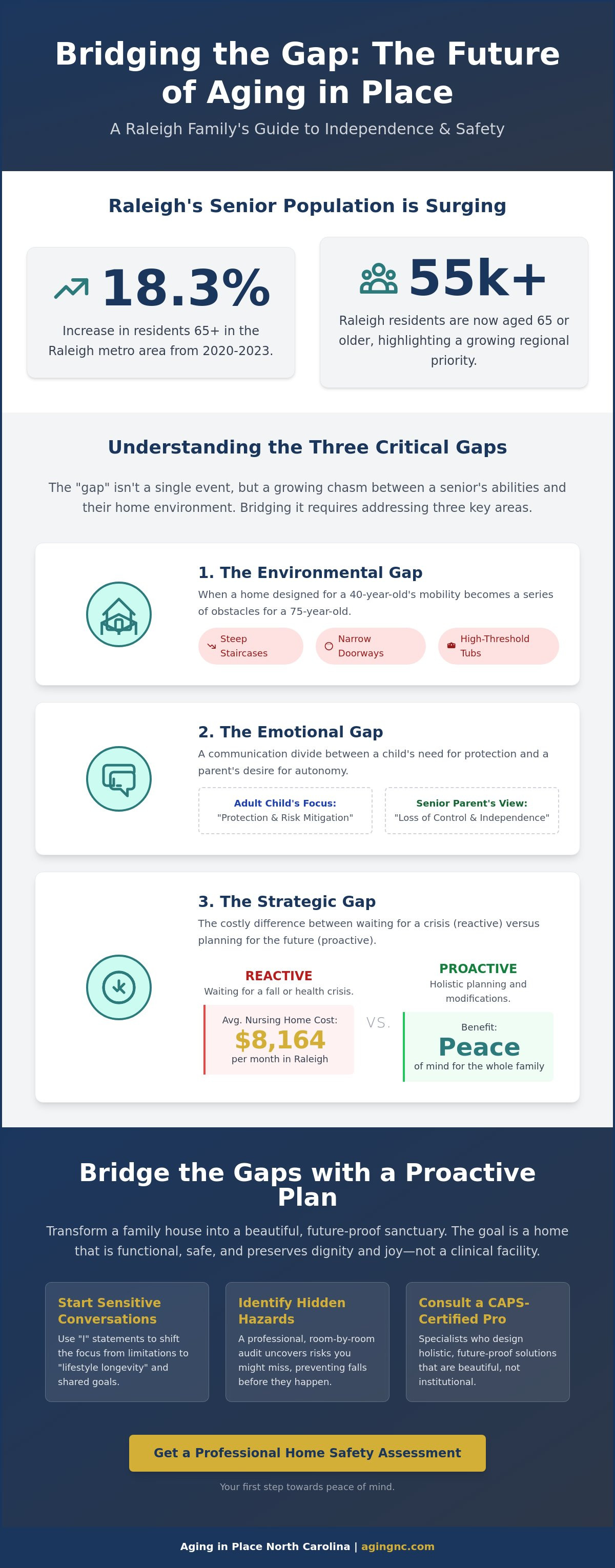
Raleigh's senior population surged by 18.3% between 2020 and 2023, making the Research Triangle one of the fastest-aging regions in the country. While more families are choosing to stay local, many struggle with bridging the gap between a parent’s fierce desire for independence and a child’s valid fear of a sudden fall or health crisis. It’s natural to feel overwhelmed by the rising costs of care, with Raleigh in-home assistance now averaging $22.62 per hour, or to feel confused by which home modifications are actually necessary. You want your parents to stay in the home they love, but you need to know they’re safe without making their living space feel like a clinical facility.
This article provides the roadmap you need to navigate intergenerational communication and home safety to help your loved ones age in place with dignity. We will cover how to leverage new resources like the $10,000 Home Comfort Act grants and the Aging with Dignity Act to transform a family house into a beautiful, future-proof sanctuary that offers everyone peace of mind.
Key Takeaways
- Learn how to start sensitive conversations using "I" statements that respect your parent’s autonomy while addressing your safety concerns.
- Identify hidden environmental hazards through a room-by-room audit to ensure every space in the home remains functional and safe.
- Discover why specialized CAPS-certified professionals are essential for bridging the gap between standard home repairs and holistic, future-proof modifications.
- Explore how "beautiful, not institutional" design choices preserve the emotional integrity and joy of the family home.
- Understand the value of a proactive home safety assessment to prevent sudden health crises and avoid the high costs of institutional care.
Understanding the "Gap" in Senior Independence and Safety
The "gap" in senior care is rarely a single event. Instead, it is a growing chasm between a senior’s current physical abilities and the architectural reality of their home. In Raleigh, where 55,029 residents are now aged 65 or older, this issue is becoming a regional priority. Bridging the gap requires a dual approach that addresses both the emotional tension within the family and the physical hazards present in the living environment.
Many families in the Research Triangle live in beautiful, older neighborhoods where multi-story homes are the standard. While these houses are full of memories, their steep staircases, narrow doorways, and high-threshold tubs often create an "Environmental Gap." This occurs when a home designed for a 40-year-old’s mobility becomes a series of obstacles for someone in their late 70s. With the 65+ population in the Raleigh metro area growing by 18.3% between 2020 and 2023, the demand for homes that can adapt to these changes has never been higher.
Closing these divides early is the only way to prevent the "Silver Tsunami" from turning into a personal family crisis. Seven out of 10 people in North Carolina will require long-term care at some point. By identifying risks before a fall occurs, families can preserve the dignity of their loved ones and avoid the stress of a forced move to an assisted living facility.
The Emotional Gap: Independence vs. Protection
Adult children often approach home safety from a place of high anxiety, focusing on "protection" and "risk mitigation." Conversely, seniors often view suggested modifications as a loss of control or a sign of weakness. To bridge this divide, the conversation must shift from "safety" to "lifestyle longevity." Rather than discussing what your parents can no longer do, focus on how a "future-proof" home allows them to stay in the space they love. The Independence Paradox in senior home care is defined as the phenomenon where a senior’s refusal of minor assistance leads to a major health crisis that permanently ends their ability to live at home.
The Strategic Gap: Reactive vs. Proactive Planning
Waiting for a health crisis to dictate home changes is a costly strategy. In Raleigh, the average cost for a semi-private room in a nursing home has reached $8,164 per month, a figure that can quickly deplete family savings. Proactive planning offers a much more sustainable path. NC families can work with CAPS-certified experts who specialize in identifying these strategic gaps. These professionals don't just fix what is broken; they design holistic solutions that ensure the home remains beautiful, functional, and safe for the long term. This proactive methodology transforms the home into a sanctuary rather than a source of worry.
How to Start the Conversation: Bridging the Communication Gap
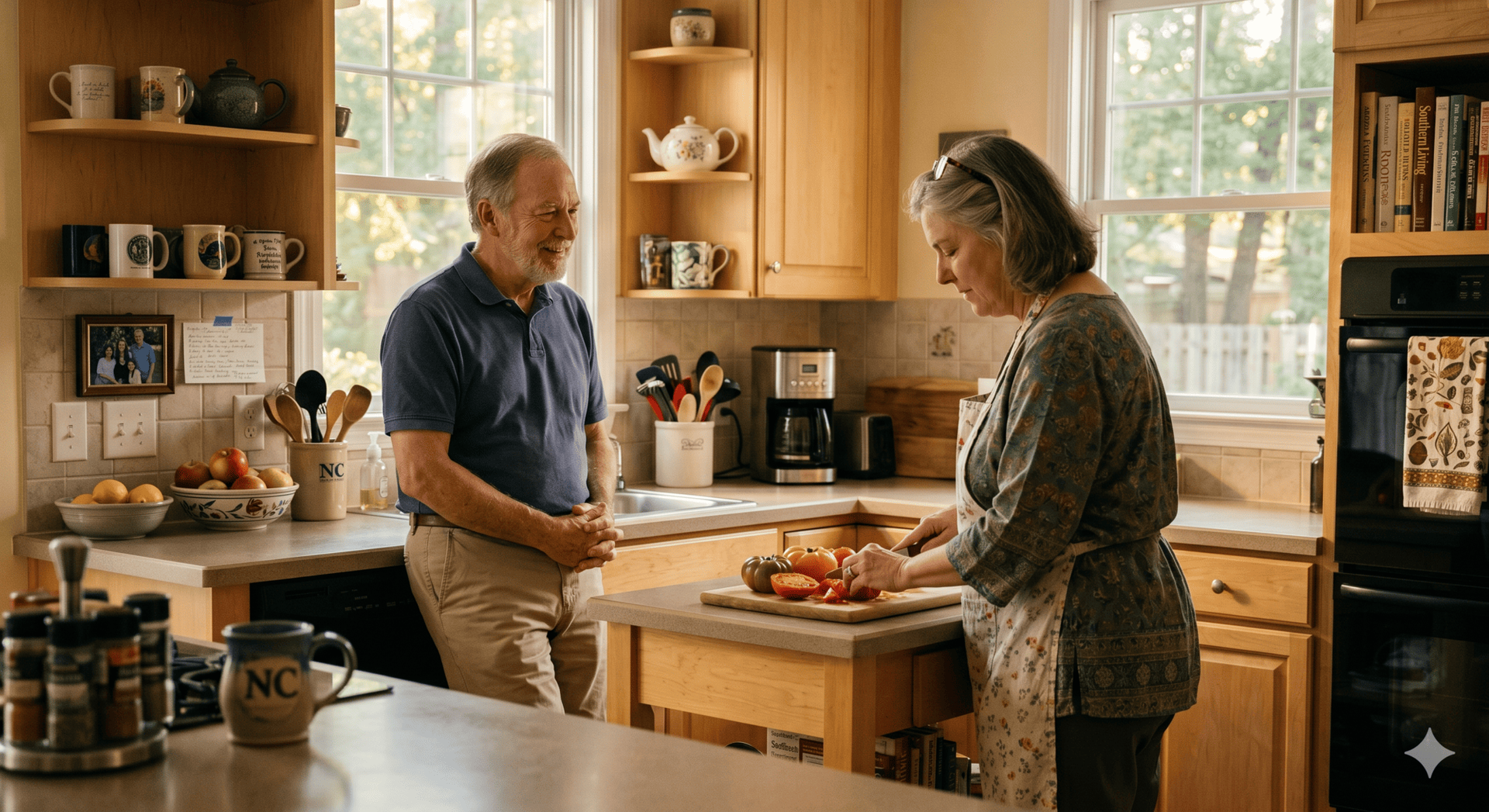
Initiating a discussion about home safety and aging is often the most daunting hurdle for families in the Research Triangle. It isn't just one "big talk." It's a series of gentle, ongoing dialogues aimed at bridging the gap between a parent’s need for autonomy and a child’s need for reassurance. Successful conversations happen when the focus shifts away from physical limitations and toward the goal of long-term independence. By approaching this as a partnership, you can reduce the defensiveness that often arises when a senior feels their lifestyle is under scrutiny.
Timing is everything. Avoid bringing up home modifications during high-stress moments, such as a holiday gathering or immediately following a doctor’s appointment. Instead, choose a quiet, neutral time when everyone feels relaxed. Use "I" statements to own your feelings rather than sounding accusatory. For example, saying "I feel anxious when I think about the steep stairs in the foyer" is far more effective than saying "You can't handle these stairs anymore." This subtle shift in language validates your concern without stripping away their dignity.
Incorporating the concept of "Whole-Family Training" can also change the dynamic. When safety is presented as a team effort where everyone learns to use new technology or understands fall prevention, the senior doesn't feel singled out. Listen more than you speak. Your parents may have specific fears about staying home that you haven't considered, such as the burden of maintenance or the fear of isolation. Acknowledging these fears is the first step toward a holistic solution. If you're looking for more ways to support your loved ones, you might consider a professional home safety consultation to get an expert's perspective.
A Step-by-Step Script for Raleigh Families
Start with empathy. You might say, "I love this house as much as you do, and I want to make sure it stays your sanctuary for the next twenty years." If they object with "I’m not ready yet," remind them that "future-proofing" is about staying ahead of the curve, not reacting to a crisis. For more detailed advice on handling these delicate moments, read The Adult Child’s Guide to Supporting Aging Parents in Raleigh, NC, which offers deeper scripts tailored for local families.
Bridging the Gap Through Professional Mediation
Sometimes, the "child vs. parent" dynamic is too strong to overcome alone. Bringing in a neutral third-party, such as a CAPS-certified safety evaluator, can remove the emotional weight from the conversation. These experts act as a "Trusted Advisor," providing an objective assessment based on data and industry standards rather than family history. In many Research Triangle family meetings, having a professional explain why a specific modification is necessary helps everyone align on a proactive plan without anyone feeling like they "lost" the argument.
Identifying and Closing Safety Gaps in the Home
Once you've aligned as a family on the need for a safer environment, the next step is a physical audit of the living space. In suburban communities like Cary and Holly Springs, many homes built in the 1990s and early 2000s feature expansive floor plans that can become difficult to navigate as mobility changes. Bridging the gap between a beloved family house and a safe, functional sanctuary requires a meticulous eye for detail. We look for the small hazards that others might miss, such as a slightly uneven transition between a hardwood foyer and a carpeted living room or a dimly lit hallway that increases the risk of a misstep.
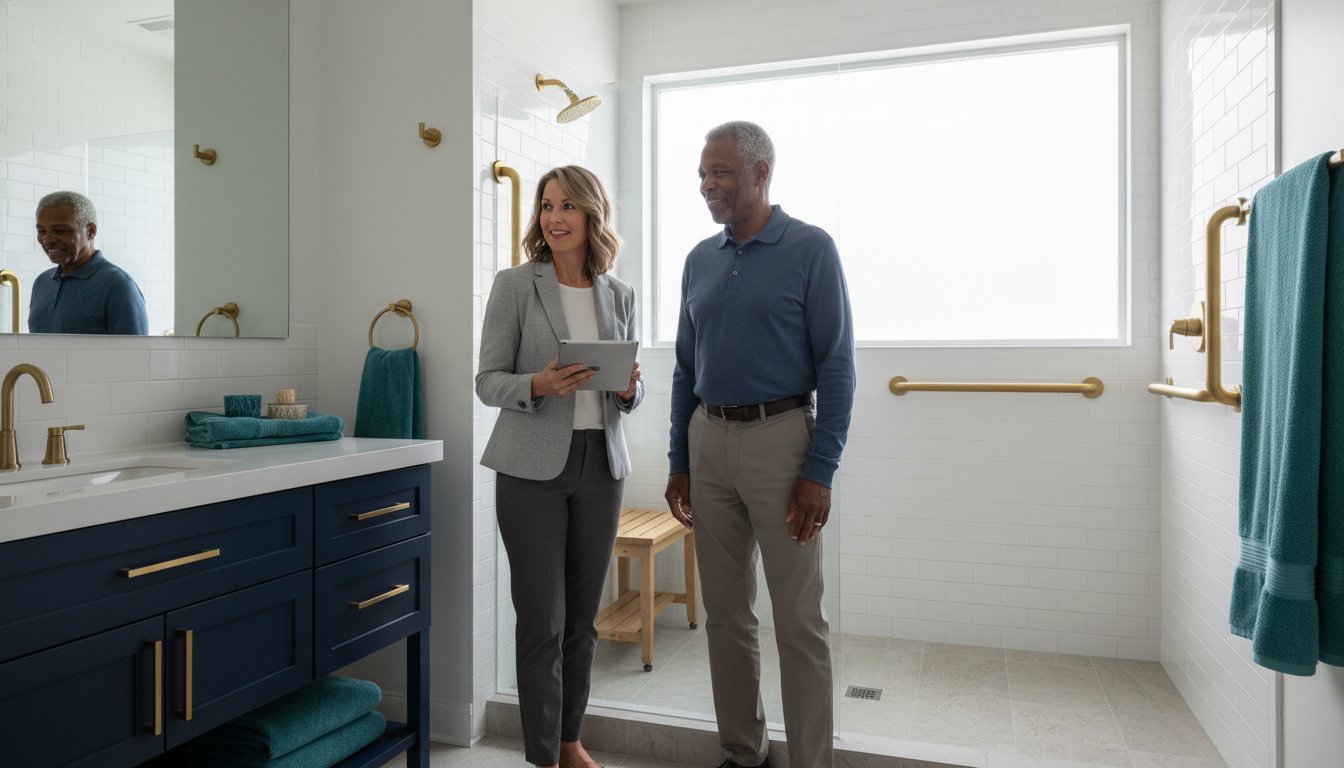
The most significant barrier to home modifications is often the fear that the house will begin to look like a clinical facility. We firmly believe that safety should be beautiful, not institutional. By choosing high-quality finishes and modern design elements, we ensure that every modification enhances the home’s aesthetic value while providing essential protection. This approach preserves the emotional integrity of the space, making it easier for seniors to embrace changes that actually improve their daily quality of life.
The Bathroom: Bridging the Most Dangerous Gap
The bathroom is statistically the most hazardous room in the home, yet it's also the place where privacy and dignity are most important. Converting a high-threshold tub into a seamless, zero-entry shower is one of the most effective ways to prevent falls. We also focus on strategic grab bar placement, using hardware that mimics the look of high-end designer towel racks. These "future-proof" additions provide stability without shouting "medical equipment." For more specific advice on selecting the right equipment, you can explore our Home Aid for Seniors in Raleigh guide.
Lighting and Visibility in Traditional NC Homes
Many older residences in Wake Forest and North Raleigh feature traditional layouts with pockets of deep shadow and narrow, dim corridors. Improving visibility is a low-impact, high-reward modification. Smart home integration allows us to install motion-activated lighting that illuminates a clear path to the bathroom or kitchen during the night, reducing the need to fumble for switches. We also focus on creating visual contrast on stairs and flooring transitions. Using a different color or texture at the edge of a step provides a clear visual cue that helps prevent trips, ensuring the home remains a place of confidence rather than a source of anxiety.
Implementation: Bridging the Gap with Professional Support
Executing a home modification plan is where many families feel the most pressure. While a standard contractor can install a grab bar, they often lack the specialized training to understand the "why" behind specific placements. Bridging the gap between basic construction and therapeutic design requires a partner who understands how a senior moves through their unique environment. Professional project management is essential here to ensure that modifications are seamless and completed with minimal disruption to the family’s daily rhythm.
In the Raleigh-Durham area, vetting your team is the most important step in creating a proactive plan. With the 85+ population in North Carolina expected to grow by 174% over the next 25 years, the market is flooded with generalists. However, a "one-size-fits-all" approach to accessibility often fails to address individual needs. A specialized team doesn't just look at current physical limitations; they create a long-term roadmap that anticipates future changes in mobility and health.
The CAPS Advantage in the Research Triangle
A Certified Aging-in-Place Specialist (CAPS) brings a unique blend of construction knowledge and empathy to your project. These experts are trained to bridge the gap between beautiful home design and the technical requirements of accessibility. When you work with a CAPS-certified professional, you aren't just getting a renovation; you're getting a solution that has been vetted against national safety standards. Always ask to see a portfolio of local Research Triangle projects to ensure their "beautiful, not institutional" promise matches your family’s aesthetic standards.
Ongoing Home Maintenance for Long-Term Safety
Safety is not a one-time transaction. It is a continuous process that involves regular upkeep and minor adjustments. This is where the role of "Fix-It Technicians" becomes invaluable for local families. These professionals handle the small tasks, such as tightening loose handrails, changing hard-to-reach lightbulbs, or checking smart home sensors, that prevent minor issues from becoming major accidents. Bridging the gap between a large-scale renovation and day-to-day maintenance ensures your home remains a safe sanctuary for years to come. For a comprehensive look at how to keep your home in top shape, check out our Handyman Services for Seniors in Raleigh, NC guide. If you're ready to start your journey toward a safer home, contact our team for a professional consultation to secure your peace of mind.
The Aging in Place NC Approach: Your Partner in Bridging the Gap
Chris and Amy Gaddy founded Aging in Place North Carolina with a singular mission: to ensure that no senior in the Research Triangle has to leave their cherished home due to physical limitations. They understand that the transition into a more supported lifestyle is deeply personal. By acting as trusted advisors, Chris and Amy help families navigate these changes with a blend of technical expertise and compassionate advocacy. Their approach isn't about making a home feel like a medical ward; it’s about enhancing the space to preserve joy and independence for years to come.
The foundation of this journey is our Comprehensive Home Safety Assessment. This deep dive into the living environment acts as a vital tool for bridging the gap between current risks and a future-proof sanctuary. We don't just point out hazards. We provide a proactive plan that aligns with your family’s specific needs and aesthetic preferences. Our promise of "beautiful, not institutional" modifications means that every grab bar, lighting update, and zero-entry shower is designed to blend seamlessly with your home's high-quality craftsmanship. This meticulous attention to detail provides the peace of mind that comes from knowing your loved ones are safe in a space they still recognize and love.
A strategic planning session is the first step toward this confidence. During this consultation, we move beyond the "how" of construction to the "why" of your family’s lifestyle. We look at the small details, such as how your parents navigate the kitchen or the specific lighting needs of an older Raleigh residence. This guided journey ensures that every modification is an investment in the future rather than a reaction to the past. By choosing a partner who champions the dignity of the elderly, you ensure that the home remains a place of joy rather than a source of stress.
Whole-Family Training and Support
Empowering caregivers is just as important as modifying the physical house. We provide whole-family safety training to ensure that adult children and caregivers have the skills and confidence to maintain a safe environment. This holistic support system acknowledges that aging is a shared journey. For more strategies on managing a shared household, see our guide on Intergenerational Living in Raleigh. We believe that when the whole family is educated and prepared, the Independence Paradox is much easier to navigate. We act as facilitators, helping every member of the household understand their role in maintaining a safe, stable home.
Your Local Raleigh-Durham Safety Experts
We are proud to serve families across Raleigh, Cary, Wake Forest, and the surrounding North Carolina communities. As a family-owned business with CAPS-certified expertise, we take a personal interest in every home we enter. If you're ready to move from a reactive state of worry to a proactive plan for the future, we are here to help. Contact us today to schedule your strategic planning session and take the first step toward a safer, more beautiful home. You can reach our team directly at Aging in Place NC to start the conversation that changes everything.
Secure Your Family’s Future in the Home They Love
Supporting your parents as they age in place is one of the most meaningful ways to honor their legacy and preserve their independence. We've explored how bridging the gap involves proactive communication, environmental audits, and the guidance of a trusted advisor. By addressing risks before they become crises, you protect your loved ones from the emotional and financial strain of institutional care, which now averages $8,164 per month for a semi-private room in Raleigh. Our family-owned team brings specialized CAPS-certified expertise to every home, ensuring that safety and style coexist perfectly.
Stay ahead of the curve by transforming your house into a future-proof environment that reflects your family's unique aesthetic. We remain committed to our "beautiful, not institutional" design philosophy, proving that life-saving modifications never have to come at the expense of elegance. Take the first step toward lasting peace of mind for the whole family and ensure your parents can stay in the home they love for years to come.
Your parents deserve to age with dignity in the place where they feel most like themselves, and we are honored to help you make that possible.
Frequently Asked Questions
What does bridging the gap mean in senior home safety?
Bridging the gap refers to the proactive process of aligning a home’s physical design with the resident’s evolving mobility needs. It ensures that the house remains a safe sanctuary rather than a series of obstacles. By identifying environmental risks early, families can prevent the 70% of North Carolinians who will eventually require long-term care from facing a preventable crisis.
How do I talk to my parents about home modifications without offending them?
Focus on lifestyle longevity and use "I" statements to express your concerns without sounding critical. For instance, explain how you want them to stay in the home they love for the next 20 years. This approach reframes modifications as an investment in their independence rather than a sign of weakness or a loss of control.
Are home modifications for seniors in Raleigh expensive?
Costs vary based on the project, but they're often more affordable than institutional care. In Raleigh, assisted living averages $5,192 per month, while a nursing home semi-private room is $8,164. To help with costs, the Home Comfort Act aims to provide grants up to $10,000 for eligible seniors starting no later than January 1, 2026.
Can a standard contractor do aging-in-place modifications?
While standard contractors can install hardware, they often lack the specialized knowledge required for holistic senior safety. They might miss critical details like proper slip-resistance ratings or ergonomic height requirements. A specialist understands the medical and physical aspects of aging, ensuring that modifications are both functional and beautiful, not institutional.
What are the most common safety gaps in older North Carolina homes?
Traditional North Carolina homes often feature high-threshold tubs, steep staircases, and dim hallways that increase fall risks. Many Raleigh houses built before 2000 also have narrow doorways that don't accommodate mobility aids. Identifying these gaps through a room-by-room audit is the first step in creating a truly future-proof living environment.
What is a CAPS professional and why do I need one?
A Certified Aging-in-Place Specialist (CAPS) is a professional trained to address the unique needs of seniors. They bridge the gap between design and healthcare by creating spaces that support physical limitations without sacrificing style. Choosing a CAPS-certified expert ensures your modifications meet rigorous national safety standards and provide long-term reliability.
How long does a home safety assessment take?
A comprehensive home safety assessment typically takes between two and three hours to complete. During this time, a specialist conducts a meticulous room-by-room audit of your entire living space. This thorough process allows us to identify hidden hazards and create a customized, proactive plan for your family's specific needs.
Is bridging the gap only for seniors with medical issues?
No, it's a proactive strategy for anyone who wants to ensure their home is ready for the future. It's much safer and more cost-effective to make modifications before a medical crisis or a fall occurs. Proactive planning allows for a seamless transition into a safer home environment while maintaining the aesthetic integrity of your space.