Hiring Aging in Place Contractors in Raleigh & the Research Triangle: A 2026 Guide
What if the modifications meant to keep you safe at home actually made you fall in love with your space all over again? Many homeowners in Wake County worry that hiring aging in place contractors will turn their carefully curated home into something cold and clinical. You've spent years building a space that reflects your taste and your life — and the thought of compromising that for the sake of safety is a real concern.
Here's the thing: it doesn't have to be a tradeoff. This guide walks you through how to find the right specialists in the Research Triangle — professionals who understand that safety and beauty aren't opposites. You'll learn the difference between a general contractor and a CAPS-certified specialist, what to look for when vetting candidates, and how smart modifications can protect both your independence and your home's character for years to come.
Key Takeaways
There's a meaningful difference between a standard general contractor and a CAPS-certified aging in place specialist — and it matters for both safety and aesthetics. The right modifications don't make your home look institutional. Done well, they're practically invisible. Home modifications are almost always a better financial investment than assisted living — and the numbers make a compelling case. Knowing what questions to ask before hiring can save you from costly mistakes and re-dos. Professional project management takes the coordination burden off your plate entirely.
Table of Contents
-
Finding the Right Aging in Place Contractors in Raleigh & the Research Triangle
-
Why a Certified Aging-in-Place Specialist (CAPS) is Essential for Your Project
-
The ROI of Home Modifications vs. Assisted Living Costs in North Carolina
-
Vetting Checklist: 5 Questions to Ask Before Hiring a Contractor in Wake County
-
Strategic Project Management: How Aging in Place NC Bridges the Gap
Finding the Right Aging in Place Contractors in Raleigh & the Research Triangle
Staying in the home you love requires more than just a standard renovation. It demands a partnership with professionals who understand that your house is a sanctuary, not a project site. Specialized aging in place contractors do more than swing hammers; they blend architectural expertise with a deep understanding of geriatric safety and ergonomics. They ensure that every grab bar, curbless shower, and widened doorway feels like a natural part of your home’s design rather than an after-thought.
Choosing a generic contractor in Raleigh often leads to missed nuances. A standard builder might follow code, but they won't necessarily understand the reach range of someone using a walker or the specific lighting needs of a person with low vision. According to the foundational definition of Aging in Place , the goal is to live in one's own home safely and independently regardless of age or ability level. This proactive approach focuses on future-proofing your environment before a fall or injury creates a crisis. It's about preserving your dignity and quality of life through thoughtful, beautiful modifications that don't feel institutional.
Whether you are renovating in the Research Triangle or looking for experts in whole house remodeling northern virginia , the key is finding a team that prioritizes high-end aesthetics alongside functional safety.
The Evolving Senior Housing Market in North Carolina
The "Silver Tsunami" is reshaping the real estate landscape across Wake and Durham counties. By 2038, the North Carolina Office of State Budget and Management predicts that one in five residents will be over the age of 65. In Cary and Raleigh, where inventory remains tight and interest rates fluctuated significantly throughout 2023, many homeowners are choosing to modify their current properties instead of moving to assisted living. The proximity to Research Triangle Park also means local seniors expect tech-integrated solutions, such as smart fall-detection sensors and automated lighting systems, to be part of their "forever home" strategy.
General Contractors vs. Aging in Place Specialists
Standard building codes are designed for the average able-bodied adult, which is why they often fall short for seniors. Aging in place specialists utilize universal design principles to create spaces that work for everyone, regardless of their physical state. Hiring a contractor who lacks specific senior safety training can result in safety features that actually create new hazards, such as improperly angled ramps or slippery tile choices. Specialized expertise ensures that safety features are integrated correctly the first time, eliminating the need for costly tear-outs when standard fixtures fail to meet actual mobility requirements.
-
Universal design focuses on intuitive use and low physical effort.
-
Standard code often ignores the specific pivot radius needed for mobility aids.
-
Future-proofing increases your home's long-term value and your family's peace of mind.
You deserve a home that grows with you. While a standard builder focuses on meeting the bare minimum of local building codes, specialized aging in place contractors look at the holistic flow of your daily life, from lighting levels to floor transitions. This meticulous attention to detail is what allows you to live the life you want in the space you've always called home.
Why a Certified Aging-in-Place Specialist (CAPS) is Essential for Your Project
Hiring a general contractor for a senior living renovation often leads to missed opportunities for safety and comfort. You need a specialist who understands the intersection of aging and architecture. The Certified Aging-in-Place Specialist (CAPS) designation was developed by the National Association of Home Builders (NAHB) in direct collaboration with AARP to bridge this gap. This certification isn't just a badge; it's a rigorous training program that teaches aging in place contractors how to address the unique technical, sensory, and cognitive needs of older adults.
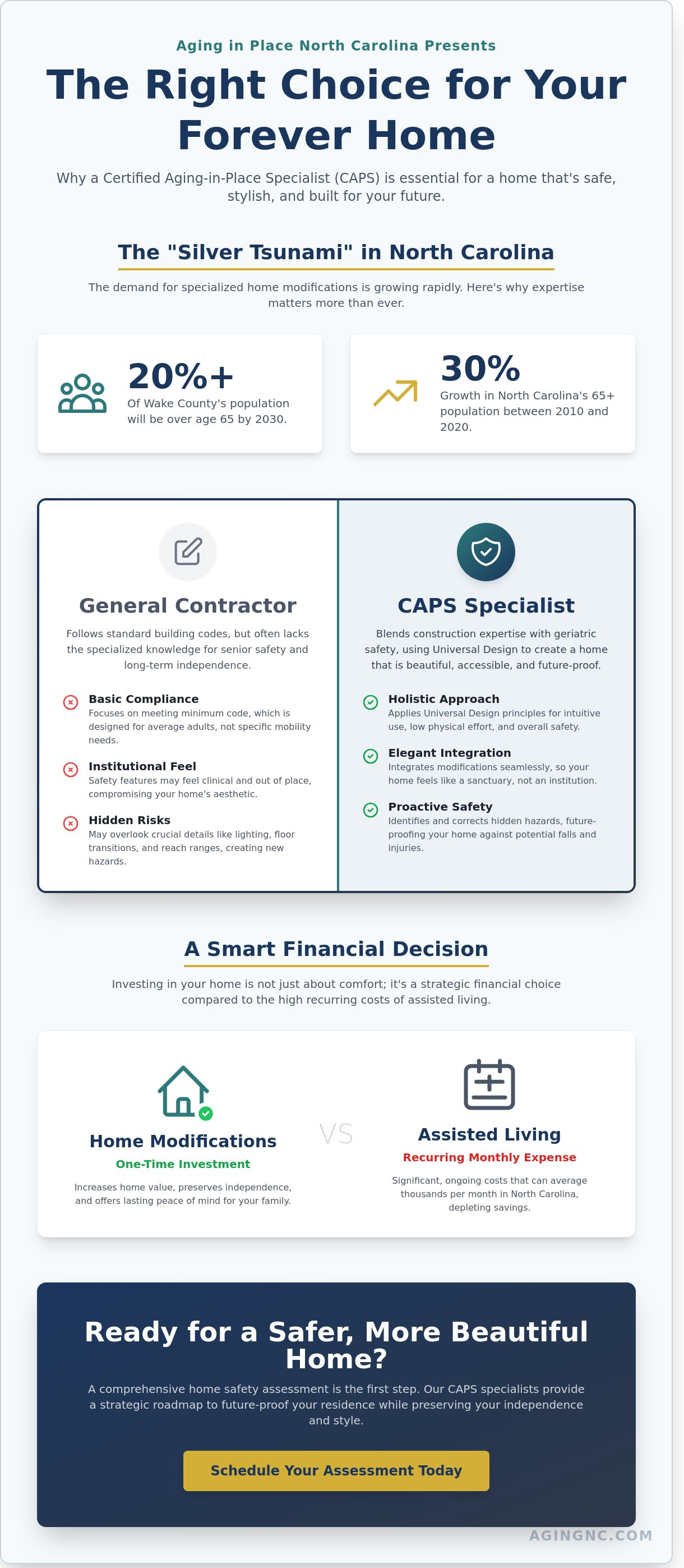
In North Carolina, where the 65 plus population grew by 30% between 2010 and 2020, CAPS professionals are becoming vital advocates for home safety. These experts are trained to identify hidden fall hazards that standard builders might miss, such as poor contrast between floor levels or inadequate lighting in transition zones. They take a holistic approach to every room. Instead of just installing a single product, they evaluate how lighting, slip-resistant flooring, and ergonomic hardware work together to create a secure environment. This meticulous attention to detail ensures your home is future-proof and ready for any mobility changes.
The "Beautiful, Not Institutional" Design Standard
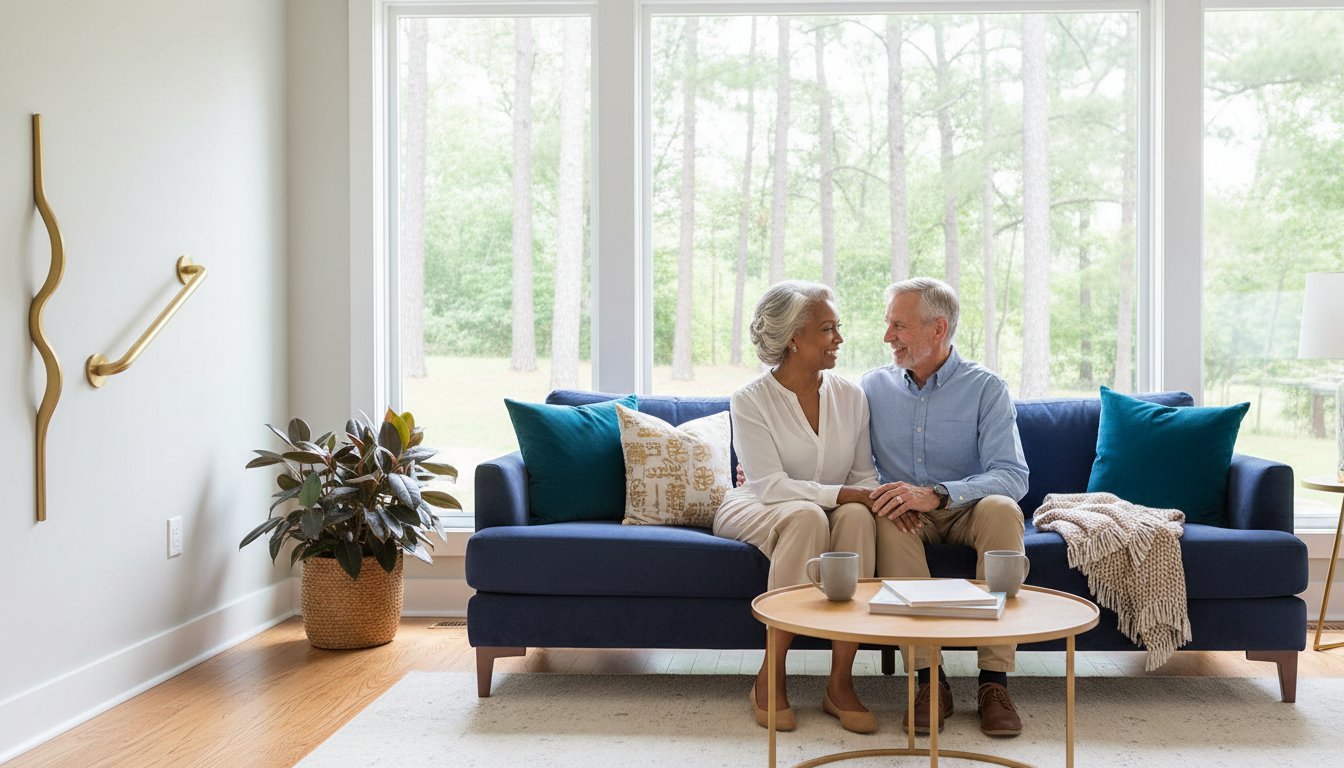
Many homeowners hesitate to start safety projects because they fear their house will begin to look like a medical facility. A CAPS professional rejects the clinical look in favor of a "beautiful, not institutional" philosophy. They use high-end finishes and clever engineering to hide accessibility features in plain sight. Modern grab bars now come in finishes like brushed gold or matte black, looking more like luxury spa accessories than hospital equipment. Zero-entry thresholds and curbless showers provide a seamless, high-end look while removing trip hazards. This focus on aesthetics isn't just about vanity; it's about preserving the psychological comfort and dignity of the homeowner. When a home feels like a sanctuary rather than a clinic, residents feel more confident and empowered.
Advocacy and Strategic Planning
A specialist acts as a trusted advisor for the whole family, helping to facilitate difficult conversations about the future. Proactive planning is the key to longevity at home. Research indicates that environmental modifications can reduce the risk of falls by approximately 26% in high-risk populations. By making these changes before a crisis occurs, you avoid the stress of "emergency" renovations. As a CAPS-certified leader in the region, Aging in Place North Carolina helps families navigate these decisions with empathy and technical precision. They don't just provide a service; they offer a long-term partnership to ensure you can stay in the home you love. If you're ready to start planning, a professional assessment is the best way to identify the most impactful upgrades for your specific needs.
The ROI of Home Modifications vs. Assisted Living Costs in North Carolina
Deciding whether to stay home or move to a facility often feels like a choice between the heart and the wallet. However, the financial data shows that staying put is usually the smarter investment. When you work with specialized aging in place contractors , you're making a one-time capital improvement to your most significant asset rather than committing to a permanent monthly expense. This shift from a "fee-for-service" model to a "home-as-an-asset" model provides long-term security for your family's estate.
The emotional return on investment is just as vital. Staying in a familiar neighborhood like Wake Forest or Holly Springs means keeping your social circles, your preferred grocery stores, and your trusted doctors. You can't put a price on the dignity of sleeping in your own bedroom. Professional modifications ensure these spaces remain beautiful and functional, avoiding the institutional feel of a care facility. We focus on making your home "future-proof" so it evolves alongside your needs.
Consider the "crisis cost" of waiting. The CDC reports that the average medical cost for a fall-related injury is approximately $30,000. A hip fracture can easily exceed $50,000 when you factor in surgery and rehabilitation. Compare that to a $15,000 bathroom remodel that eliminates trip hazards and adds reinforced grab bars. Investing in prevention today is significantly cheaper than reacting to an emergency tomorrow. It's the difference between a planned upgrade and an unplanned life upheaval.
Assisted Living Costs in the Research Triangle (2026)
By 2026, industry projections suggest the average cost for assisted living in the Raleigh and Durham area will reach approximately $6,150 per month. This totals more than $73,000 every year. These figures don't include the hidden costs of moving, such as real estate commissions, the physical toll of downsizing, or the loss of community connections. A modified primary residence offers a predictable cost structure. Once the modifications are complete, your primary expenses return to standard taxes and maintenance, providing a level of financial stability that facilities cannot match.
Home Modification Price Transparency
Budgeting for safety doesn't have to be a guessing game. While every home is unique, common modifications often fall into predictable ranges. Portable or modular ramps typically cost between $1,500 and $5,000. High-end, curbless shower conversions generally range from $10,000 to $18,000. To get an accurate budget, a professional safety assessment is the essential first step. This allows aging in place contractors to identify which upgrades are urgent and which can be phased over several years. Strategic planning helps you manage cash flow while building a safer, more comfortable environment at your own pace. As you coordinate your budget, you can learn more about Allen & Allen, Inc. to see how their credit consulting services can help you manage the financial aspects of these home modifications.
Vetting Checklist: 5 Questions to Ask Before Hiring a Contractor in Wake County
Choosing the right partner for home modifications is about more than just construction; it's about finding a steward for your future independence. You deserve a home that remains a sanctuary of dignity and joy. Before you sign a contract, use these five questions to ensure your chosen aging in place contractors align with your vision for a safe, beautiful home.
-
Are you licensed by the North Carolina Licensing Board for General Contractors (NCLBGC)? In North Carolina, any project costing $30,000 or more requires a specific license. Verify their insurance coverage includes both general liability and workers' compensation to protect your assets.
-
What is your specific experience with universal design? Ask if they hold a Certified Aging-in-Place Specialist (CAPS) or Universal Design Certified Professional (UDCP) designation. This ensures they understand how to blend safety with style.
-
Can you provide three references from recent projects in Cary, Apex, or Morrisville? Local references confirm the contractor understands Wake County building codes and maintains a reputation for community trust.
-
Who is my daily point of contact for sub-contractors? Clear communication prevents "contractor fatigue." You should know exactly who is entering your home and who is responsible for the project timeline.
-
Are you willing to collaborate with my third-party safety evaluator? A reputable contractor welcomes the insights of a safety professional to ensure the final result meets your holistic needs.
Verifying Credentials and References
Expertise in senior-specific projects is a specialized skill set. When you visit a contractor's website, look for the CAPS or UDCP digital badges. These certifications prove the team understands the unique mobility and sensory needs of older adults. Ask to see a portfolio of accessible bathrooms they've completed. Look for "beautiful, not institutional" details like curbless showers that use high-end tile rather than plastic inserts. Finally, check the Better Business Bureau (BBB) of Eastern North Carolina to review their 12 month track record for dispute resolution.
Understanding the Project Management Lifecycle
A structured timeline is essential to minimize disruption for seniors who value their daily routines. Professional aging in place contractors provide a clear schedule that accounts for every phase from demolition to the final walkthrough. A dedicated project liaison acts as a buffer, handling the logistics of sub-contractors so the homeowner doesn't feel overwhelmed. We also recommend asking about post-project support. Our "Fix-It Technician" model ensures that after the major renovation is complete, you have a trusted professional available for ongoing maintenance to keep your home future-proof and functional.
Ready to start your journey toward a safer, more beautiful home? Schedule a professional home safety assessment today to identify the right modifications for your needs.
Strategic Project Management: How Aging in Place NC Bridges the Gap
Hiring aging in place contractors is often a stressful decision made during a family crisis. We change that dynamic by acting as your dedicated project manager and personal advocate. Aging in Place North Carolina doesn't just swing hammers; we bridge the gap between healthcare needs and home construction. Our team ensures that every modification serves your specific mobility goals while maintaining the warmth and character of your residence. We take the burden of coordination off your shoulders, overseeing the technical details so you can focus on your family.
From Safety Assessment to Strategic Plan
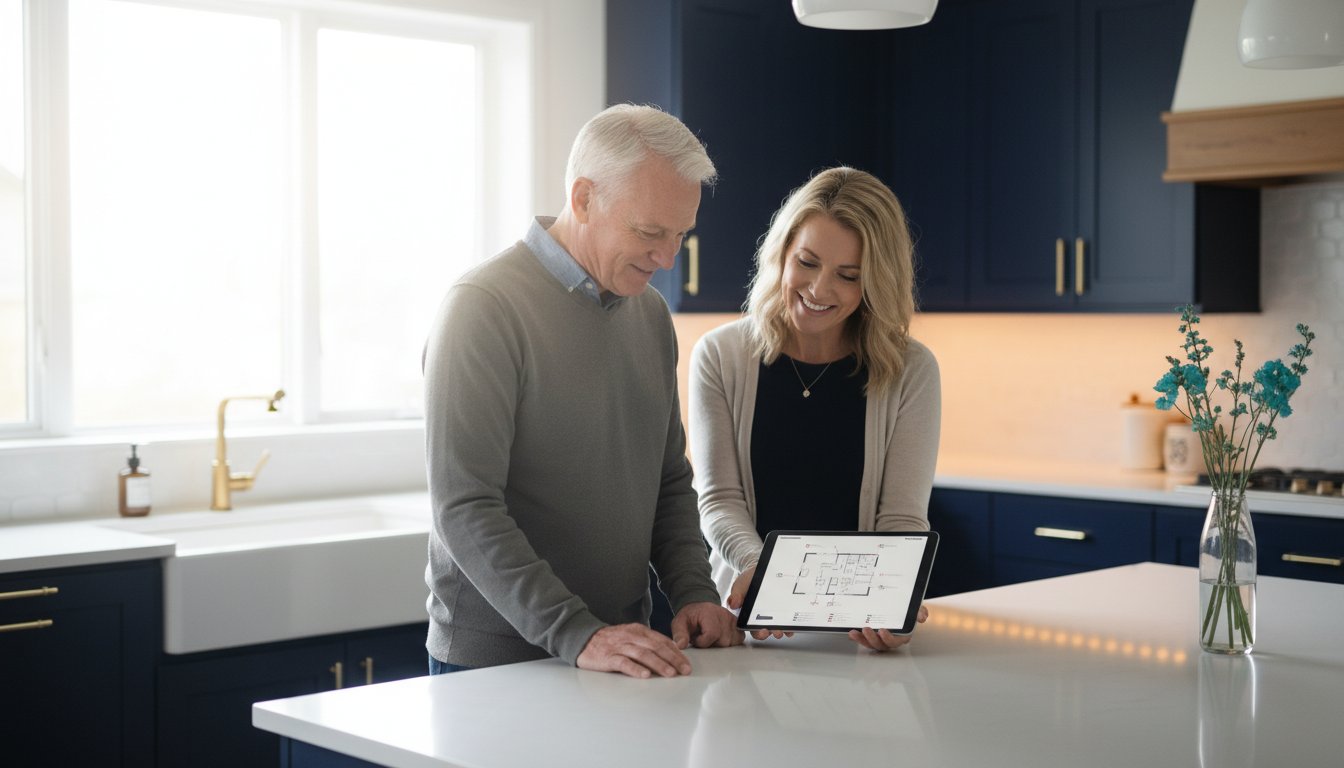
Most contractors look at a bathroom and see a standard renovation project. We look at it and see a potential fall risk. Our process begins with a Comprehensive Home Safety Assessment that evaluates every room through a specialized lens. We identify specific hazards that general builders often overlook, such as 1/2-inch floor height transitions or inadequate lighting levels in high-traffic corridors. This assessment produces a strategic plan, which acts as a roadmap for the family to prioritize high-impact changes first.
Our focus remains strictly on environmental safety rather than medical intervention. This distinction keeps the project grounded in home improvement. By planning ahead, we prevent the "institutionalization" of your home. We believe that modifications should be beautiful, not clinical. Every grab bar, ramp, or widened doorway is integrated with a sense of craftsmanship that respects your home's aesthetic integrity. For homeowners researching specialized accessibility equipment, Indiana Home Safety & Mobility serves as a prime example of how mobility solutions can be professionally implemented to maintain that balance. It's about future-proofing your space so it remains a sanctuary, not a facility.
Your Partners in Independence
True independence is a family effort. We don't just finish the construction and walk away. Our "Whole-Family Training" is a core part of our service that empowers everyone involved. We spend time with seniors and their caregivers to ensure everyone feels confident using new accessibility features. Whether it's mastering a new smart-home lighting system or understanding the proper way to navigate a modified entrance, we stay until you're comfortable. You won't be left to figure things out on your own once the aging in place contractors have left the site.
We are dedicated to helping Raleigh residents live the life they want in the place they love. You deserve a home that supports your journey without sacrificing its beauty or your dignity. Our goal is to provide the technical expertise and the emotional support needed to make aging in place a reality for your family.
Ready for peace of mind? Schedule your Comprehensive Home Safety Assessment today.
Future-Proof Your Home for a Lifetime of Independence
Choosing the right aging in place contractors in 2026 is about more than simple renovations; it's a strategic investment in your long-term autonomy. By prioritizing CAPS-certified experts like Chris and Amy Gaddy, you ensure every modification meets the rigorous safety and accessibility standards established by the National Association of Home Builders. These thoughtful updates provide a substantial alternative to the rising costs of residential care in North Carolina, where Genworth Cost of Care data shows facility rates continue to climb annually. Our family-owned team provides dedicated oversight to ensure your home remains beautiful, not institutional. We're proud to serve families throughout Raleigh, Cary, and the wider Research Triangle with solutions that blend seamlessly into your existing decor. You've spent years building a life in the home you love, and it's our mission to help you stay there with absolute confidence. Take the first step toward a safer, more comfortable future today.
Frequently Asked Questions
How do I find a CAPS-certified contractor near Raleigh, NC?
You can find a CAPS-certified professional by searching the National Association of Home Builders (NAHB) online directory. This database allows you to filter by zip code to find aging in place contractors within the Raleigh-Durham area. Verifying this credential ensures your contractor has specific training in universal design and the unique needs of seniors. It's a proactive step toward creating a home that supports your independence for years to come.
What is the average cost of an aging-in-place home modification?
According to HomeAdvisor data from 2023, the national average cost for aging-in-place remodeling projects ranges from $3,000 to $15,000. Small projects like installing grab bars might cost $100 to $500, while larger renovations like walk-in tubs or widening doorways require a larger investment. These modifications future-proof your living space; they turn your current house into a forever home that remains safe and functional as your needs change.
Do I need a permit for a wheelchair ramp or walk-in tub in Wake County?
Yes, Wake County typically requires a building permit for permanent wheelchair ramps and plumbing permits for walk-in tub installations. According to the City of Raleigh's Development Services, any project that involves structural changes or new plumbing lines must be inspected to ensure safety. Working with experienced aging in place contractors ensures these legal requirements are handled correctly; this gives you peace of mind that your home remains compliant and safe.
Can aging-in-place modifications increase my North Carolina home value?
Accessibility features often increase a home's appeal to a broader market, especially since 10,000 Baby Boomers reach retirement age every day. While specific ROI varies, the National Association of Realtors (NAR) notes that universal design elements like curbless showers and first-floor primary suites are highly desirable. These upgrades don't just add financial value; they provide a seamless transition for any future resident, making your property a standout in the North Carolina market.
What is the difference between a home safety assessment and a home inspection?
A home safety assessment focuses on how you interact with your environment, while a home inspection evaluates the building's structural integrity and systems. Our holistic assessments identify specific fall risks and mobility barriers tailored to your physical needs. In contrast, an inspector looks at the roof, wiring, and foundation. By choosing an assessment, you're getting a personalized roadmap for independence rather than just a technical report on the house's condition.
How long does a typical bathroom modification for senior safety take?
A typical bathroom modification for senior safety takes between 5 to 15 business days to complete. Simple updates like installing high-contrast grab bars can be done in a single afternoon. More complex projects, such as converting a traditional tub into a beautiful curbless shower, require more time for plumbing and tiling. We work efficiently to minimize disruption, ensuring your daily routine returns to normal as quickly as possible.
Does insurance or Medicare cover the cost of aging in place contractors?
Traditional Medicare does not cover the cost of home modifications because they're considered home improvements rather than medical equipment. However, some Medicare Advantage plans and long-term care insurance policies began offering limited coverage for safety items like grab bars in 2019. You should check your specific policy details or look into North Carolina's CAP/DA waiver program, which provides financial assistance for home modifications to eligible seniors.
How can I make my home safer without it looking like a hospital?
We believe your home should be beautiful, not institutional, so we use high-end finishes that blend safety with style. You can choose designer grab bars that double as towel racks or elegant wet rooms with decorative slip-resistant tile. These "invisible" modifications provide the support you need without sacrificing the aesthetic of your home. It's about creating a space that feels like a sanctuary, where safety and sophisticated design live together perfectly.