Home Aid for Seniors in Raleigh: A How-To Guide for Safe Aging in Place
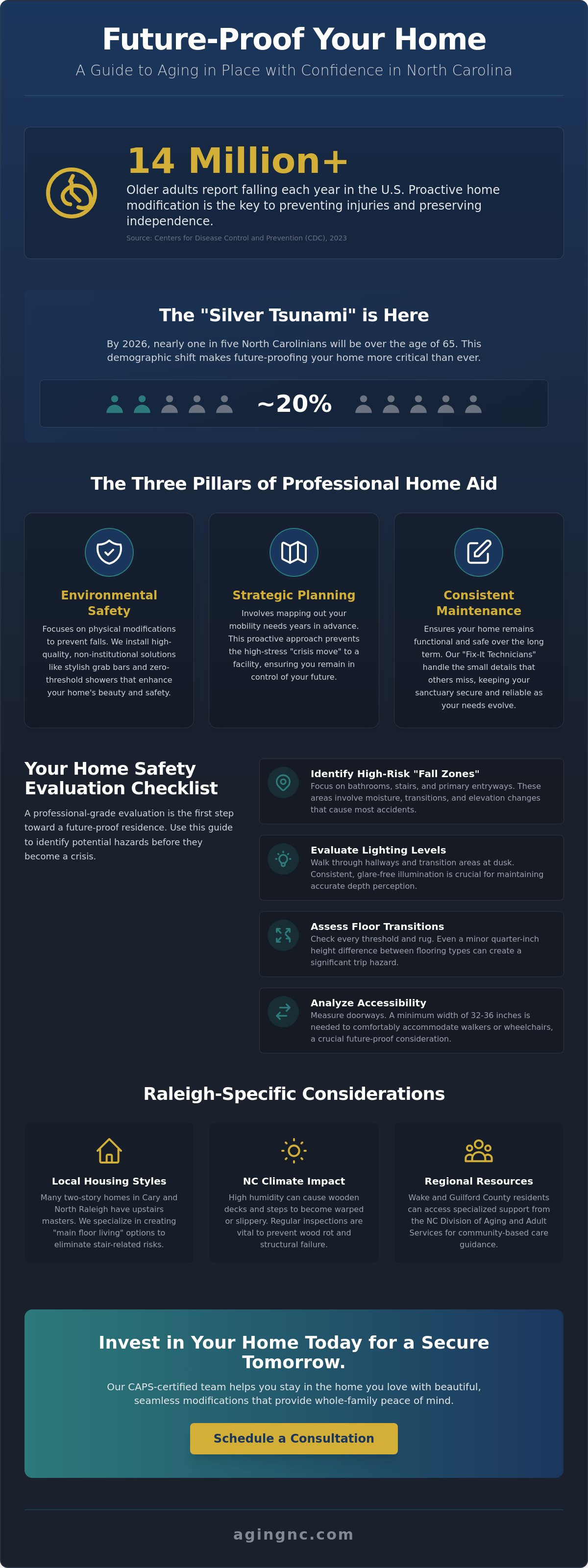
What if the family home you love could actually become safer and more comfortable as you age, rather than a source of constant worry for your children? For many families in the Research Triangle, the transition to needing extra support feels like a choice between independence and safety. According to 2023 data from the CDC, more than 14 million older adults report falling each year, which often triggers an immediate, anxious search for a home aid for seniors . You deserve to feel confident that your environment supports your lifestyle instead of restricting it.
We understand that you want a home that remains beautiful, not institutional. This guide provides a clear roadmap to identify, evaluate, and implement the right modifications to ensure you can age in place with dignity. You'll learn how to distinguish between medical requirements and home safety upgrades while creating a future-proof environment for your whole family. We'll explore professional local strategies to transform your living space into a secure sanctuary that preserves both your safety and your most cherished memories.
Key Takeaways
- Understand why proactive planning is essential for the "Silver Tsunami" in Raleigh to ensure long-term comfort and dignity.
- Learn how to conduct a professional-grade home safety evaluation by identifying high-risk fall zones and optimizing lighting in transition areas.
- Discover how strategic home aid for seniors can often replace the need for expensive medical care through smart, environmental modifications.
- Master the process of vetting specialized contractors to ensure your modifications are beautiful, functional, and meet rigorous safety standards.
- Explore the "Future-Proof" philosophy to invest in your home today, securing peace of mind and independence for your family’s tomorrow.
Understanding Home Aid for Seniors in the Research Triangle
Stay in the home you love. For most Raleigh residents, this isn't just a preference; it's a vital part of their identity and dignity. Effective home aid for seniors involves a sophisticated blend of personal assistance and environmental safety. It's a holistic approach that ensures your physical surroundings support your changing needs rather than creating obstacles. By 2026, nearly 20 percent of North Carolinians will be over the age of 65. This demographic shift, often called the Silver Tsunami, makes proactive planning essential for families in Wake County right now.
The core of successful Aging in place is the transition from reactive repairs to proactive future-proofing. Many homeowners wait for a fall or a medical crisis before making changes. However, waiting creates unnecessary risk and high-pressure decisions. Future-proofing involves identifying potential hazards, like high thresholds or poor lighting, before they lead to an injury. We believe your home should remain a beautiful sanctuary. Our goal is to ensure modifications feel like high-quality craftsmanship, not institutional additions. This focus on aesthetics helps preserve the emotional weight of independence and the joy of living in your own space.
The Three Pillars of Professional Home Aid
Professional home aid for seniors rests on three foundational pillars that provide whole-family peace of mind. First, environmental safety focuses on physical modifications to prevent falls, such as installing grab bars that match your bathroom's decor. Second, strategic planning involves mapping out your mobility needs years in advance. This prevents the "crisis move" to a facility. Finally, consistent maintenance ensures your home remains functional and safe. Our "Fix-It Technicians" handle the small details that others miss, ensuring your sanctuary stays secure and reliable as you age.
Raleigh-Specific Considerations for Aging in Place
- Local Housing Styles: Many traditional two-story homes in Cary and North Raleigh feature master bedrooms on the second floor. We look for ways to create "main floor living" options to eliminate stair-related risks.
- NC Climate Impact: North Carolina's high humidity and seasonal changes can cause wooden decks and outdoor steps to warp or become slippery. Regular inspections are vital to prevent wood rot that could lead to structural failure.
- Regional Resources: Residents in Wake and Guilford Counties have access to specialized local support, including the North Carolina Division of Aging and Adult Services, which provides guidance on community-based care.
Choosing to stay home is a bold statement of independence. By combining professional expertise with a deep empathy for the homeowner's experience, we help Raleigh seniors live the life they want. Our CAPS-certified team ensures that every modification is seamless and durable, providing a foundation for a safe and confident future.
How to Conduct a Comprehensive Home Safety Evaluation
Stay in the home you love by taking a proactive approach to your environment. Effective home aid for seniors begins with a clear-eyed look at potential risks before they lead to an injury. According to the Centers for Disease Control and Prevention, three million older adults are treated in emergency departments for fall injuries each year. A structured evaluation is the first step toward creating a "future-proof" residence that balances safety with your personal style.
- Step 1: Identify high-risk "fall zones." Focus your attention on the bathroom and primary entryways. These areas involve frequent transitions, moisture, or elevation changes that account for the majority of household accidents.
- Step 2: Evaluate lighting levels. Walk through hallways and stairs at dusk. Transition areas require consistent, glare-free illumination to ensure depth perception remains accurate as you move between rooms.
- Step 3: Assess floor transitions. Check every threshold and rug. Even a small quarter-inch height difference between a carpeted room and a hardwood hall can create a significant trip hazard.
- Step 4: Analyze accessibility for mobility aids. Measure your doorways. Most standard interior doors are only 30 inches wide, but a minimum of 32 to 36 inches is necessary to comfortably accommodate walkers or future wheelchairs.
Planning for these changes is a core part of Growing Older at Home, as it allows you to make modifications on your own terms rather than during a medical crisis.
The CAPS Advantage in North Carolina
A Certified Aging-in-Place Specialist (CAPS) is a professional trained by the National Association of Home Builders to identify specific barriers that family members often miss. While a standard handyman might suggest a simple repair, a CAPS professional performs a holistic safety audit. They look at the "why" behind a movement, ensuring that every modification is beautiful, not institutional. This specialized expertise ensures your home remains a sanctuary of dignity rather than a clinical space.
Room-by-Room Safety Checklist
Bathroom: Move beyond basic suction-cup bars. We recommend permanent grab bar placement anchored into wall studs and the application of non-slip surfacing techniques that maintain the aesthetic of your tile while providing essential grip.
Kitchen: Focus on ergonomics. Replace deep lower cabinets with pull-out shelving and ensure appliance controls are accessible from a seated position to prevent overreaching.
Exterior: Raleigh-style porches often feature uneven brickwork or steep wooden steps. Stabilizing these walkways and adding dual handrails ensures you can enjoy your outdoor space with total confidence.
If you aren't sure where to start, scheduling a professional home assessment can provide the roadmap you need for total peace of mind.
Environmental Support vs. Medical Care: Which Do You Need?
Families often assume a medical professional is the first step when a loved one starts struggling at home. They think, "We need a nurse," when the reality is they need a ramp or better lighting. This confusion is common, but identifying the right type of home aid for seniors can save thousands of dollars and prevent unnecessary stress. Environmental aid focuses on the structure of the house, while medical care focuses on the body. For families seeking a comprehensive approach to independence, Mighty Mentors WA offers personalized mentoring and in-home care services that illustrate how social support can complement a safe living environment. Investing in professional modifications provides a higher return on independence than premature clinical care. While a home health aide in North Carolina costs a median of $4,767 monthly according to 2021 Genworth data, a permanent accessibility upgrade is a one-time investment that often pays for itself in just three months.
Future-proofing a home isn't about creating a sterile clinic. It's about dignity. We believe modifications should be beautiful, not institutional. High-quality craftsmanship ensures that grab bars look like high-end fixtures and ramps blend into the existing architecture. This aesthetic focus preserves the emotional integrity of the home, helping seniors feel like they're living in their sanctuary rather than a facility. By addressing physical barriers early, you extend the period of independence and delay the need for intensive medical oversight.
When Environmental Aid is the Priority
When mobility or vision begins to decline, the house itself often becomes the primary hazard. Data shows that 1 in 4 Americans aged 65 or older falls each year, making falls the leading cause of injury-related ER visits. By prioritizing environmental aid, you address these risks before a crisis occurs. This proactive approach is a core part of the National Institute on Aging guide to aging in place, which emphasizes that early modifications can prevent the need for more intensive medical interventions. Strategic planning for home aid for seniors includes:
- Installing non-slip flooring and removing trip hazards like high thresholds.
- Upgrading lighting to 100-watt equivalent LEDs to assist with vision impairment.
- Adding CAPS-certified bathroom modifications to ensure safety during the most dangerous daily tasks.
Integrating Care: The Holistic Approach
A safe home environment doesn't replace medical care; it empowers it. When a home is future-ready, a professional caregiver can focus on the person rather than struggling with a cramped bathroom or steep stairs. We coordinate with local Raleigh health providers, such as those within the Duke Health or WakeMed networks, to ensure that our modifications meet specific recovery or chronic care needs. Our whole-family safety training ensures that everyone, from adult children to professional aides, knows how to use the new features effectively; for caregivers seeking the highest standards of safety, resources like a Manual handling course Dublin from Guardian Safety illustrate the specialized training required to safely assist seniors with limited mobility. This holistic strategy creates a seamless transition as needs evolve, ensuring the home remains a place of joy and safety for years to come.
Implementing Home Modifications: A Strategic How-To
Hiring a standard general contractor for accessibility projects often leads to disappointing results. Most builders focus on meeting minimum building codes, but those codes are designed for the average able-bodied adult. They don't account for the unique mobility patterns or vision changes that come with age. Effective home aid for seniors requires a specialist who understands the difference between a standard renovation and a future-proof modification. According to the National Association of Home Builders, 76% of adults over age 50 want to remain in their current homes. Achieving this requires a partner who prioritizes human-centric design over simple construction.
Budgeting for these changes shouldn't feel like a loss of equity. A 2024 report from the Joint Center for Housing Studies at Harvard University indicates that well-executed accessibility features can maintain or even increase a property's market appeal. The key is to avoid an institutional look. We focus on high-end finishes and seamless integration so your home feels like a sanctuary, not a clinic. Phasing the work also helps manage costs. We typically recommend starting with "high-traffic" safety zones like the primary bathroom and the main entrance before moving to secondary areas like guest rooms or basements.
Selecting the Right Modifications for NC Homes
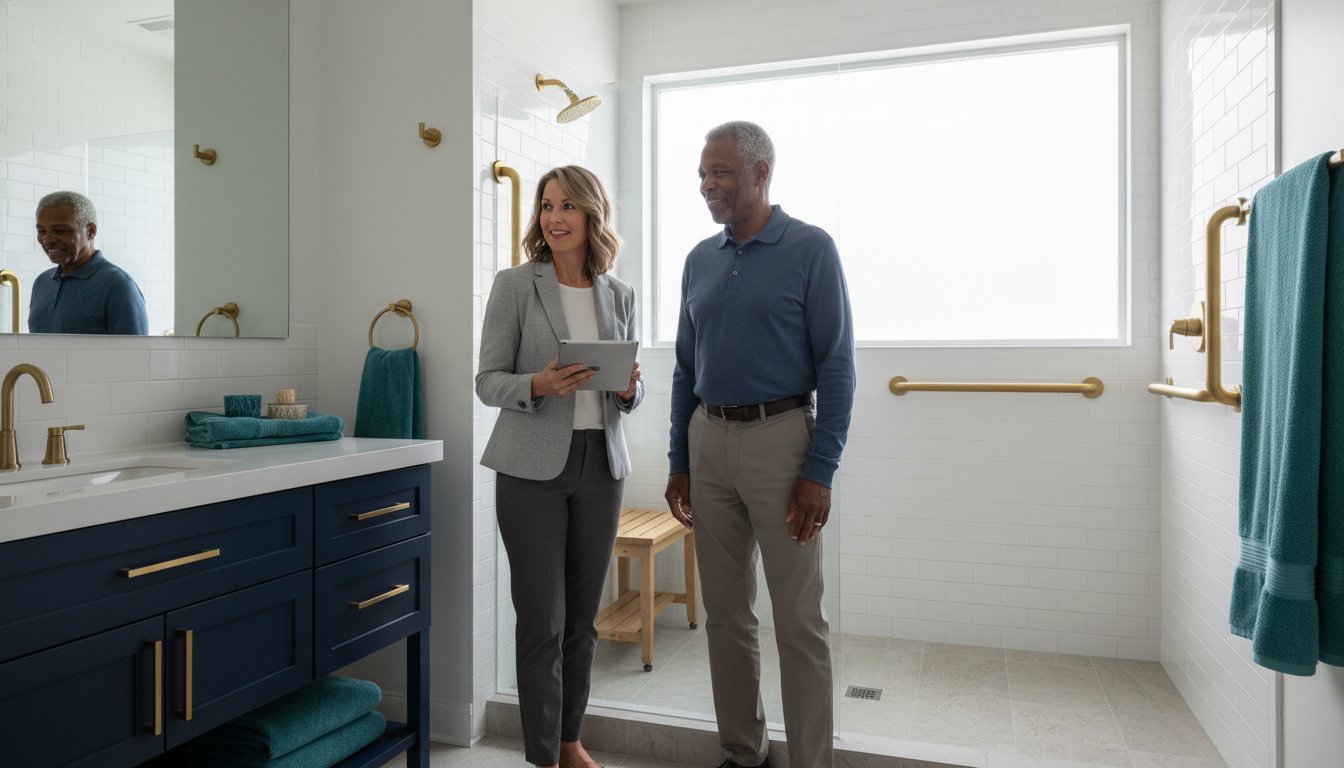
North Carolina architecture, from Raleigh's mid-century ranches to traditional two-story homes in the Research Triangle, presents specific challenges. We implement low-profile ramps and zero-threshold entries that complement your home's curb appeal. Smart home integration is another vital tool for independence. We install motion-activated lighting and voice-controlled thermostats to reduce the need for reaching or straining. These technology-driven solutions provide 24/7 safety monitoring while blending perfectly with your existing decor. We select finishes like brushed gold grab bars or designer slip-resistant tiling to ensure every update is beautiful, not institutional.
Navigating the Project Management Process
Managing a home renovation is exhausting for any family. Our Aging in Place specialists act as your primary liaison, overseeing every specialized builder on the job. We ensure every modification adheres to strict ADA and CAPS (Certified Aging in Place Specialist) safety benchmarks. This professional oversight prevents costly mistakes, such as installing a grab bar into drywall without proper blocking. Every project concludes with a meticulous final walkthrough. We test every drawer, light switch, and ramp for ease of use. This process ensures the home aid for seniors we provide is durable and provides long-term peace of mind for the whole family.
Ready to transform your space into a safe, beautiful sanctuary? Schedule a home safety assessment with our expert team today.
Strategic Planning with Aging in Place North Carolina
Our local mission focuses on a simple, powerful belief: your home should remain your sanctuary regardless of your age. We serve families throughout Raleigh, Cary, and Greensboro, providing the specialized expertise needed to navigate the complexities of aging. We don't just fix problems; we anticipate them. Our "Future-Proof" philosophy encourages you to invest in your home today to secure your peace of mind for the next decade. By taking a proactive stance, you can avoid the 25% increase in household injury risks that often occur when environments aren't adapted to changing mobility needs. We help you move from a state of constant anxiety to a clear, actionable safety roadmap.
Professional Assessments in the Research Triangle
Ongoing Maintenance for Continued Safety
Safety isn't a one-time project; it's a continuous commitment. Our "Fix-It Technician" program is designed to handle the small, often overlooked repairs that prevent major accidents. We take care of the tasks that have become difficult or dangerous for you to manage alone, such as changing high-ceiling bulbs or securing loose carpet edges. For residents in Wake Forest and Holly Springs, we provide seasonal check-ups to ensure your home remains resilient against North Carolina's weather changes. These regular visits provide a consistent layer of home aid for seniors , keeping your living space in peak condition year-round.
You shouldn't have to wait for a fall to start thinking about home modifications. Taking action now preserves your independence and protects your legacy. Our team is ready to guide you through every step of this journey, from the initial evaluation to the final installation. Schedule your Comprehensive Home Safety Assessment today and start building a safer, more confident future in the home you love.
Take the Next Step Toward a Future-Proof Home
Securing your independence starts with a clear plan for your living environment. You've learned how a professional safety evaluation identifies hidden risks and why distinguishing between environmental support and medical care is vital for long-term success. Finding reliable home aid for seniors in the Research Triangle means more than making repairs; it's about a holistic strategy for longevity. Our family-owned and operated team brings local expertise to every project, ensuring your modifications meet the high standards of CAPS-certified specialists recognized by the National Association of Home Builders.
We're committed to a "beautiful, not institutional" design philosophy because your home shouldn't feel like a clinical facility. By focusing on high-quality craftsmanship and seamless integration, we help you maintain your lifestyle without compromise. You've worked hard for your home, and we're here to help you stay there with confidence and peace of mind. Let's work together to create a space that's safe, stylish, and ready for the years ahead.
Frequently Asked Questions
What is the difference between home aid and home health care?
Home aid for seniors focuses on non-medical support like meal preparation, light housekeeping, and assistance with daily activities, while home health care provides clinical services from licensed medical professionals. If your parent needs help with bathing or grocery shopping, home aid is the right choice. For families with pets, utilizing specialized support like Mission Cats In-Home Care can further reduce household stress by ensuring animals are cared for in their own familiar surroundings. Home health involves wound care or physical therapy prescribed by a doctor. Choosing the right support ensures your loved one stays independent while receiving the specific level of care they require.
Does Medicare cover home safety assessments or modifications in North Carolina?
Medicare typically doesn't pay for the actual installation of grab bars or ramps, but it may cover a home safety evaluation if it's part of a prescribed occupational therapy plan. According to Medicare.gov, durable medical equipment like hospital beds is covered, yet permanent home fixtures are usually excluded. You might find financial assistance through North Carolina's CAP/DA waiver program, which helps eligible seniors fund necessary home modifications to prevent nursing home placement.
How much do typical senior home modifications cost in the Raleigh area?
Home modification costs in Raleigh vary based on the project scope, with simple grab bar installations starting around 150 dollars and full bathroom remodels often exceeding 10,000 dollars. Data from HomeAdvisor shows that the average North Carolina homeowner spends between 800 and 3,000 dollars on accessibility upgrades. We focus on high-impact changes that provide the best return on safety. Investing in these future-proof solutions prevents the high cost of assisted living facilities.
What are the most important home aids for a senior living alone?
The most critical home aid for seniors living alone includes high-lumen LED lighting, non-slip flooring, and strategically placed grab bars. Falls account for 3 million emergency room visits annually among older adults according to CDC data, so eliminating trip hazards is our first priority. We also recommend smart home integration like voice-activated lights and automated thermostats. These tools provide peace of mind for the whole family, knowing the home environment is proactive rather than reactive.
Can home modifications be done without making the house look like a hospital?
You can absolutely modify your home without it feeling institutional by choosing designer finishes and integrated hardware. We believe safety should be beautiful, so we select grab bars that double as decorative towel racks and curbless showers with high-end tile. Your home remains a sanctuary, not a clinic. Our CAPS-certified team ensures every modification blends seamlessly with your existing decor. You don't have to sacrifice your personal style to achieve a safe, functional living space.
How do I know if my parent needs a professional home safety evaluation?
You should schedule a professional home safety evaluation if your parent has experienced a fall or shows visible hesitation while navigating stairs. Statistics from the CDC indicate that 25 percent of seniors fall each year, making early intervention vital. If you notice they're "furniture surfing" to stay balanced, it's time for an expert assessment. Our holistic approach identifies hidden risks in every room, giving you a clear roadmap for a safer, more confident future.
What local North Carolina areas do you provide safety assessments in?
We provide comprehensive home safety assessments throughout the Research Triangle, including Raleigh, Durham, and Chapel Hill. Our team also serves families in Cary, Wake Forest, and Apex to ensure local seniors can age in place with dignity. Whether you live in a historic home or a modern townhome, we bring our specialized expertise to your neighborhood. We're committed to helping North Carolina families stay in the homes they love through every stage of life.