Home Modifications for Elderly Residents in Raleigh & the Research Triangle: The 2026 Guide
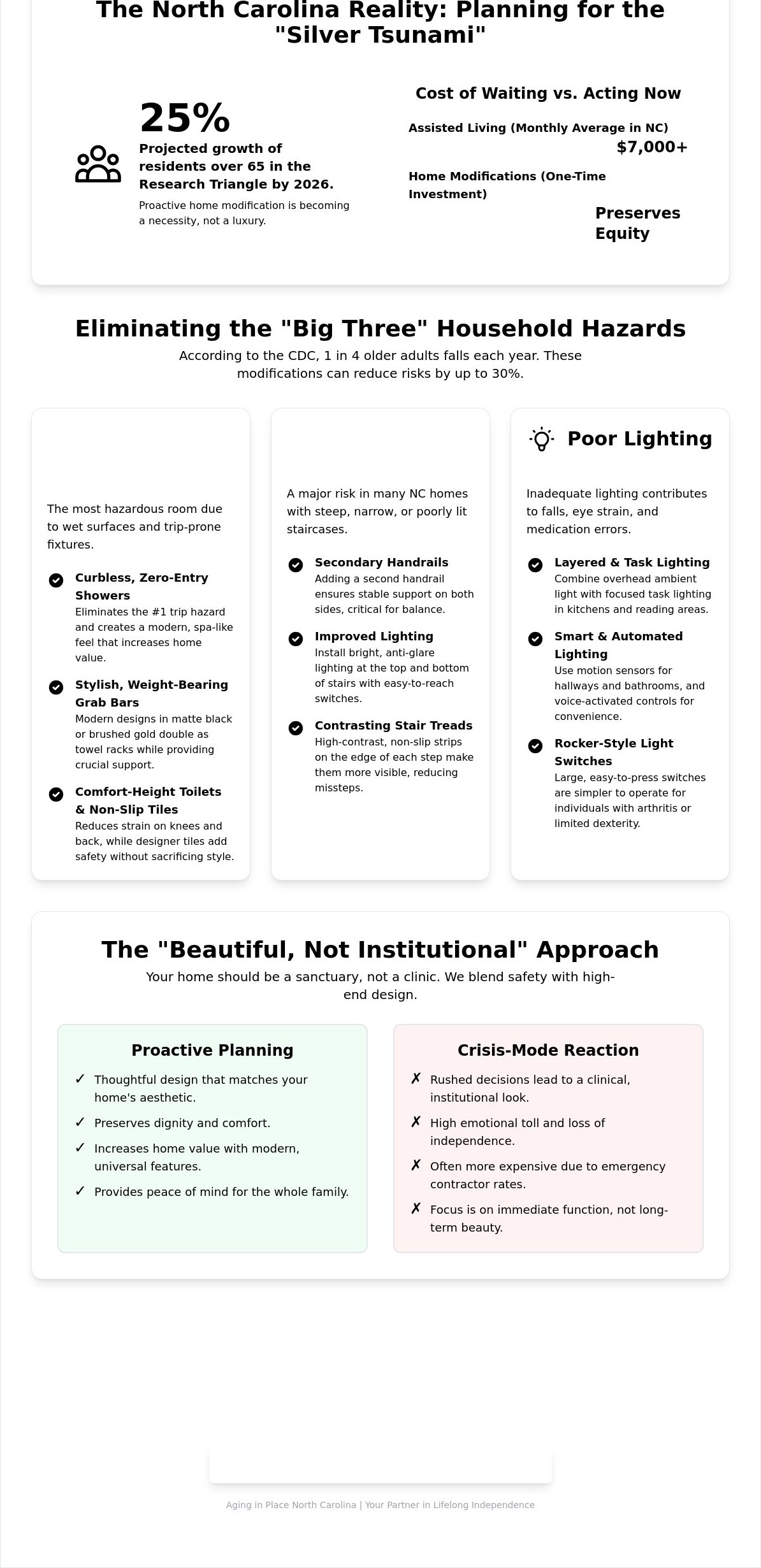
Last Tuesday, a family in North Hills realized their mother's beloved 1980s colonial was no longer the sanctuary it once was after she narrowly avoided a slip in the master bath. You likely share that same knot in your stomach every time the phone rings late at night. It's a common reality across the Research Triangle, where the population of residents over age 65 is projected to grow by 25% by 2026. You want your parents to stay in the neighborhood they love, but the fear of a fall or the rising $7,000 monthly average cost of assisted living in North Carolina creates constant anxiety.
We believe that home modifications for elderly residents should be beautiful, not institutional. You can create a future-proof space that preserves both dignity and your home's aesthetic value. This 2026 guide explores how to implement seamless safety features, from zero-entry showers to smart lighting, while finding trusted CAPS-certified contractors right here in Raleigh. We'll show you how to transform a house into a lifelong haven that supports independence and provides your whole family with lasting peace of mind.
Key Takeaways
- Learn why proactive planning for North Carolina’s "Silver Tsunami" beats crisis-mode renovations, helping you maintain your independence and peace of mind.
- Discover how to implement high-impact home modifications for elderly residents using modern design trends like matte black and brushed gold to ensure your space remains beautiful, not institutional.
- Identify the "Big Three" household hazards—bathroom slips, stair falls, and poor lighting—and get a room-by-room guide to eliminating these risks.
- Master the 5-step process for a successful home project in the Research Triangle, starting with why a professional CAPS-certified assessment is your mandatory first step.
- Explore how a holistic, whole-family approach to environmental maintenance and safety training can future-proof your home for long-term comfort.
Why Home Modifications for the Elderly are Essential in Raleigh and the Research Triangle
Aging in place home modifications are intentional environmental changes that support long-term residential safety and autonomy. These upgrades transform a standard house into a future-proof sanctuary, allowing you to remain in the neighborhood you love. In North Carolina, we're witnessing a demographic shift known as the Silver Tsunami. By 2026, the population of residents over age 65 in Wake and Durham counties is projected to reach record levels, making proactive home planning a necessity rather than a luxury.
Traditional architecture in the Research Triangle often presents unique hurdles. Many homes in Cary and North Raleigh feature steep, narrow staircases, sunken dens, and high-threshold entries. While these features add character, they often become significant barriers to mobility. Transitioning your space early ensures you aren't forced into a crisis-mode renovation following an injury. Choosing home modifications for elderly residents now allows for thoughtful design that looks beautiful, not institutional.
The financial logic is also compelling. When you evaluate the one-time cost of accessibility upgrades against the recurring Raleigh assisted living expenses, the savings are substantial. Professional modifications help you preserve your home equity while avoiding the high monthly fees associated with senior care facilities.
The High Cost of Waiting: Prevention vs. Crisis
A single fall in a bathroom or on an outdoor step can trigger a traumatic, forced move to a senior facility. The prevention window is the strategic timeframe when a homeowner is still mobile enough to actively lead the design of their safety upgrades. Waiting until a medical emergency occurs often results in rushed, clinical-looking additions that don't match your home's aesthetic. The emotional toll of losing independence due to an avoidable hazard is often more painful than the physical injury itself.
Aging in Place in North Carolina: Local Trends for 2026
Intergenerational living is a growing trend across the Triangle as families seek to stay connected. We're seeing more residents in Wake County take advantage of updated zoning laws that allow for "granny flats" or Accessory Dwelling Units (ADUs). These spaces provide a perfect balance of privacy and proximity. To navigate these complex projects, many families now partner with CAPS (Certified Aging-in-Place Specialists). These experts ensure that home modifications for elderly family members are integrated with high-quality craftsmanship, making the home safer for everyone from toddlers to grandparents.
Essential Home Modifications: A Room-by-Room Guide for North Carolina Seniors
Future-proof your home today to ensure it remains a place of comfort for years to come. Effective home modifications for elderly residents focus on Universal Design, a philosophy that makes spaces safer for everyone regardless of age or ability. By prioritizing "beautiful, not institutional" upgrades, you maintain your home's aesthetic while gaining vital peace of mind. We target the "Big Three" hazards that lead to most home accidents: bathroom slips, stair falls, and poor lighting. According to the CDC, one out of four older adults falls each year; however, proactive changes can reduce these risks by up to 30%.
Bathroom Safety: Beyond the Plastic Bench
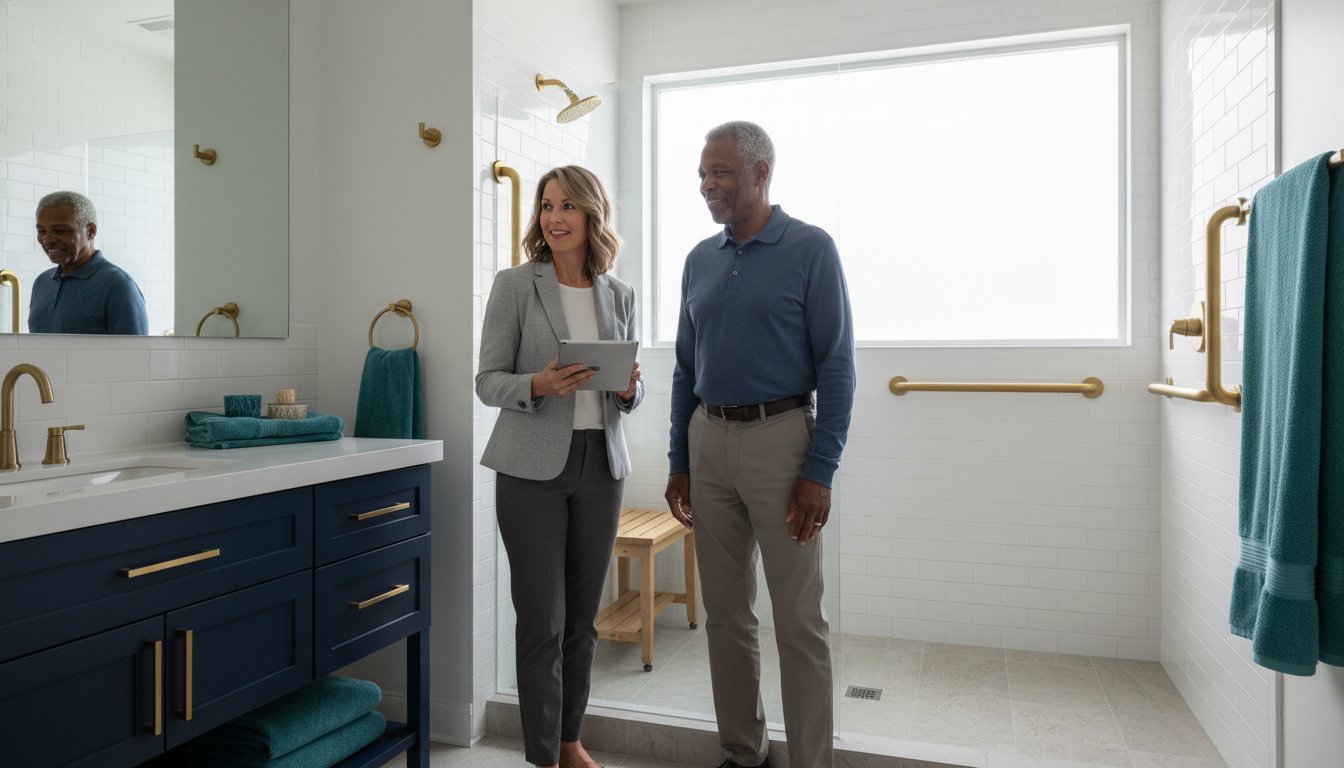
The bathroom is often the most hazardous room in the house due to wet surfaces and tight spaces. We recommend curbless walk-in showers that eliminate the traditional 5-inch curb, removing a major trip hazard while creating a high-end, spa-like atmosphere. These modifications often increase home value because of their modern appeal. Strategic grab bar placement no longer requires a clinical look. Modern fixtures function as high-end towel racks but provide the weight-bearing support necessary for stability. When reviewing a remodeling checklist for aging in place, consider adding comfort-height toilets and non-slip designer tiles to blend safety with luxury.
Kitchen and Living Area Accessibility
Kitchen functionality changes as our reach and grip strength evolve. Pull-down shelving brings items from high cabinets directly to you, while lever-style door handles replace difficult-to-turn knobs. Lighting is a silent hero in safety. We install motion-sensor toe-kick lights under base cabinets to illuminate your path during midnight trips to the kitchen. If you're assisting a family member with these choices, our Adult Child’s Guide provides a framework for these conversations. Don't overlook flooring transitions; removing thick area rugs and leveling uneven thresholds can prevent a life-altering fall.
Entryways and Multi-Level Navigation
North Carolina porches are beautiful but can become barriers. We evaluate whether custom wooden ramps or discreet vertical platform lifts best suit your home's architecture. For multi-level living, modern stairlift technology is now whisper-quiet and takes up minimal space. In some Raleigh homes, a residential elevator becomes a viable investment that preserves total home access. It's essential to have sturdy handrails on both sides of every staircase, providing double the points of contact. You can find more advice on coordinating these larger projects in our Adult Child’s Guide. Every step you take toward home modifications for elderly safety is an investment in your continued independence.
The Beautiful, Not Institutional Approach: Balancing Aesthetics with Accessibility
"I don't want my house to look like a hospital." This is the most common concern we hear from families across the Research Triangle. It's a valid worry because your home is a sanctuary, not a clinic. Fortunately, modern home modifications for elderly residents have evolved far beyond the cold, chrome bars of the past. Today, we focus on "invisible accessibility" that integrates seamlessly with the upscale design trends found in Raleigh and Durham neighborhoods. You can have a home that is both magazine-worthy and exceptionally safe.
Future-proofing your property doesn't just provide safety; it protects your investment. In the competitive Triangle real estate market, homes featuring high-end universal design often appeal to a wider range of buyers. According to 2024 housing market data, 60% of homebuyers prioritize features that allow for long-term living. By choosing designer finishes like matte black or brushed gold for your hardware, you create a space that feels intentional and modern. We contrast institutional-grade equipment with designer aging-in-place solutions to ensure your home remains a place of pride and beauty.
Integrated Safety Features
True safety often starts behind the scenes. We recommend installing reinforced blocking inside your walls during any bathroom refresh. This "hidden" safety measure ensures that if you need grab bars in the future, the support is already there without requiring a second renovation. Smart home integration also plays a massive role in 2026. Voice-activated lighting and smart locks provide peace of mind for both the resident and their caregivers. Beauty and safety are mutually inclusive in modern remodeling; a well-lit hallway is both a design statement and a critical fall-prevention strategy.
Choosing Materials for Longevity and Style
The materials you choose dictate the "feel" of your home while performing vital safety functions. We often recommend slip-resistant luxury vinyl plank (LVP) over traditional ceramic tile. LVP offers a softer landing surface and higher traction, yet it perfectly mimics the look of natural hardwoods found in historic Oakwood homes. Consider these design choices for a safer environment:
- Color Contrast: Use dark baseboards against light walls to help those with low vision navigate room boundaries more easily.
- Ergonomic Hardware: Replace round door knobs with stylish lever handles that require less grip strength and match current Raleigh architectural styles.
- Texture: Choose matte finishes for flooring to reduce glare, which can be disorienting for seniors with cataracts or light sensitivity.
Selecting the right hardware is about finding pieces that are both ergonomic and architecturally appropriate. It's about making sure your home modifications for elderly family members feel like a natural upgrade rather than a medical necessity. Our goal is to provide a seamless transition that preserves your dignity and your home's aesthetic integrity for years to come.
Planning Your Project: Costs, Contractors, and CAPS Expertise in Wake County
Staying in the home you love requires more than just a desire to remain independent. It requires a proactive, structured plan that ensures your living space remains a sanctuary rather than a source of stress. In North Carolina, a successful project follows a clear 5-step path: professional safety assessment, design and budgeting, contractor vetting, project management, and whole-family training. By following this sequence, you ensure that home modifications for elderly residents are beautiful, not institutional.
The Professional Safety Evaluation
A professional safety assessment is the mandatory first step for any project in the Research Triangle. Unlike a general contractor's quote, which focuses on materials and labor costs, an Aging in Place NC assessment is a holistic roadmap. We evaluate how you interact with your environment, identifying hidden risks like poor lighting levels or inadequate floor transitions that a standard builder might overlook. This process future-proofs your home by addressing both current mobility needs and potential future challenges.
For immediate safety concerns, we utilize the Fix-It Technician concept. These specialized professionals handle smaller, high-impact repairs like installing grab bars or improving entryway lighting. This allows families to secure the home quickly while planning for larger, long-term investments. Our goal is to provide peace of mind through meticulous attention to detail, ensuring every change enhances your quality of life.
Navigating the Local Contractor Landscape
Vetting contractors in Raleigh, Cary, and Greensboro requires a specific set of criteria. You aren't just looking for a builder; you're looking for a partner who understands the nuances of accessibility. Avoid "handyman hacks" that may ignore North Carolina building codes or ADA standards. Improperly installed ramps or showers can create new hazards and lead to costly corrections later. Use this checklist when interviewing local firms:
- Are they a Certified Aging-in-Place Specialist (CAPS) through the NAHB?
- Do they have experience with North Carolina residential building codes for 2024 and beyond?
- Can they provide local references from families in Wake or Durham County?
- Do they offer integrated project management to oversee safety standards?
Timelines for home modifications for elderly residents vary by scope. A professional ramp installation typically takes 1 to 3 days once permits are secured. However, a comprehensive bathroom remodel, such as converting a tub to a curbless shower, often requires 3 to 6 weeks from the initial design phase to the final inspection. This duration ensures the craftsmanship meets our "beautiful, not institutional" standard. We act as your advocate throughout this process, ensuring the final result is a seamless blend of style and safety.
Ready to create a safer, more comfortable future in your own home? Schedule your comprehensive home safety assessment today to begin your journey toward independence.
Future-Proofing Your Independence with Aging in Place North Carolina
Aging in Place North Carolina serves as the strategic partner for families across the Research Triangle who refuse to let physical changes dictate where they live. We believe that home modifications for elderly residents should be proactive, seamless, and, above all, beautiful. Our team manages the entire process from initial design to final walkthrough, removing the typical stress of home renovation. By acting as a single point of contact, we ensure that every project meets high safety standards without ever feeling institutional or cold.
Our holistic approach focuses on the "Whole-Family" dynamic. We recognize that a safe home environment benefits the primary resident while providing vital support for adult children and local caregivers. We don't just install hardware; we create environments where North Carolina seniors can maintain their dignity and lifestyle for years to come. Our project management services are designed to be future-ready, anticipating needs before they become emergencies.
Our Comprehensive Support for Triangle Families
Founders Chris and Amy Gaddy lead our mission with specialized expertise as CAPS-certified (Certified Aging-in-Place Specialist) professionals. This certification, backed by the National Association of Home Builders, ensures that every recommendation is rooted in proven accessibility standards. We provide more than just one-time upgrades. Our ongoing home maintenance services, delivered by our dedicated "Fix-It Technicians," prevent the gradual deterioration that often leads to safety hazards. We also provide specialized training for families in Raleigh, Durham, and Chapel Hill. These programs empower caregivers with the skills needed to navigate the modified space safely, ensuring everyone feels confident in the updated environment.
Start Your Safety Journey Today
Securing your future starts with a clear, manageable path to action. Our process is designed to be transparent and supportive, moving through three distinct phases:
- The Assessment: A detailed evaluation of your current home layout and specific mobility needs.
- The Modification Plan: Selecting "beautiful, not institutional" solutions that blend with your home's existing aesthetic.
- Managed Implementation: Professional oversight of all construction and installations to ensure quality and timeliness.
Choosing to invest in home modifications for elderly family members today provides the peace of mind that comes from a future-proofed residence. It's about moving from a state of worry to a state of readiness. We invite you to book a consultation with our expert team to begin your proactive safety journey. Let us help you stay in the home you love, surrounded by the memories you've built, while living the independent life you deserve.
Secure Your Future in the Home You Love
Investing in your home's longevity is a proactive choice that preserves your independence and provides your family with lasting peace of mind. According to the AARP 2021 Home and Community Preferences survey, 77 percent of adults aged 50 and older want to remain in their current residence as they age. This goal becomes a reality when you implement strategic home modifications for elderly residents that prioritize both safety and style. By choosing our CAPS-certified experts, you're partnering with a family-owned and operated NC business that truly understands the specific needs of Wake County homeowners.
We believe your living space should remain a sanctuary. Our team specializes in beautiful, not institutional designs that blend seamlessly with your existing architecture. Whether it's a zero-entry shower or enhanced lighting, these changes are crafted to be functional yet elegant. You don't have to settle for a clinical environment to stay safe. We're here to ensure your Raleigh home remains the place where you feel most confident and comfortable for years to come.
Take the first step toward a safer, more vibrant future today. We look forward to helping you stay right where you belong.
Frequently Asked Questions
How much do home modifications for the elderly typically cost in North Carolina?
Home modifications for elderly residents in North Carolina typically range from $3,000 to $15,000 depending on the project's complexity. A simple grab bar installation might cost $250, while a full walk-in tub conversion often exceeds $10,000. These investments help you stay in the home you love by creating a future-proof environment that adapts to your needs. We focus on seamless designs that maintain your home's aesthetic while prioritizing safety.
Does Medicare or insurance cover the cost of home modifications in Raleigh?
Medicare doesn't typically cover the cost of home modifications for elderly residents because they're classified as home improvements rather than medical equipment. However, the North Carolina Community Alternatives Program for Disabled Adults (CAP/DA) provides financial assistance for specific accessibility changes for eligible seniors. Some long-term care insurance policies also offer benefits for home safety upgrades. You should review your specific policy to see if it includes a stay-at-home benefit.
What are the most important home modifications for someone with dementia?
The most important modifications for dementia involve high-contrast flooring and simplified lighting systems to reduce confusion and fall risks. Installing auto-shutoff sensors on stoves and removing busy patterns from rugs can prevent 40 percent of household accidents related to cognitive decline. We use a holistic approach to ensure your space remains beautiful, not institutional. These changes provide peace of mind for the whole family while preserving the occupant's dignity.
How do I find a CAPS-certified professional in the Research Triangle area?
You can find a CAPS-certified professional in the Research Triangle by searching the National Association of Home Builders (NAHB) online directory. This certification ensures the contractor understands the unique needs of seniors and the technical requirements of accessibility. Our team holds these credentials to provide expert guidance throughout Raleigh, Durham, and Chapel Hill. We specialize in future-ready solutions that blend high-quality craftsmanship with essential safety features.
Can home modifications increase the resale value of my Raleigh home?
Accessibility upgrades can increase your Raleigh home's appeal to the 20 percent of the population currently aged 65 or older. Features like curbless showers and wider doorways are highly sought after in the Triangle real estate market. These Universal Design elements make your property more attractive to a broader range of buyers. You're not just fixing a problem; you're making a savvy investment in your property's long-term marketability and domestic stability.
What is the difference between ADA compliance and Universal Design?
ADA compliance refers to a set of mandatory federal standards for public spaces, while Universal Design is a proactive philosophy focused on making homes usable for everyone. Universal Design avoids the clinical look of traditional handicap features. It results in a home that feels open and intuitive for a toddler, a guest, or a senior. Our goal is to create a seamless environment where safety features are practically invisible but always present.
How long does a typical bathroom accessibility remodel take to complete?
A typical bathroom accessibility remodel takes between 10 and 15 business days to complete from demolition to final inspection. Simple updates like installing grab bars or a comfort-height toilet take less than a day. Larger projects, such as converting a tub into a curbless shower, require more time for plumbing and tile work. We prioritize a steady, organized workflow to minimize disruption to your daily routine and preserve your confidence at home.
Are there grants available for senior home repairs in Wake County?
Wake County offers the Elderly and Disabled Homeowner Assistance Program (EDHAP) which provides grants for urgent repairs and safety modifications. Additionally, the City of Raleigh's Homeowner Rehabilitation Program offers zero-interest loans for low-income seniors needing essential home improvements. These local resources help residents maintain their independence without financial strain. We recommend contacting the Wake County Department of Housing Affordability to verify your eligibility for these specific 2026 programs.