Home Safety Checklist for Elderly Parents in Greensboro: The 2026 Guide
In North Carolina, falls claim more than 1,200 senior lives every year. That's a number that tends to sit with you, especially when your parents are still living in the home they've had for decades, and you're two towns away, wondering if the bathroom is safe.
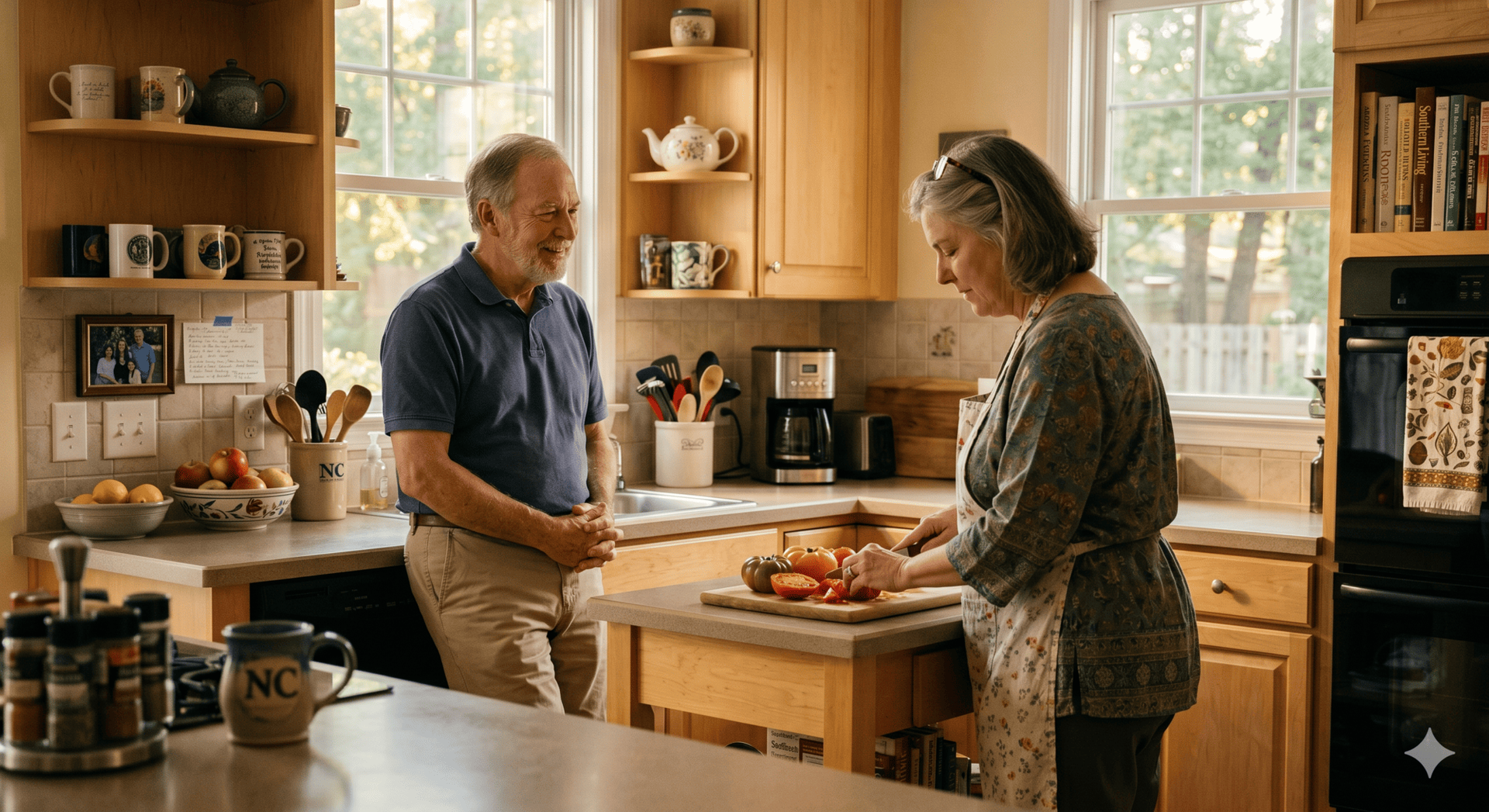
Most families want the same thing: for Mom and Dad to stay in the house they love, on their own terms, for as long as possible. What they don't want is to turn that home into something that looks like a rehab facility. This guide walks through a practical, room-by-room approach to home safety that prioritizes both function and the dignity of the space your parents have built their lives in.
Key Takeaways
- Greensboro's housing stock, from Fisher Park estates to Lindley Park ranches, comes with its own set of challenges that generic safety checklists don't account for.
- A room-by-room approach helps families identify specific hazards and address them with modifications that look intentional rather than institutional.
- Planning ahead is far less stressful and less expensive than reacting to a fall or a hospitalization.
- Guilford County has its own building codes and permit requirements, and knowing them before you start saves headaches later.
- A professional assessment gives you a complete picture: not just a list of things to fix, but a realistic roadmap for the years ahead.
The Greensboro Senior Safety Landscape: Why a Checklist Isn't Enough
Greensboro homes have character. A 1950s ranch in Lindley Park is a very different building from a multi-story 1920s house in Fisher Park, and the hazards inside reflect that. A safety checklist downloaded from the internet might help you spot loose rugs, but it won't tell you whether the walls in your parents' bathroom can support a grab bar, or how the century-old floor joists are holding up.
By 2026, aging in place has grown into something more comprehensive than fall prevention. It now draws on smart home technology, structural evaluation, and the kind of honest conversations about mobility that most families put off until something goes wrong. A Certified Aging-in-Place Specialist (CAPS) brings a level of technical scrutiny that goes well beyond a surface-level walkthrough, and often makes those conversations easier, because the framing shifts from "you need help" to "let's make your home work better for you."
What Guilford County's Climate Actually Does to Homes
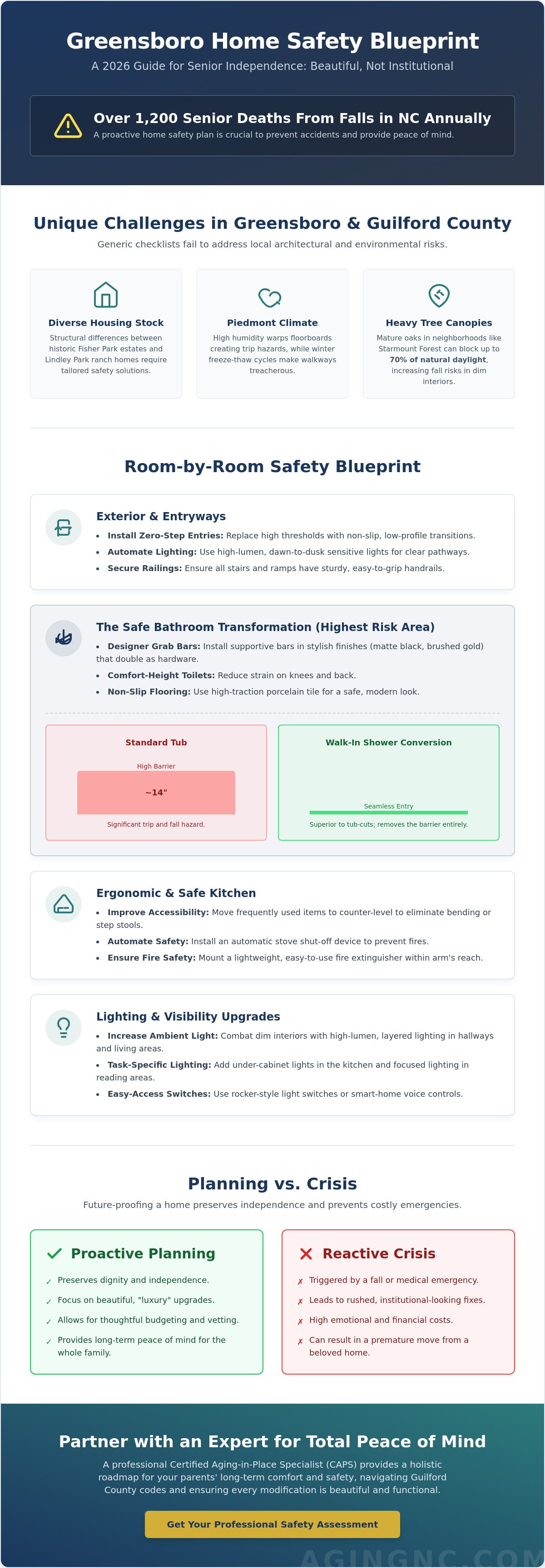
It's not something most people think about, but Greensboro's humidity genuinely affects home safety. High summer moisture causes traditional oak floorboards to swell and develop subtle ridge points that catch the toe of a slipper or the tip of a walker. In winter, the Piedmont's freeze-thaw cycles can make brick walkways treacherous after an overnight drop in temperature. And the tree canopy in neighborhoods like Starmount Forest, while beautiful, can block a significant portion of natural daylight, leaving interior hallways dim enough to pose a genuine risk for someone with declining vision.
The 'Beautiful, Not Institutional' Philosophy
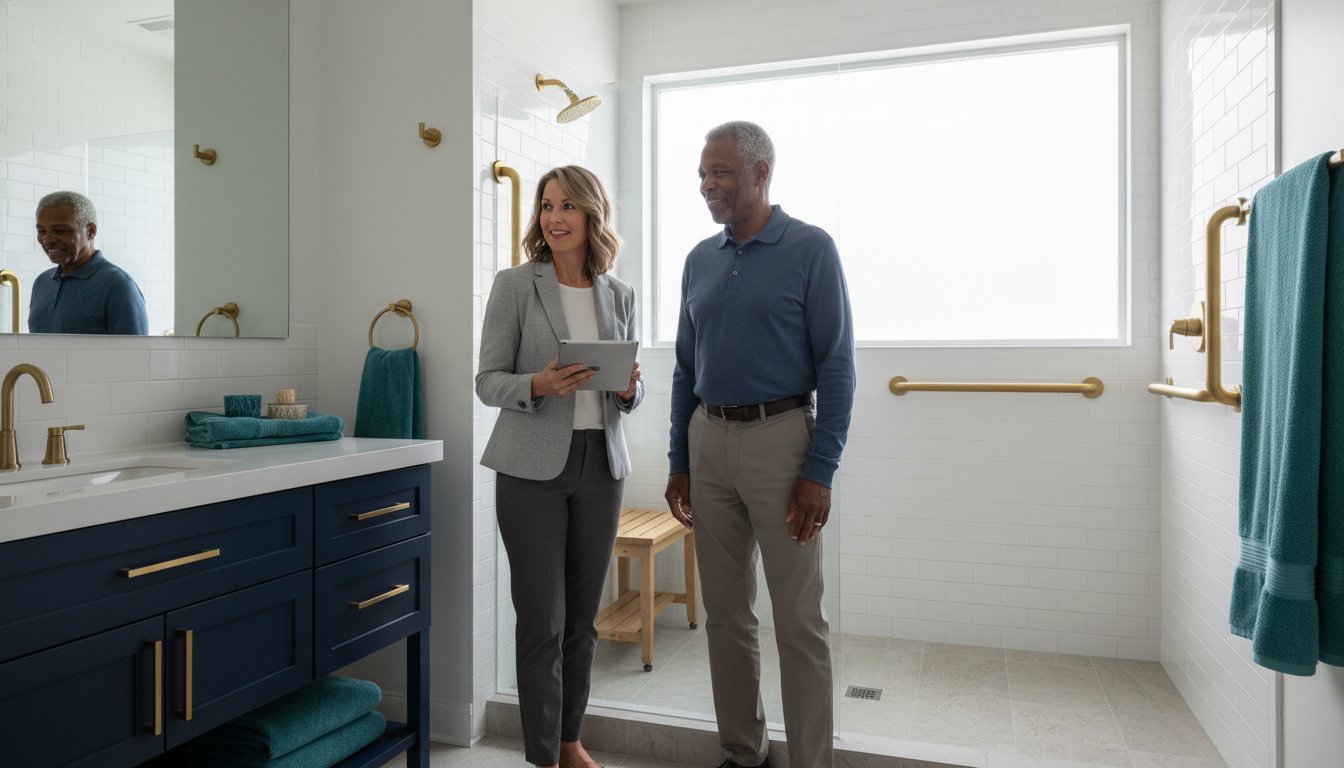
There's a real mental health component to how a home looks. When safety modifications start to make a house feel clinical, seniors often stop using them, or, worse, feel like they're already losing independence rather than protecting it. The goal is to make changes that feel like upgrades, not concessions. A curbless shower can look like a spa. A reinforced grab bar can look like a designer towel rack. Done right, these modifications make the home more comfortable for everyone, not just a senior who needs assistance.
Room-by-Room Home Safety Checklist for Greensboro Seniors
Exterior and Entryways
Many traditional Greensboro homes have raised thresholds or steps at the front entrance that go unnoticed for decades, until they become a problem that is. Replacing high thresholds with low-profile, non-slip transitions is a low-cost fix with a high impact. Exterior lighting should be bright enough to illuminate the entire path from the driveway to the door, and ideally be set on a dusk-to-dawn sensor so it's never a question of whether someone remembered to turn it on.
Inside, pay attention to the kitchen. Reorganizing so that the most-used items live at counter level eliminates the need for step stools and the reaching and bending that often precede falls. Mount a fire extinguisher where it can actually be reached. If there's any concern about an older stove, automatic shut-off devices are widely available and genuinely worth considering.
Bathroom Safety Modifications for Seniors
The bathroom is where most household falls happen, and it's also the room where safety modifications are most visible, for better or worse. Strategic grab bar placement, matched to the existing hardware finish (brushed gold, matte black, chrome), provides real support without the medical-equipment look. Comfort-height toilets and non-slip porcelain tile handle the rest.
For families thinking longer-term, a walk-in shower conversion is worth the investment. Removing the standard tub's 14-inch step-over completely eliminates one of the most common points of failure. It's also just more comfortable for most people to use.
Lighting and Visibility
Good lighting is the most cost-effective safety upgrade in the house. Task lighting over the kitchen counter, especially near the stove and cutting board, is important for both safety and clear visibility of medication labels. In hallways and bathrooms, motion-activated lighting means your parents don't have to fumble for a switch at 2 a.m. Voice-controlled smart lighting has become genuinely easy to set up and is worth considering for rooms your parents use most.
Flooring and Pathways
Area rugs are responsible for a disproportionate number of household falls. If they stay, they need professional-grade non-slip backing and secured edges. The transitions between rooms, those metal "trip strips" between different flooring types, are worth removing or replacing with flat transitions wherever possible. Pets are another common, yet often overlooked, tripping hazard. Working with a professional like I Wuff You Dog Training to address behaviors like jumping or following too closely can significantly improve safety for seniors living with dogs.
For anyone using a walker or wheelchair, a clear 32-inch path through the main living areas isn't a preference; it's a necessity. A furniture rearrangement walkthrough is often one of the simplest and most effective things a family can do on their own before calling anyone else. If you are concerned about a specific hazard, a professional home safety assessment can provide a customized roadmap for these essential upgrades.
Planning Ahead vs. Reacting to a Crisis
The difference between proactive planning and reactive crisis management is mostly a matter of timing, but that timing matters enormously. When a parent falls and ends up in the hospital, families are suddenly making major home modification decisions under stress, on someone else's schedule, with limited time to think about aesthetics or budget. The result is usually more expensive and less thoughtful than it would have been otherwise. Being proactive also means having a clear record of your home's contents; you can discover HomeGuard to help you document your belongings before a disaster occurs, adding another layer of protection to your long-term plan.
A phased approach spreads the work and the cost over time and allows for better decisions at every stage. Year one might focus on lighting upgrades and non-slip floor treatments, high-impact changes that are also relatively affordable. Year two could address the entryway. Year three might be the bathroom conversion. This kind of roadmap also makes the conversations with parents easier, because you're not proposing a total overhaul all at once.
The CDC's home safety resources offer a solid starting point for identifying the most common fall hazards by room.
When to Call a Professional
A DIY walkthrough is a reasonable first step, but it won't catch everything. Whether a wall can actually support a grab bar depends on where the studs are and what's behind the drywall. Installing one incorrectly isn't just a waste of money; it's dangerous. A ramp that doesn't meet the 1:12 ADA slope ratio is harder to use, not easier. These are the details that matter and that a professional assessment is designed to find.
Ongoing Maintenance
Safety features only work if they're kept up. A grab bar that was installed correctly five years ago can loosen over time. Sensor lights need new batteries. Exterior steps that were treated for slip-resistance need to be retreated. Greensboro's variable weather, humid summers, and icy winters are genuinely hard on exterior surfaces, and a seasonal check of those areas is time well spent. Our Home Maintenance Plans shift the focus from emergency repairs to routine upkeep that prevents accidents. This proactive care builds long-term independence and whole-family confidence.
Home Modifications in Greensboro: A Local Guide
Choosing a CAPS-Certified Contractor in Greensboro
Not every contractor is equipped for aging-in-place work. You're looking specifically for a CAPS-certified professional, someone trained by the National Association of Home Builders to understand the mobility and sensory needs of older adults, not just how to build things.
When you're interviewing contractors, a few questions are worth asking:
- Can they provide references from similar projects in Greensboro neighborhoods?
- How do they approach modifications that need to last for 10 or more years?
- Do they have someone on staff for smaller precision installs like grab bars, lighting, and threshold replacements, rather than treating everything as a full renovation?
The Process
A well-run project moves through three phases.
- First, a thorough assessment that identifies not just visible hazards but the less obvious ones: lighting dead zones, subtle floor transitions, and walls that won't support hardware.
- Second, a design and materials phase where the aesthetic decisions are made, matching finishes and materials to the existing home.
- Third, coordinated installation with a single point of contact for the family, so the work respects your parents' daily routine rather than disrupting it.
In Guilford County, projects such as wheelchair ramps or structural additions typically require permits from the Greensboro Planning and Development Department. Ramps over 30 inches in height are subject to specific local building codes. On the financial side, the North Carolina Housing Finance Agency's Urgent Repair Program offers up to $10,000 for eligible low-income seniors, and the USDA Section 504 program provides grants in more rural parts of the county for health and safety improvements.
Ready to transform your parents' home into a safe, beautiful haven? Schedule a professional home safety assessment with our expert team today.
Working with Aging in Place NC
A home safety assessment isn't just a list of problems. It's the foundation for a realistic plan. Our CAPS-certified team evaluates over 25 risk factors during a home visit, from lighting levels in hallways to the friction coefficient of bathroom tiles, and then translates that into a prioritized plan that accounts for both your parents' current needs and where things are likely to go over the next five to ten years.
We also handle project management, so your family doesn't have to coordinate among contractors, track supply lead times, and manage permit timelines while also trying to be present for your parents. Our job is to make this process something you can hand off.
What families can expect:
- Whole-family training so everyone who visits knows how to use the equipment safely, not just the person living there
- Long-range planning with a roadmap for each stage of the aging process, so you're not making major decisions reactively
- Local expertise built around Greensboro's neighborhoods, housing stock, and contractor community
Del Scheitler founded Aging in Place NC because he saw a gap between what traditional home remodeling offered and what families actually needed. It's a family-owned business, and we treat clients accordingly.
When you book an initial consultation, it helps to have a rough sense of your parents' daily routines and any mobility challenges that have come up recently, even minor ones. That context shapes the entire evaluation.
Schedule your Greensboro Home Safety Assessment today to gain the confidence that comes with professional expertise and dedicated local support.
Frequently Asked Questions
What is a CAPS-certified professional, and why do I need one in Greensboro?
CAPS stands for Certified Aging-in-Place Specialist, a designation from the National Association of Home Builders. Greensboro's mix of mid-century and historic homes means there are structural and architectural quirks that a general contractor might not anticipate. A CAPS professional knows what to look for and how to address it without making the home feel clinical.
Does Medicare pay for home safety modifications in North Carolina?
Standard modifications like ramps and grab bars typically aren't covered under Medicare Part B, since they're classified as home improvements rather than medical equipment. Some durable medical equipment, such as patient lifts, may be covered with a physician's order. Many families also explore North Carolina Medicaid waivers or local grants in Greensboro, and we can help navigate those options.
How long does a typical home safety assessment take?
Most assessments run 90 minutes to two hours. That's enough time for a thorough room-by-room walkthrough and a detailed conversation about what we found and our initial recommendations. We take that information back and create a comprehensive, detailed guide for your family's needs.
Can you make my parents' bathroom safe without it looking like a hospital?
Yes, and this is where good design really matters. Grab bars in matching hardware finishes, curbless showers with custom tile, comfort-height toilets that don't read as medical equipment: these are all standard parts of our approach to bathroom modifications. The goal is for someone visiting your parents' home not to immediately notice anything has been changed.
What are the most common fall hazards in older Greensboro homes?
Loose area rugs, poor lighting in transition zones between rooms, and steep or narrow staircases in older floor plans are most common. These are also the most preventable.
Do we need to move the bedroom to the first floor immediately?
Not necessarily. A sturdy dual handrail, improved lighting on the staircase, or a stairlift can meaningfully extend the usability of a second-floor bedroom for several years. We look at the whole picture, current mobility, the staircase itself, and the first-floor layout before recommending a transition.
How do I convince my parents to allow safety modifications?
The most effective framing usually centers on staying put. According to AARP, 77% of adults over 50 want to remain in their current homes. Positioning modifications as what makes that possible, rather than evidence they need help, tends to land better. It's also worth emphasizing that many of these changes make the home more comfortable for everyone who visits.
What is the difference between a home safety assessment and a home inspection?
A home inspection evaluates the structural and mechanical systems of the building. A safety assessment evaluates how the person lives in the building: whether your parent can safely use the stove, navigate the hallway at night, or get in and out of the shower. The questions are completely different.
You've built a lifetime of memories in your home, and we're here to help you stay there.