Home Repair for Senior Citizens: Free & Low-Cost Resources in Raleigh & the Research Triangle (2026)
What if the greatest threat to your independence isn't your health, but a home that's no longer keeping up with you? Many homeowners in Raleigh and across the Research Triangle find themselves trapped between a fixed income and the rising cost of essential maintenance. You shouldn't have to choose between your safety and your savings account. We know you want to stay in the home you love, and finding home repair for senior citizens free of charge or at low cost is the first step toward that peace of mind.
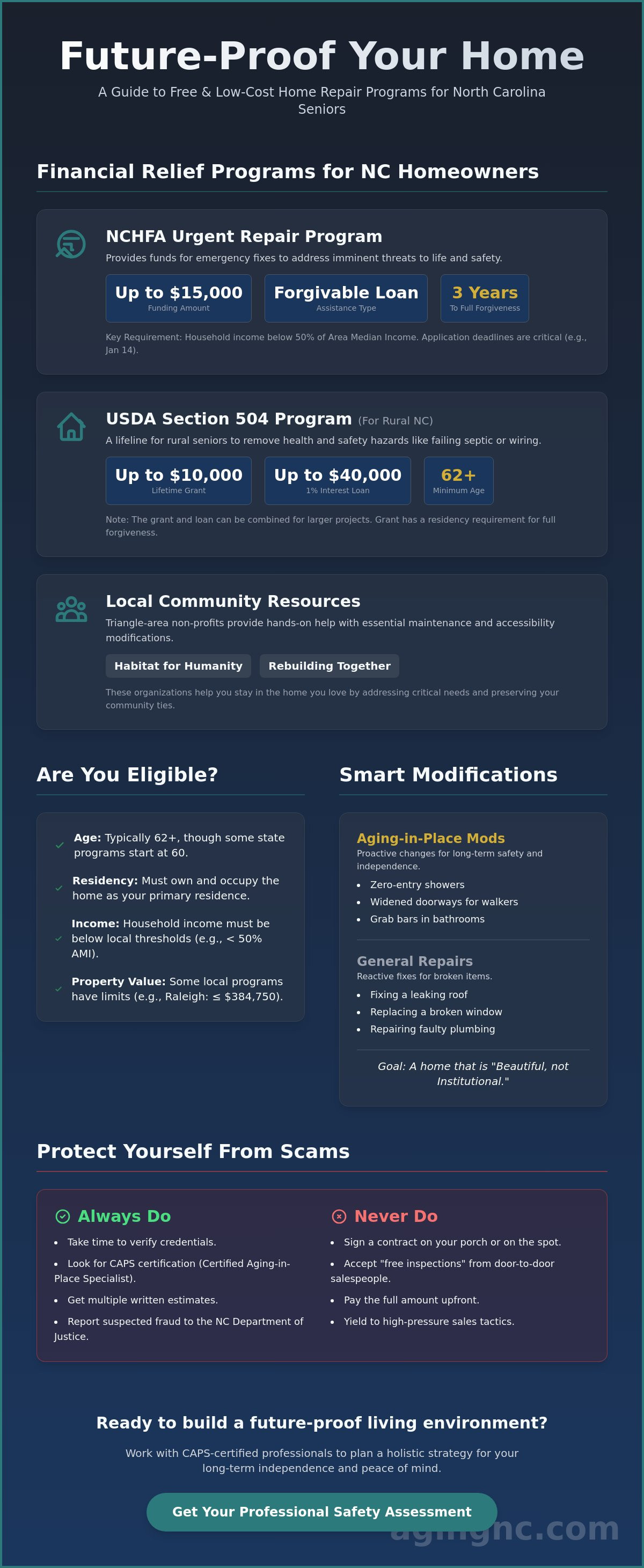
This guide cuts through the jargon to reveal legitimate financial relief available right now. You'll discover how programs like the NCHFA Urgent Repair Program provide up to $15,000 in forgivable loans for those earning below 50% of the area median income. We also provide the exact 2026 deadlines you need to know, such as the January 14 cutoff for urgent repair funding and the March 31 LIHEAP application window. By the end of this article, you'll have a clear roadmap to secure the grants and professional guidance needed to future-proof your home, ensuring it remains a beautiful, safe sanctuary for years to come.
Key Takeaways
- Learn to navigate the landscape of home repair for senior citizens free programs by distinguishing between legitimate forgivable grants and predatory lending scams.
- Access federal support through the USDA Section 504 program, which offers lifetime grants of up to $10,000 for health and safety repairs for rural North Carolina homeowners.
- Connect with local Triangle non-profits like Habitat for Humanity and Rebuilding Together that provide essential maintenance and accessibility modifications to help you stay in the home you love.
- Prioritize critical safety modifications while maintaining a "beautiful, not institutional" aesthetic that preserves the dignity and quality of your personal space.
- Build a future-proof living environment by working with CAPS-certified professionals who can help you plan a holistic, whole-family strategy for long-term independence.
Finding Legitimate Free Home Repair for Senior Citizens in North Carolina
Stay in the home you love. It’s a simple goal, but for many seniors in Raleigh and the Research Triangle, a leaking roof or a steep set of stairs can make that dream feel fragile. You might have heard whispers about "free money" from the government to fix your house. While the federal government rarely hands out literal bags of cash, North Carolina offers robust programs that function as home repair for senior citizens free of long-term debt. These are often structured as deferred, forgivable loans. For instance, the NCHFA Urgent Repair Program provides up to $15,000 for emergency fixes. This loan is forgiven at a rate of $5,000 per year, meaning if you stay in your home for three years, you owe nothing back.
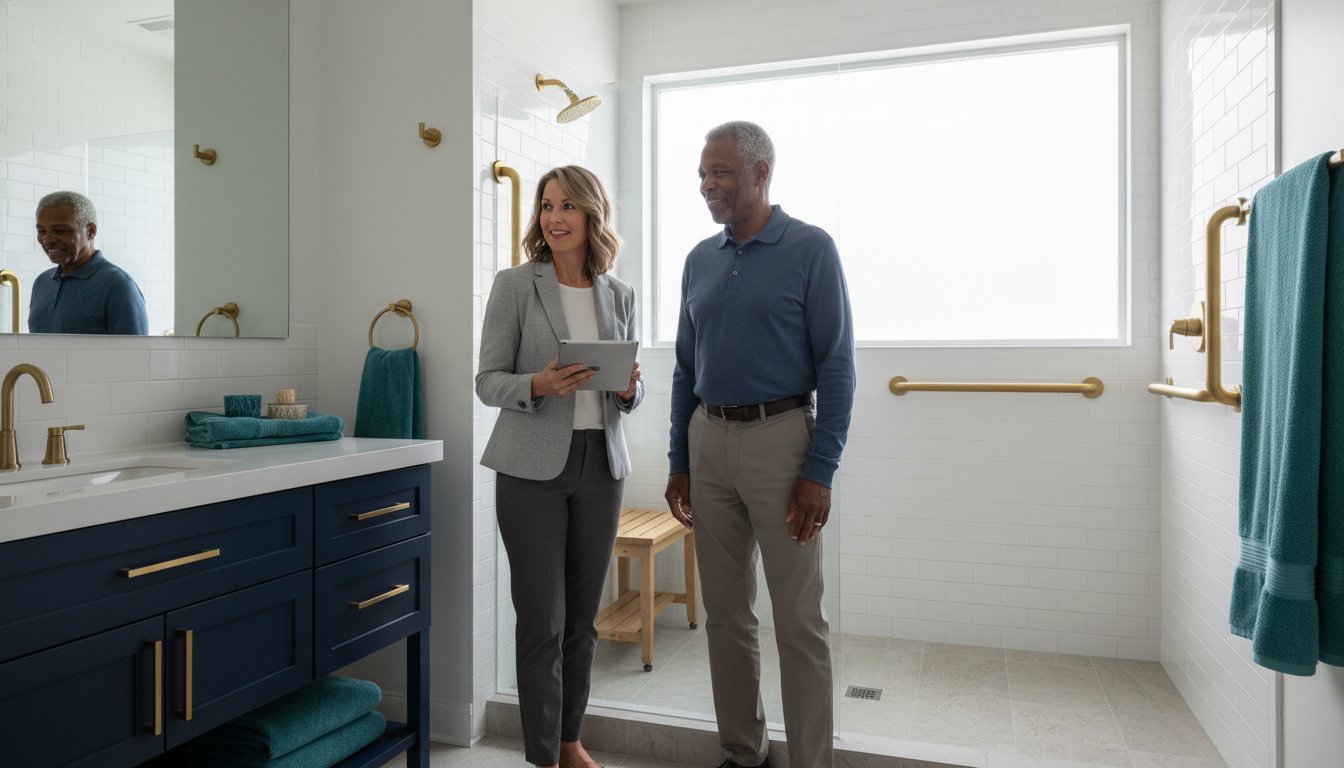
North Carolina prioritizes seniors for these programs because keeping you in your community is better for everyone. It’s about more than just fixing a floor; it’s about fall prevention and independence. However, there is a clear distinction between general maintenance and aging-in-place modifications. A general repair might fix a broken window, while an aging-in-place modification creates a "future-proof" environment, such as installing a zero-entry shower or widening a doorway for a walker. A professional safety assessment is the first step to identify which specific modifications actually matter for your long-term mobility, ensuring your home remains beautiful, not institutional.
Avoiding Senior Home Repair Scams in the Research Triangle
Protect your peace of mind by staying alert to red flags. In Raleigh and Durham neighborhoods, door-to-door contractors often appear after storms, offering "free inspections" that lead to high-pressure sales. Never sign a contract on your porch. Legitimate professionals won't mind if you take time to verify their credentials. Always check for a CAPS (Certified Aging-in-Place Specialist) designation. This certification ensures the contractor understands the unique safety needs of older adults. If you suspect fraud, report it immediately to the North Carolina Department of Justice or your local Wake County or Durham County consumer protection office.
Basic Eligibility: Who Qualifies in 2026?
Most assistance programs in 2026 have specific requirements to ensure help reaches those who need it most. You typically must be at least 62 years old, though some state programs like the NC DHHS Housing and Home Improvement service begin eligibility at age 60. Financial thresholds are also strict. For the Urgent Repair Program, your household income must fall below 50% of the area median income. Additionally, the City of Raleigh Substantial Rehabilitation Program requires your property value to be $384,750 or less. You must also own and occupy the home as your primary residence to qualify for these grants and forgivable loans.
Federal Assistance Programs for Raleigh and Greensboro Seniors
Federal safety nets provide a crucial foundation when local funds are exhausted. Accessing home repair for senior citizens free of financial stress often begins with understanding which federal department fits your specific geography and needs. These programs aren't just about fixing what’s broken; they are about investing in your ability to stay in the home you love. By utilizing government home repair assistance, you can address critical safety issues before they lead to a crisis.
The USDA Section 504 Grant: A Lifeline for Rural NC
The USDA Section 504 program is a standout for those in rural North Carolina. Seniors aged 62 and older can receive a lifetime grant of up to $10,000. This funding is specifically earmarked for removing health and safety hazards, such as a failing septic system or dangerous electrical wiring. To qualify for this grant, you must:
- Be the homeowner and occupy the house as your primary residence.
- Be unable to obtain affordable credit elsewhere.
- Have a household income that does not exceed the very-low-limit for your specific county.
The grant carries a 20-year residency requirement for full forgiveness. If you sell the home before that period ends, you may need to repay a portion. For larger projects, the USDA offers 1% interest loans up to $40,000, which can be combined with the grant for a holistic repair strategy.
HUD and FHA: Financing Your Safety Roadmap
HUD and FHA programs offer sophisticated ways to finance a future-proof home. The Title 1 Property Improvement Loan is a flexible option for accessibility modifications like walk-in tubs or exterior ramps. Unlike traditional loans, Title 1 doesn't always require equity for loans under $7,500. Finding home repair for senior citizens free of high-interest debt is possible when you use your home’s value to your advantage.
For more extensive renovations that are beautiful, not institutional, the Home Equity Conversion Mortgage (HECM) allows homeowners to use their equity to fund modifications without the burden of monthly payments. Managing these options is easier with a comprehensive safety assessment from a CAPS-certified professional who understands how to blend these financial tools with practical design.
Weatherization and 203(k) Rehabilitation
Energy efficiency is safety too. The Weatherization Assistance Program (WAP) helps low-income seniors lower their utility bills by sealing air leaks and improving insulation. In the Research Triangle, the Central Pines Regional Council manages these applications, with the next funding cycle opening in the spring of 2026. For those looking to do a deep, structural overhaul, the FHA 203(k) loan provides a way to finance major repairs through a single mortgage. This ensures your home remains a safe sanctuary for the long haul.
Local Non-Profits and Community Resources in the Research Triangle
Federal grants provide the financial foundation, but local non-profits are the boots on the ground that turn policy into tangible safety. In Raleigh and the surrounding Triangle, a sophisticated network of organizations works to ensure that your home remains a sanctuary. These groups understand that a single repair often isn't enough; they look at your living situation holistically to provide home repair for senior citizens free of the stress that comes with hiring unknown contractors. They act as your advocates, ensuring that every modification is beautiful, not institutional, and contributes to your long-term independence.
Habitat for Humanity’s 'Housing Plus' in North Carolina
Habitat for Humanity of Wake County has evolved its mission to focus heavily on preserved housing. In a strategic move to streamline services, they have partnered with Preserving Home (formerly known as Rebuilding Together of the Triangle) to manage all application intakes for home preservation. This partnership means you don't have to navigate multiple confusing systems. They focus on "critical repairs" that impact your health, such as failing HVAC systems, leaking roofs, or rotten flooring that creates a fall risk. Because demand is high, waitlists are common in Wake and Durham counties, so it's vital to apply as soon as windows open. They prioritize projects that address immediate safety hazards, helping you stay in the home you love without the burden of massive repair bills.
County-Level Support: Wake, Durham, and Guilford
Your local government offers specific layers of protection that national sites often overlook. For instance, the NC DHHS Housing and Home Improvement service provides a limit of $7,000 per individual per program year for those aged 60 or older. This is a vital resource for smaller, high-impact modifications like grab bars or ramp installations. If you live in more rural pockets of the Triangle, local agencies often point you toward USDA Home Repair Loans and Grants to supplement local funds, especially for major health hazards like septic failure.
Beyond direct repairs, look into property tax relief. In towns like Cary and Morrisville, seniors may qualify for tax exclusions or deferrals that free up monthly income for home maintenance. Community Action Agencies across the Research Triangle also serve as unsung heroes, often administering the Weatherization Assistance Program (WAP). With the 2026 application cycle for WAP funds through the Central Pines Regional Council opening in the spring, now is the time to gather your documentation. These agencies ensure your home is future-proof, reducing utility costs while increasing daily comfort and safety.
Prioritizing Modifications: Safety vs. Aesthetics on a Budget
When funds are limited, the order in which you tackle home improvements matters immensely. You might be tempted to fix a cosmetic crack in the drywall, but a loose floorboard or a dark hallway is far more dangerous. We believe in a "Safety First" hierarchy that addresses immediate fall hazards before anything else. While searching for home repair for senior citizens free programs, you should focus your initial requests on high-impact modifications. A well-placed grab bar or a threshold ramp provides more daily value than a new coat of paint.
Independence is about more than just physical safety; it’s about how your home makes you feel. We firmly believe that modifications should be beautiful, not institutional. Adding a plastic, hospital-style rail might solve a physical problem, but it can chip away at your sense of dignity. By choosing high-quality finishes and thoughtful designs, you can create a space that feels like a home rather than a clinic. This holistic approach supports your mental health and preserves the joy of your personal environment. For those small but vital tasks, local handyman services for seniors can ensure your home stays in top shape without the institutional look.
The Essential Safety Checklist for Raleigh Homes
Older homes in the Research Triangle often hide trip hazards in plain sight. Uneven transitions between hardwood and tile or loose carpeting on stairs are leading causes of accidents. Bathroom safety is non-negotiable. Professional grab bar placement must be tailored to your specific height and reach to be effective. Additionally, lighting is one of the most affordable ways to prevent night-time falls. Replacing standard bulbs with high-lumen LEDs and adding motion-sensor path lights in hallways can transform a dangerous house into a predictable, safe sanctuary.
Creating a 'Future-Proof' Roadmap
Proactive planning is the key to staying in the home you love. Don't wait for a mobility change to become a crisis before looking into home repair for senior citizens free of high-pressure sales. You can layer free government grants with professional aging in place services to create a comprehensive strategy. A professional safety assessment identifies the small details others miss, saving you money by preventing redundant or ineffective repairs. This roadmap ensures your home is ready for whatever the future holds, allowing you to live the life you want with total confidence.
Take the first step toward a safer, more beautiful home today by scheduling a comprehensive safety assessment with our caring experts.
Beyond the Repair: Coordinating Your Safe Aging-in-Place Strategy
Securing a grant for a leaking roof or a new furnace is a significant victory for any homeowner. However, true independence requires looking beyond the immediate crisis. A single repair won't solve the long-term challenge of a home that wasn't originally built for your changing needs. You need a strategic safety plan that blends available home repair for senior citizens free resources with professional oversight. This is where a CAPS-certified professional becomes your most valuable ally. We act as your Trusted Advisor, ensuring every change made today supports the life you want to live tomorrow.
Transitioning from crisis management to proactive living is a journey. Instead of waiting for a fall to dictate your home's layout, you can take control now. Our holistic approach considers every room, every hallway, and every daily habit. We don't just fix what is broken; we future-proof your environment. By coordinating various local and federal programs, we help you build a seamless support system that preserves your dignity and quality of life. This proactive stance turns a house into a long-term sanctuary where you can age with confidence.
Professional Safety Evaluations in the Triangle
A standard contractor sees a job; a specialist sees a lifestyle. Our home safety assessment covers specific details like reach ranges, floor friction, and lighting contrast that a general builder often misses. These evaluations are powerful tools when applying for local grants. They provide the professional documentation needed to prove a modification is a medical necessity rather than a cosmetic upgrade. For the adult child or caregiver, this professional assessment provides much-needed peace of mind. It replaces the constant worry of "what if" with a concrete, actionable roadmap for the entire family unit.
Project Management: Ensuring Quality and Beauty
Managing a home modification project is complex and often overwhelming. We liaise with contractors to ensure every nail and rail meets the highest safety standards. Our primary signature is the promise that your modifications will be beautiful, not institutional. A home should never lose its warmth or its market value because of accessibility upgrades. We advocate for high-quality craftsmanship that blends seamlessly with your existing decor. By coordinating your home repair for senior citizens free grant projects with our professional guidance, you ensure the work is done right the first time. Take the next step toward a future-proof home by scheduling your consultation with Aging in Place North Carolina today. We are ready to help you stay in the home you love.
Live the Life You Want in the Home You Love
Your home is a sanctuary of memories, and it should remain a safe place for your future. We've explored how to navigate the $15,000 NCHFA Urgent Repair Program and the March 31 deadline for LIHEAP assistance. These verified resources provide a path to home repair for senior citizens free of high-interest debt, but securing the funding is only half the battle. A truly future-proof home requires a holistic strategy that blends these grants with expert, specialized oversight.
As a family-owned and operated team right here in North Carolina, we believe your environment should be beautiful, not institutional. Our CAPS-certified experts are dedicated to identifying the small details that others miss, ensuring every modification enhances your quality of life. Don't let a deteriorating floor or a dark hallway steal your independence. Schedule your Comprehensive Home Safety Assessment with Aging in Place North Carolina today. We are ready to act as your trusted advisor, helping you stay in your home with total confidence and peace of mind.
Frequently Asked Questions
Is there really 'free money' from the government for home repairs?
The federal government doesn't provide direct cash to individuals, but several programs offer interest-free, deferred loans that are forgiven over time. For example, the NCHFA Urgent Repair Program (URP) functions as home repair for senior citizens free of repayment if you occupy your home for at least three years. These programs prioritize safety and health repairs, such as fixing rotten floors or dangerous heating systems, rather than cosmetic upgrades.
What is the USDA Section 504 Home Repair program?
The USDA Section 504 program provides financial assistance specifically to very-low-income homeowners in rural areas. Seniors aged 62 and older can receive a lifetime grant of up to $10,000 to eliminate health and safety hazards. This is an essential resource for those seeking assistance in the outlying areas of the Research Triangle where municipal services might be limited. For larger projects, the program also offers 1% interest loans up to $40,000.
How do I find a reputable senior-focused handyman in Raleigh?
Finding a trustworthy professional starts with looking for specific credentials like the Certified Aging-in-Place Specialist (CAPS) designation. This certification ensures the technician understands the unique safety needs of older adults and avoids "institutional" looking modifications. You can search the National Association of Home Builders directory or contact local senior centers for vetted referrals. Our team acts as a trusted advisor to help you find specialists who prioritize beautiful, high-quality craftsmanship.
Does Medicare pay for home modifications like ramps or grab bars?
Medicare Part B generally does not cover the cost of home modifications like wheelchair ramps or grab bars. These are typically classified as home improvements rather than Durable Medical Equipment (DME). However, some Medicare Advantage plans have begun offering supplemental benefits for home safety in 2026. You should review your specific plan details with a benefits counselor to see if your coverage includes any "future-proof" home modifications.
Are there local North Carolina grants for seniors who aren't 'very-low-income'?
While most direct grants target very-low-income households, seniors with moderate incomes can access low-interest financing through the HUD Title 1 Property Improvement Loan program. These loans don't always require equity for smaller amounts and can be used for accessibility features. Additionally, local property tax relief programs in Wake County can free up monthly cash flow. These options provide financial relief for those who exceed the strict income thresholds of traditional grant programs.
What should I do if I suspect a home repair scam targeting a senior?
You should immediately contact the North Carolina Department of Justice's Consumer Protection Division if you suspect a scam. Avoid any contractor who demands cash upfront or uses high-pressure, door-to-door sales tactics in Raleigh neighborhoods. Professional advisors will always provide a written contract and encourage you to consult with your family. Reporting these incidents helps protect the entire community and ensures that home repair for senior citizens free of fraud remains the standard.
Can I get help with property taxes in Wake County if I make home improvements?
Wake County offers the Elderly or Disabled Homestead Exclusion, which can significantly reduce your tax burden. This program reduces the assessed value of your home by either $25,000 or 50%, whichever is greater, for residents aged 65 or older who meet income requirements. By lowering your annual tax bill, you can redirect those savings toward ongoing maintenance. This is a strategic way to fund your aging-in-place modifications without taking on new debt.
How long does it typically take to get approval for a home repair grant?
Approval timelines typically range from three to six months depending on the specific program's funding cycle and current waitlist. For instance, applications for the Weatherization Assistance Program through the Central Pines Regional Council often open in the spring of 2026. You can speed up the process by having your proof of income, property deed, and a professional safety assessment ready. Being proactive ensures you are at the front of the line when new funds become available.