Home Assistance for the Elderly in Raleigh: A How-To Guide for Aging in Place
What if the Raleigh home where you raised your family could actually become your safest haven as you age, rather than a source of hidden hazards? You likely want to stay in the neighborhood you love, but the thought of steep stairs or slippery bathroom tile creates a constant sense of worry for your family. It's frustrating when the only solutions offered feel cold and clinical; nobody wants their sanctuary to look like a hospital ward. Effective home assistance for the elderly should preserve the aesthetic of your space while proactively preventing the falls that lead to 3 million emergency room visits for seniors annually, according to CDC data.
We agree that safety shouldn't come at the cost of your home's dignity or beauty. You'll learn how to transform your North Carolina residence into a future-proof sanctuary through strategic environmental design and professional safety planning. This guide provides a clear roadmap to help you find local CAPS-certified contractors and implement modifications that are seamless, elegant, and life-changing. We'll cover everything from simple lighting upgrades to comprehensive floor-plan adjustments that ensure your home remains yours for years to come.
Key Takeaways
- Future-proof your living space with modifications that prioritize both safety and style, ensuring your Raleigh home remains a beautiful sanctuary rather than an institutional setting.
- Discover how a professional safety assessment identifies "invisible" trip hazards common in North Carolina homes, creating a solid foundation for long-term independence.
- Learn why comprehensive home assistance for the elderly must include routine maintenance and the "Fix-It Technician" model to prevent minor home issues from becoming major mobility risks.
- Empower your entire support network with whole-family safety training designed to provide immediate peace of mind and confidence for seniors and their caregivers.
Understanding Home Assistance for the Elderly in North Carolina
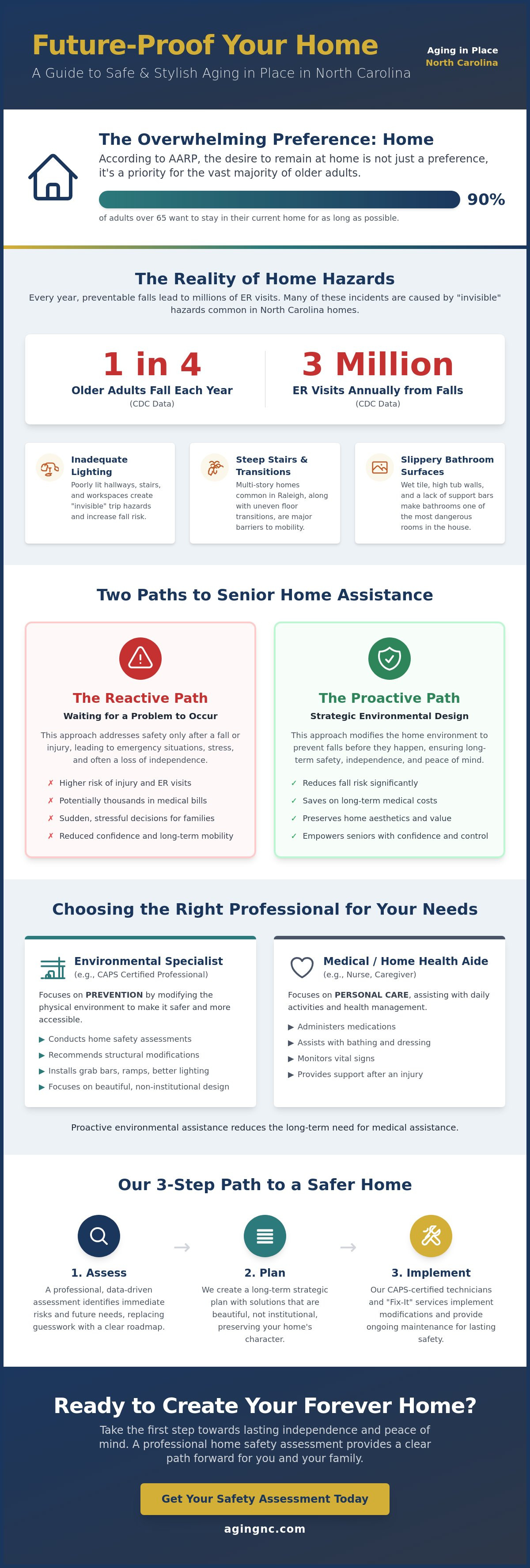
Stay in the home you love. For 90% of adults over age 65, this isn't just a preference; it's a priority, according to the AARP 2021 Home and Community Preferences survey. True home assistance for the elderly goes far beyond medical check-ups. It involves a holistic strategy to make your physical environment work for you. Understanding Aging in Place starts with recognizing that your house is a tool for independence. In the Research Triangle and Greensboro, we see a growing demand for future-proof living. This means shifting the focus from reactive repairs to proactive, strategic planning that ensures your home remains a sanctuary of dignity rather than a source of stress.
Professional support in North Carolina is evolving. While many families first think of hiring a nurse, the current landscape in Raleigh and surrounding areas highlights a critical gap: the safety of the home itself. We distinguish between home health aides, who manage personal care, and aging-in-place environmental specialists, who modify the home to prevent the need for that care in the first place. Our goal is to ensure your modifications are beautiful, not institutional, preserving the aesthetic of your home while maximizing your safety.
Environmental vs. Medical Assistance: Which Do You Need?
Deciding between a medical aide and an environmental specialist depends on your daily challenges. You hire a nurse when you need help with medications or vitals. You hire a Certified Aging-in-Place Specialist (CAPS) when the bathroom floor feels slippery or the stairs become a barrier. CAPS-certified professionals in North Carolina focus on home safety through accessibility assessments and smart home integration. This environmental assistance reduces the long-term cost of care by preventing falls. A single fall-related injury can cost thousands in medical bills; a well-placed, stylish grab bar costs a fraction of that and provides lasting peace of mind.
The Local Impact: Aging in Raleigh and the Research Triangle
Raleigh's unique architecture presents specific challenges for seniors. Many homes in the Research Triangle are multi-story builds with deck-heavy designs and uneven terrain. These features represent significant fall risks as mobility changes. Local Raleigh zoning and safety standards also require a meticulous approach to home modifications to ensure everything is up to code. By 2030, the NC Office of State Budget and Management projects that one in five North Carolinians will be over age 65. We call this the silver tsunami. Future-proofing your home today is a pragmatic investment. It ensures you’re prepared for the future with a whole-family safety plan that keeps you independent and confident in your own space.
How to Evaluate Your Home for Senior Safety and Accessibility
A comprehensive home safety assessment serves as the vital foundation for effective home assistance for the elderly . It's more than a simple walk-through; it's a strategic roadmap designed to preserve independence. In older neighborhoods across Greensboro and Cary, homes often feature "invisible" hazards that residents have overlooked for decades. According to 2023 data from the CDC, one in four older adults falls each year, and many of these incidents occur due to environmental factors like uneven floor transitions or inadequate lighting in high-traffic corridors.
Evaluating a home through a professional lens reveals risks that the untrained eye might miss. We examine entryways for height consistency, test the slip-resistance of various flooring materials, and measure lumen levels in workspaces. Involving the whole family in this evaluation process is essential. When everyone participates, it builds the necessary buy-in for future modifications, ensuring the home remains a place of joy rather than a source of anxiety. You can find additional Government resources for aging in place to help guide your initial family discussions.
The Professional Assessment Process
An Aging in Place NC evaluation replaces "I think it's safe" with data-driven safety recommendations. We look at the home's current state and its future-proof potential. Our specialists create a long-term strategic plan that addresses immediate risks while preparing for future mobility changes. This holistic approach ensures that every modification is seamless and intentional. We prioritize solutions that are beautiful, not institutional, so your home continues to reflect your personal style while providing the support you need.
DIY vs. Professional Evaluations: What You Might Miss
Adult children often make the mistake of "senior-proofing" a home with reactive, surface-level fixes like adding a single suction-cup grab bar. These DIY attempts often fail to account for weight-bearing requirements or the ergonomic flow of the room. A Certified Aging-in-Place Specialist (CAPS) brings a technical perspective to the table, identifying subtle dangers like low-profile thresholds or poor contrast between stairs. Professional assessments prevent expensive emergency renovations by identifying structural needs long before a medical crisis forces a hurried, high-cost construction project.
Our goal is to help you stay in the home you love with total confidence. By combining technical expertise with deep empathy, we ensure your living space is ready for the years ahead. If you're ready to begin this journey, a professional home safety assessment is the best first step toward securing your independence. High-quality home assistance for the elderly starts with a safe environment, allowing you to focus on living the life you want.
Strategic Home Modifications: Beautiful, Not Institutional
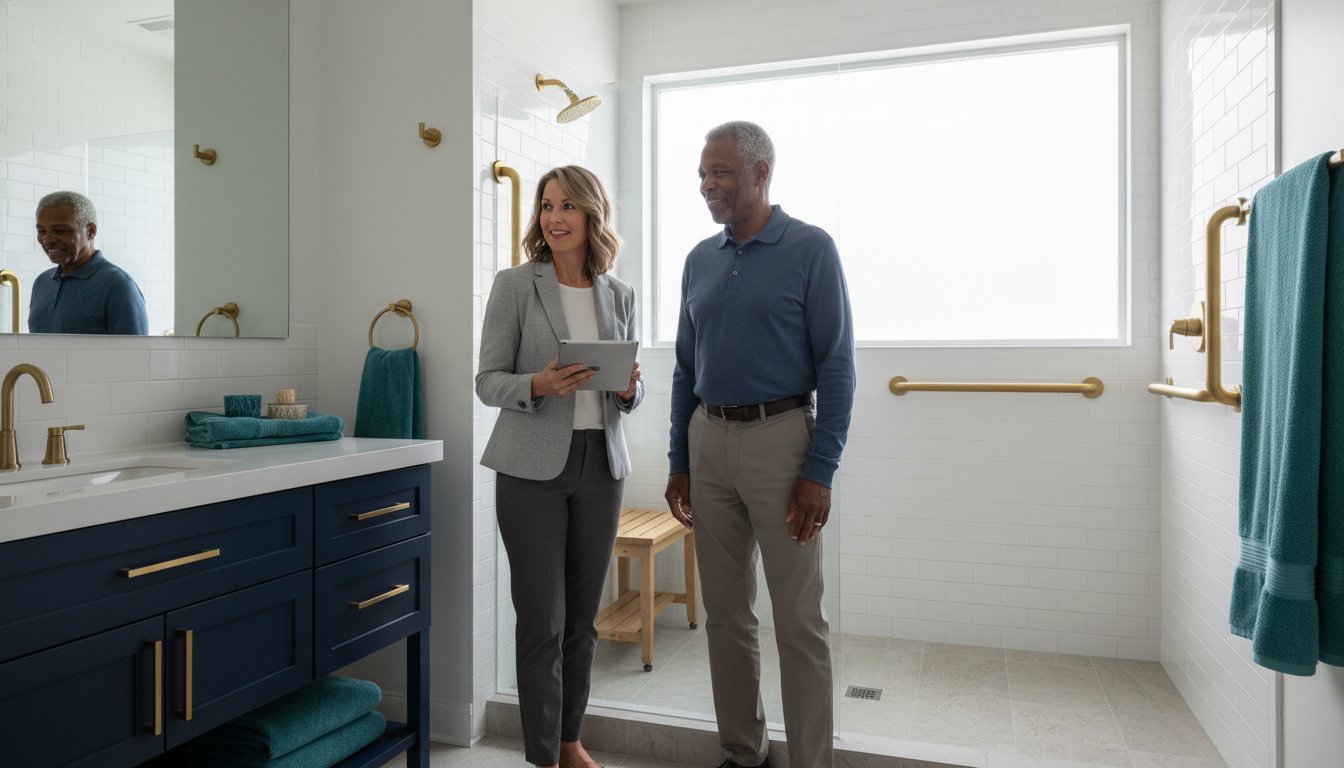
Your home is a sanctuary, not a clinical facility. We believe that home assistance for the elderly should enhance your living space rather than detract from its aesthetic value. A "Beautiful, Not Institutional" approach ensures that safety upgrades feel like high-end renovations. This philosophy protects your home's market value while providing the future-proof environment you need to stay independent. Many homeowners worry that accessibility means adding cold, metal railings or hospital-grade flooring. We choose a different path by selecting materials and designs that blend with your existing decor.
In Raleigh, we often see traditional homes with narrow doorways or steep entries. Instead of industrial metal ramps, we recommend landscape-integrated paths or low-profile thresholds. These modifications blend seamlessly into North Carolina architecture. For additional guidance on state-level resources, the NC Division of Aging and Adult Services provides comprehensive data on community-based support programs. Using these resources helps you build a holistic plan for staying in the home you love. Budgeting for these changes is a proactive investment. While costs vary, these updates often prove more economical than the monthly fees of a residential facility.
Kitchen and Bathroom: The High-Risk Zones
The kitchen and bathroom are statistically the most dangerous rooms for seniors. One in four older adults falls each year, according to 2023 CDC data. Focus on home modifications for seniors that prioritize both safety and style. Replace standard faucets with touchless models and install D-shaped cabinet pulls for easier grip. Strategic grab bar placement is essential; modern designs now double as high-end towel racks or soap dishes. Non-slip surfaces, such as textured tile or treated hardwood, provide the necessary traction without sacrificing the room's elegance. These changes don't just prevent accidents; they enhance the daily experience of your home.
Smart Home Technology as an Assistance Tool
Smart home integration acts as a silent partner in your daily routine. Voice-activated lighting eliminates the need to fumble for switches in the dark, significantly reducing fall risks. Smart thermostats allow for effortless climate control from a smartphone or tablet. These systems respect your privacy while providing the peace of mind your loved ones deserve. We incorporate automated alerts into our whole-family training model. This ensures that everyone knows how to use the technology effectively. Monitoring systems can be discreet, focusing on motion patterns rather than invasive cameras. This technology provides a layer of home assistance for the elderly that feels supportive, not restrictive.
The Role of Home Maintenance in Senior Safety
Maintaining a property is a critical yet frequently overlooked form of home assistance for the elderly . Small issues like a loose floorboard, a flickering porch light, or a stiff door handle might seem minor to a younger homeowner. However, for a senior in Raleigh, these represent high-risk hazards. We call this the deferred maintenance trap. When routine tasks are ignored, the home environment slowly transforms into a series of obstacles that threaten independence. Data from the CDC indicates that one in four older adults falls each year, and many of these incidents are caused by preventable home hazards that a proactive maintenance plan would have caught.
Our Fix-It Technician model provides personalized upkeep for seniors in Wake Forest and the greater Triangle area. This isn't just a handyman service; it's a future-proof strategy for your residence. Instead of reacting to a crisis, we identify potential risks before they cause an injury. This is especially important for North Carolina homes where the environment is often harsh on building materials. The NC State Climate Office reports that humidity levels in the Raleigh area frequently exceed 70% during the summer. This moisture leads to wood rot on decks and slippery mold growth on walkways, both of which compromise safety if not addressed seasonally.
- Spring: Inspecting deck stability and cleaning gutters to prevent water damage.
- Summer: Checking HVAC filters and humidity levels to ensure respiratory health.
- Fall: Clearing leaves from paths and checking exterior lighting for earlier sunsets.
- Winter: Testing smoke detectors and ensuring walkways are clear of ice or debris.
Preventative Care for the Home Environment
Small repairs do more than fix a house; they preserve dignity. A leaking faucet or a cracked walkway can make a senior feel like they're losing control of their surroundings. By addressing these issues early, you ensure the home remains a place of joy rather than a source of stress. When vetting local contractors in Raleigh, look for professionals who understand aging-in-place needs. We ensure every repair is beautiful, not institutional, so your home continues to reflect your personal style while remaining safe.
Project Management for Major Modifications
Large-scale changes require expert oversight to ensure they meet your long-term needs. We act as the primary liaison between the homeowner and NC general contractors, ensuring every renovation meets strict CAPS (Certified Aging-in-Place Specialist) standards. This specialized home assistance for the elderly significantly reduces the emotional and physical stress on the adult child who may be managing their parent's care from a distance. We handle the technical details so you can focus on your family. Our goal is a seamless transition that enhances independence through high-quality craftsmanship.
Secure your peace of mind by scheduling a home safety assessment today to identify and fix hidden hazards before they become emergencies.
Starting Your Journey with Aging in Place North Carolina
Deciding to remain in your own home as you age is a courageous choice that prioritizes dignity and comfort. At Aging in Place North Carolina, we transform this vision into a sustainable reality. Our journey begins with comprehensive safety assessments that provide immediate peace of mind for families. We don't just look at floor plans; we evaluate how you interact with your environment. By identifying specific risks such as inadequate lighting or high-threshold transitions, we create a roadmap for a home that is beautiful, not institutional. This proactive approach ensures that home assistance for the elderly is about empowerment rather than just reaction.
Education is a cornerstone of our philosophy. In Holly Springs, our whole-family training sessions bridge the gap between physical modifications and daily life. We teach caregivers and adult children how to utilize new installations safely, reducing the risk of strain or secondary injuries. When everyone understands the mechanics of a future-proof home, the atmosphere shifts from one of anxiety to one of confidence. We believe that no one should have to leave the home they love simply because their physical needs have changed. Our team acts as a dedicated advocate, ensuring every modification supports your long-term independence.
Our Service Area: Serving the Heart of NC
We provide specialized support across the Research Triangle and the Triad, including Raleigh, Cary, Wake Forest, and Greensboro. Navigating local building codes can be a significant hurdle for families. Our team manages all local permitting and contractor coordination, ensuring every project meets 2024 safety standards. Whether you are in a historic Raleigh bungalow or a modern Greensboro townhome, our CAPS-certified professionals apply a meticulous eye to every detail. The Aging in Place NC promise is simple: we provide professional, empathetic service that respects the emotional weight of your living space while delivering technical excellence.
Empowering Your Family Today
Moving from a state of constant worry to a clear strategic plan is the most effective way to protect your future. Early intervention remains the most critical factor in successful aging. Data from the CDC indicates that one in four older adults falls each year, yet many of these incidents are preventable through environmental adjustments. By addressing mobility challenges before a crisis occurs, you maintain control over your lifestyle and your surroundings. Our "Fix-It Technicians" and consultants work to ensure your home assistance for the elderly is seamless and holistic. Don't wait for a fall to dictate your living situation.
- Identify hidden trip hazards with professional eyes.
- Coordinate with trusted local contractors for seamless execution.
- Future-proof your bathroom and kitchen for lifelong accessibility.
- Train the whole family on updated safety protocols.
Take the first step toward a safer, more confident lifestyle. Schedule your Comprehensive Home Safety Assessment today and let us help you stay in the home you love.
Future-Proof Your Raleigh Home Today
Choosing to age in place is a powerful decision that preserves dignity and family history. You've seen how strategic modifications and proactive maintenance create a foundation for long-term independence. Quality home assistance for the elderly focuses on more than just physical safety; it integrates functional changes into your existing decor without sacrificing style. Since 2021, our family-owned and operated team has specialized in "beautiful, not institutional" solutions that respect the aesthetic of your North Carolina home. Our CAPS-Certified Experts bring the specialized knowledge required to identify hidden risks while maintaining the warmth of your living space. By taking these steps now, you're not just fixing a house; you're investing in a future where your loved ones feel empowered and secure. It's time to replace uncertainty with a clear, professional plan that protects your family's peace of mind. We're here to help you turn that vision into a reality. You deserve the confidence that comes with a home designed for a lifetime of comfort.
Frequently Asked Questions
What is the difference between home health care and home assistance for the elderly?
Home health care provides clinical medical services like wound care or physical therapy, while home assistance for the elderly focuses on non-medical support like meal preparation and companionship. Licensed medical professionals deliver home health services often covered by Medicare. Home assistance helps you maintain independence through daily task support. This holistic approach ensures your home remains a sanctuary rather than a clinic.
Does home assistance for seniors include modifying the physical house?
Comprehensive home assistance for the elderly includes physical modifications to future-proof your living space for safety and mobility. We identify barriers like high thresholds or poor lighting that compromise your independence. Our goal is to create a seamless environment where you feel confident. These changes are designed to be beautiful, not institutional, preserving the aesthetic of your Raleigh home while adding critical layers of protection.
How much does a professional home safety assessment cost in Raleigh?
A professional home safety assessment in the Research Triangle typically costs between $150 and $500 according to industry data from the National Association of Home Builders. This investment provides a detailed roadmap for necessary accessibility improvements. A CAPS-certified professional evaluates every room to identify specific risks. You receive a prioritized list of modifications that balance safety with your personal style and long-term needs.
Can home modifications for seniors be done without making the house look like a hospital?
You can modify your home without it looking like a medical facility by choosing high-quality, designer-grade fixtures. We use stylish grab bars that double as towel racks and slip-resistant flooring that mimics natural wood. These seamless integrations maintain your home's warmth and character. Our "beautiful, not institutional" philosophy ensures that every safety feature enhances your decor rather than detracting from it, providing peace of mind.
What are the most common fall hazards in North Carolina homes?
The North Carolina Falls Prevention Coalition identifies loose throw rugs and inadequate lighting as the primary fall hazards in local residences. Over 25 percent of seniors in North Carolina experience a fall each year, often due to cluttered pathways or lack of sturdy handrails on stairs. We focus on these high-risk areas during our assessments. Simple fixes like adding LED motion lighting can reduce your risk of injury.
How do I find a CAPS-certified professional in the Research Triangle?
You can find a Certified Aging-in-Place Specialist (CAPS) by searching the National Association of Home Builders (NAHB) official directory for the Raleigh-Durham area. This certification ensures the professional has specific training in the unique needs of the aging population. We pride ourselves on maintaining these high standards to serve our neighbors. Choosing a certified expert gives your family confidence that the work meets rigorous safety guidelines.
Is there financial assistance for home modifications for seniors in NC?
Financial assistance is available through programs like the USDA Section 504 Home Repair program, which provides grants up to $10,000 for seniors aged 62 and older. The North Carolina Housing Finance Agency also offers the Urgent Repair Program for low-income homeowners to address safety threats. These resources help cover the costs of essential updates. We can help you navigate these options to ensure your home remains safe.
How can I convince my parents that home assistance is necessary?
Start the conversation by focusing on how home assistance preserves their independence rather than taking it away. Frame the discussion around "future-proofing" the home to avoid a sudden crisis or injury. Use our whole-family safety training approach to involve everyone in the decision-making process. Showing them beautiful, non-institutional options helps alleviate fears that their home will lose its personal touch or feel like a facility.