Senior Home Options in Raleigh, NC: Comparing Assisted Living vs. Aging in Place
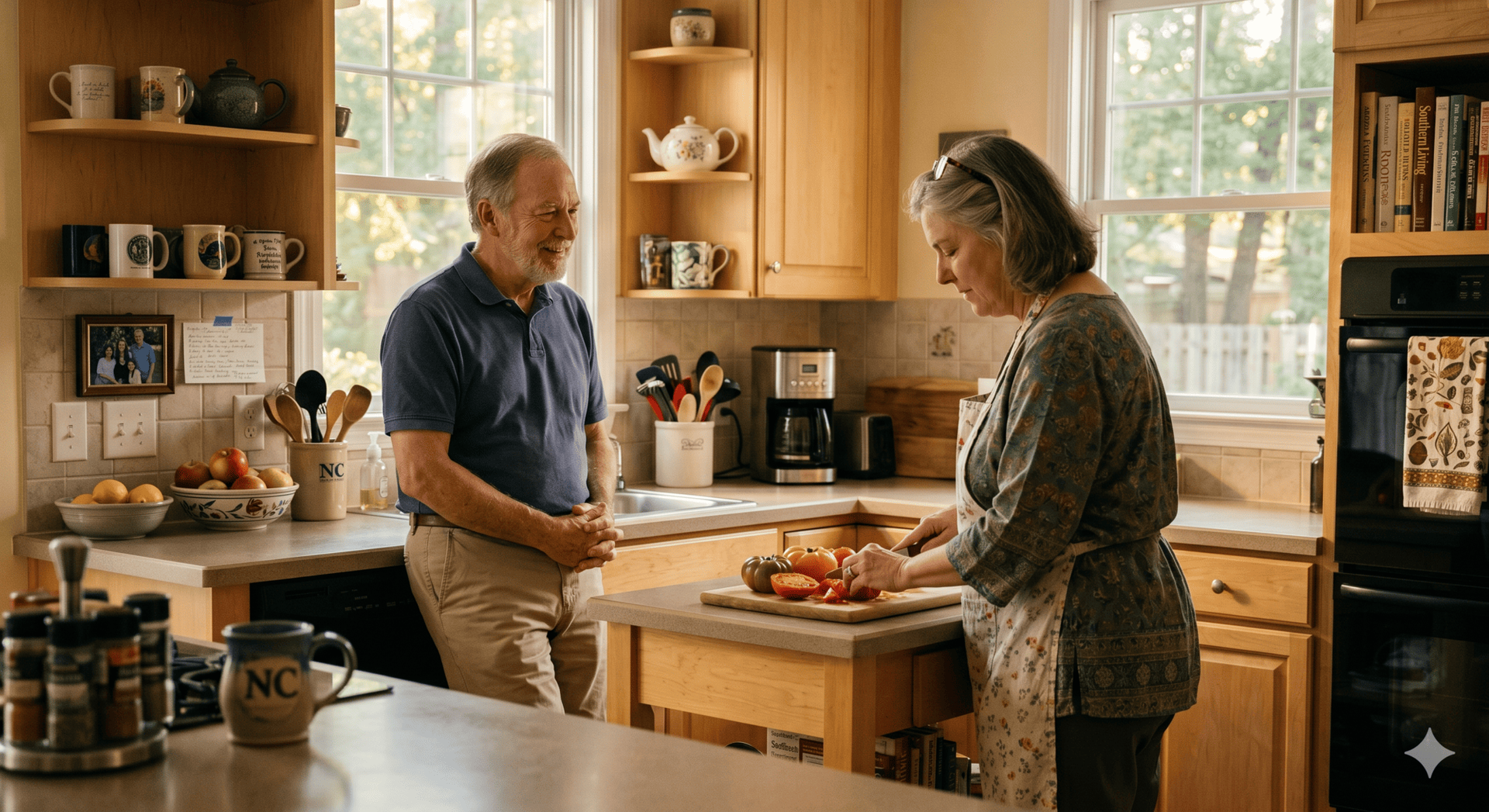
Most people don't spend much time thinking about where they'll live when they get older, until suddenly it's the only thing the family can talk about. Maybe a parent had a close call on the stairs. Maybe a doctor said something at a checkup. Whatever brought you here, the question is a real one: Is it time to look at assisted living, or is there a way to make the home they're already in work better?
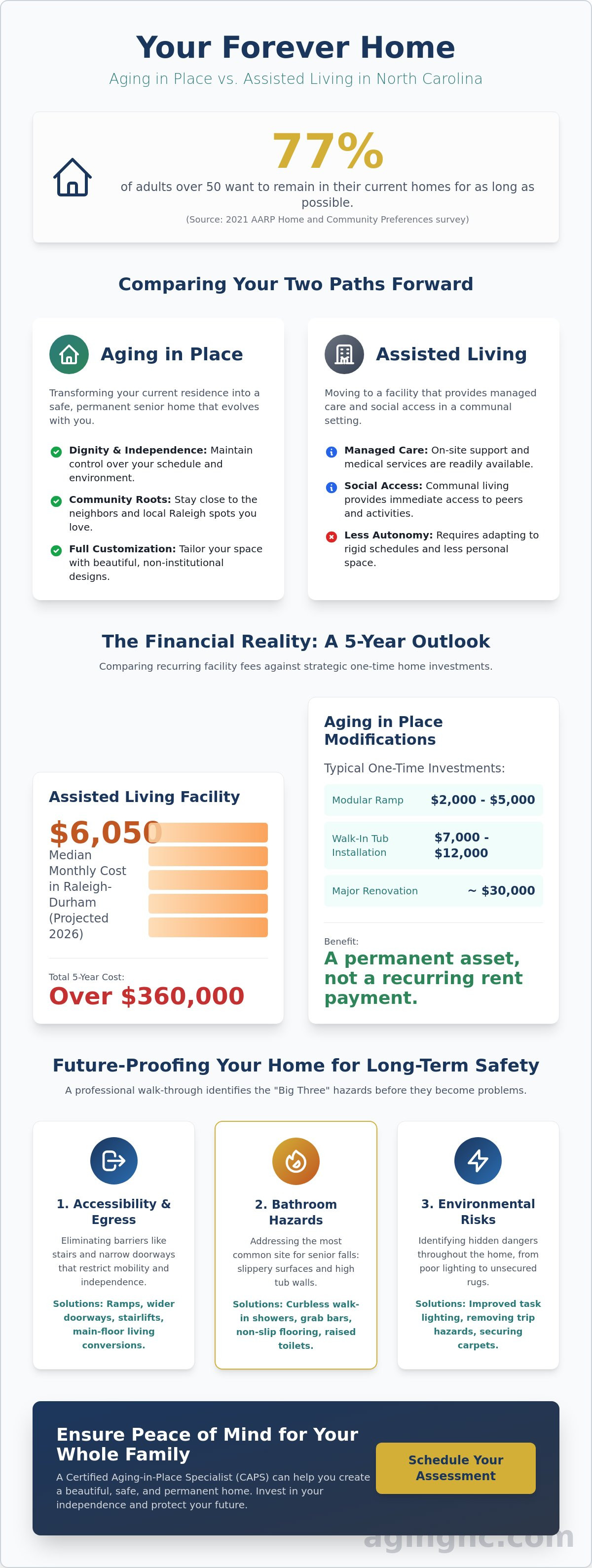
According to AARP, 77% of adults over 50 want to stay in their current home as long as possible. The challenge is figuring out how to make that safe, sustainable, and not something everyone in the family is quietly dreading. This guide lays out both options honestly, with real numbers and practical guidance for families in Raleigh and the broader Research Triangle.
Key Takeaways
- Assisted living in the Triangle runs roughly $6,000 a month and rising. Home modifications are a one-time investment that most families recoup many times over.
- Safety modifications don't have to look clinical. Done well, they're indistinguishable from a well-designed home.
- The biggest fall risks in Raleigh homes are predictable and fixable before anything goes wrong.
- A phased approach lets families address the highest-priority issues first without having to take on a full renovation all at once.
- A CAPS-certified professional brings a level of technical detail that a DIY walkthrough won't catch.
Senior Living in the Research Triangle: More Options Than You Think
North Carolina's population of residents 65 and older is projected to grow by 50% by 2040, according to the NC Office of State Budget and Management. That kind of growth is pushing families to have conversations they've been putting off, and it's also expanding what the options actually look like.
For a long time, "senior living" meant one thing: a facility. Assisted living communities in Wake County range from independent living in North Hills to memory care in Cary, and they do offer real benefits, particularly for people who need round-the-clock medical support or who are at risk of isolation. But they also entail trade-offs in autonomy, privacy, and the daily routines people build over decades in a particular place. For families relocating a loved one to the Triangle from out of state, rnmedflights.com provides professional medical travel support to ensure a safe transition.
What's changed is that staying home is now a genuine option, not just wishful thinking. With the right modifications and the right support, most homes can be adapted to meet changing mobility needs without looking or feeling like a medical facility. The question isn't whether it's possible; it's whether it's right for your family's specific situation, or if the broader senior housing market, served by specialists like the Assisted Living Real Estate Group, is a better fit.
What Aging in Place Actually Looks Like
Choosing to stay in a Raleigh, Cary, or Wake Forest home, or anywhere else in the Triangle, isn't just about avoiding a move. It's about making deliberate choices so the home continues to work as needs change. That means a professional assessment of the space, targeted modifications, and, in some cases, the integration of technology that makes daily tasks easier without being intrusive.
A Certified Aging-in-Place Specialist (CAPS) evaluates the home as a whole: how someone moves through it, where the friction points are, and what would need to change if mobility were to become more limited. The goal is to get ahead of problems rather than react to them.
The things people tend to value most about staying home:
- Control over their own schedule and environment
- Staying connected to the neighbors, restaurants, and routines they've built over the years
- A space that reflects their taste, not a facility's design standards.
Cost Comparison: NC Assisted Living vs. Home Modifications
Finances are usually where this conversation gets serious. In the Raleigh-Durham area, median monthly assisted living costs are projected to reach around $6,050 in 2026, following the 3-5% annual increases North Carolina has seen consistently over the past decade. That's more than $72,000 a year. A five-year stay can exceed $360,000.
Home modifications are an entirely different kind of expense. A quality modular ramp runs $2,000 to $5,000. A walk-in shower conversion typically costs $7,000 to $12,000. These are one-time costs, not recurring monthly fees, and they stay with the property.
There's also what you might call the hidden cost of moving. Selling a family home in the Triangle typically involves real estate commissions of around 6%, plus moving costs averaging $3,500 or more. If the transition involves bringing a loved one to the area from a distance, you can visit RN MEDflights to learn about safe medical travel assistance. Staying put avoids all of that, and it protects the equity in a home that, in most Triangle markets, has appreciated significantly.
For families where modifications are medically necessary, it's worth looking into the IRS Medical Expense Deduction, which can offset some of the cost at tax time.
The Long-Term Financial Roadmap
A comprehensive aging-in-place plan, including a significant renovation and ongoing support services, typically comes in well under the cost of five years of assisted living. The math isn't close. The more useful question is usually which modifications to prioritize first, and how to phase the work so it's manageable.
Maintenance and Ongoing Support Costs
One objection to staying home is that facilities handle maintenance. That's true, but facility fees also tend to increase faster than inflation, and you have little control over what you're paying for. Managing your own home maintenance means you control the budget and the quality. Working with a professional project manager also reduces the risk of contractor problems, which unfortunately affect a meaningful number of older North Carolina homeowners every year.
Beyond the Institution: Creating a Beautiful, Safe Home
The most common thing we hear from homeowners is some version of: "I don't want my house to look like a facility." It's a reasonable concern, and it's one the industry hasn't always taken seriously enough.
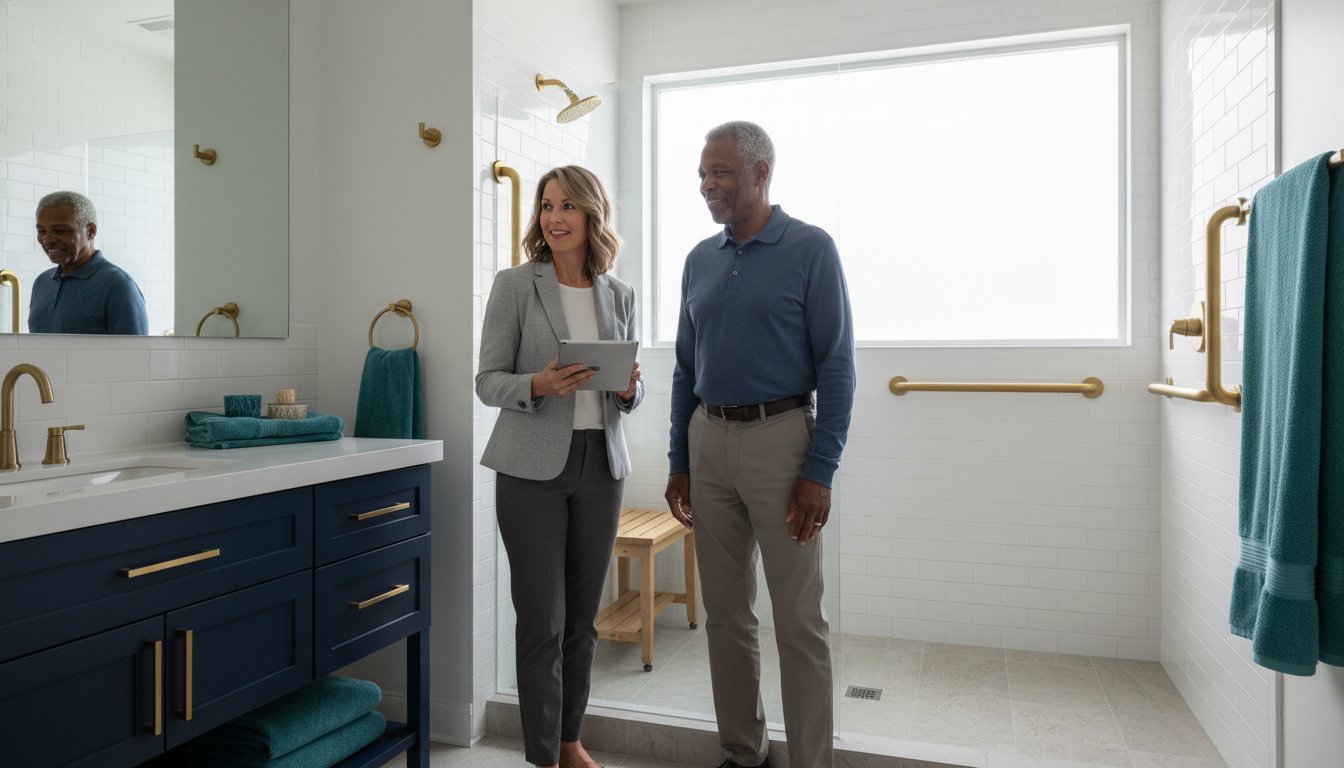
The good news is that the design options available today are genuinely different from what they were even ten years ago. A curbless walk-in shower is now standard in high-end bathroom renovations, not just in accessible design. Grab bars come in finishes that match any hardware. Lever-style door hardware looks contemporary and works better for everyone, not just people with arthritis. Motion-activated pathway lighting is something people install because it's convenient, not because they need it for safety.
Done well, these modifications blend into the home. A visitor wouldn't clock them as "safety features." That matters, not just aesthetically, but because people are more likely to actually use modifications that don't make them feel like they're in a medical setting.
Universal Design Principles
- Zero-entry showers. Replacing a high-threshold tub eliminates one of the most common points of failure in a bathroom. It also just makes the shower easier to use for everyone.
- Lever-style hardware. Round knobs require grip strength that decreases with age. Lever handles work better and look just as good, often better.
- Wider doorways and turning clearances. Widening doorways to 36 inches and ensuring a 5-foot turning radius in key areas is the kind of change that's much easier to do proactively than after a mobility aid becomes necessary.
Why the Environment Matters for More Than Safety
There's a real mental health dimension to this that doesn't get discussed enough. When a home starts to feel like an obstacle course, it erodes confidence and increases anxiety. When it's designed to work with someone's mobility rather than against it, the effect is the opposite. Research has linked safe, familiar living environments to lower rates of cognitive decline and better overall well-being in older adults. The home itself becomes part of the care.
Evaluating Your Raleigh Property for Long-Term Safety
A good starting point for any family is a room-by-room walkthrough focused on the three areas where most falls happen: bathrooms, stairs, and entryways. Look for loose rugs, dim lighting, and handrails that aren't as sturdy as they should be.
Raleigh adds a few specific considerations. The region's humidity, particularly on mornings when it's sitting around 70%, can make wooden porches and brick walkways slippery in ways that don't always look dangerous. Many Research Triangle homes built during the 1990s housing boom also have narrow hallways and steep bonus room stairs that weren't designed with long-term livability in mind.
A DIY walkthrough will catch the obvious things. What it tends to miss are the subtler issues: electrical outlets placed too low, a bathroom door that swings the wrong direction, and wall locations that can't support hardware without additional blocking. These are the details that a professional assessment is designed to find.
What a Home Safety Assessment Covers
A thorough home evaluation goes beyond a hazard checklist. It looks at how someone actually moves through the space day to day, what the likely trajectory of their mobility needs is, and what modifications would have the most impact both now and over the next several years. The output isn't just a list of problems. It's a prioritized plan. Our Aging in Place North Carolina home evaluation is a deep dive into your daily life.
Prioritizing Modifications
Not everything needs to happen at once. The most useful thing an assessment does is help families distinguish between what needs to happen now, what can wait a year or two, and what's worth planning for further down the road. That phased approach makes the project financially manageable and avoids the rushed, expensive decisions that often follow a fall or hospitalization.
When vetting contractors for any of this work, look specifically for CAPS certification. A general contractor who hasn't worked in aging-in-place design will miss technical requirements that matter for both safety and durability.
Ready to future-proof your living space for the years ahead? Schedule your comprehensive home safety assessment today to ensure your home remains your safest haven.
Working with Aging in Place NC
Del Scheitler started Aging in Place NC because he saw what happened when families tried to navigate this process alone: overwhelmed adult children coordinating among contractors while managing jobs and their own families; parents who felt like modifications were being done to them rather than with them; and results that didn't always hold up.
Our approach is built around comprehensive project management. One point of contact, from initial assessment through final installation, handles contractor coordination, technical oversight, and quality control. The family stays focused on what matters.
Beyond the initial project, we offer ongoing maintenance services to keep safety features in good working order over time. Smart home sensors get updated. Ramps get checked. Nothing gets forgotten.
We currently serve families across Raleigh, Cary, Greensboro, and surrounding communities.
Take Action Today
The best time to start this conversation is before something forces it. When a parent can be an active participant in the design process, the results are better, and the transition is smoother. When the conversation happens after a fall, options narrow, and stress levels are high.
If you're not sure where to begin, a comprehensive home safety assessment gives you a clear picture of where things stand and what the path forward looks like.
Schedule your Comprehensive Home Safety Assessment today to identify risks and create a seamless plan for staying in the home you love.
Frequently Asked Questions
What does assisted living actually cost in Raleigh right now?
Based on recent North Carolina long-term care data, median monthly costs are projected to be around $6,050 in 2026. That includes basic utilities and meals in most facilities, but typically excludes specialized medical care or personal services. Annual costs run over $72,000.
Can a modified home really be as safe as an assisted living facility?
For most people whose primary challenges are mobility and environmental hazards rather than intensive medical needs, yes. The key is getting the modifications right, which means a professional assessment rather than guessing at what's needed.
Does Medicare cover home modifications in North Carolina?
Standard structural modifications like walk-in showers and ramps aren't covered under Medicare Part A or B. Some Medicare Advantage plans now include supplemental benefits for safety devices and home assessments, so it's worth reviewing the specifics of your plan. The USDA Section 504 program and the NC Housing Finance Agency's Urgent Repair Program are also worth looking into for eligible households.
What are the most common fall hazards in Raleigh homes?
Loose area rugs, poor lighting in hallways and transition zones, and older high-threshold bathtubs come up most consistently. Many 1990s-era Triangle homes also have narrow hallways and steep stairs that weren't designed with aging in mind.
How do I know if my parent needs a facility or just home modifications?
If someone requires 24-hour medical supervision or help with more than three activities of daily living, a facility is probably the right answer. If the challenges are primarily about mobility and home safety, modifications can often address them effectively. For those researching care options outside of the US, specifically in the United Kingdom, you can learn more about local providers through comprehensive online care directories.
What does a CAPS certification actually mean?
CAPS stands for Certified Aging-in-Place Specialist, a designation from the National Association of Home Builders. It means the professional has been trained specifically in the technical requirements of accessibility and the design principles that make modifications functional without looking institutional.
How long does a typical modification project take?
Smaller projects like grab bar installation and lighting upgrades usually take one to three days. A full bathroom conversion or ramp installation typically runs one to two weeks. A good project manager will schedule work to minimize disruption to daily routines.
Are there financial assistance programs in NC for aging-in-place modifications?
Yes. The USDA Section 504 Home Repair program provides grants up to $10,000 for homeowners 62 and older. The NC Housing Finance Agency's Urgent Repair Program offers up to $12,000 for eligible low-income seniors. Eligibility requirements apply to both.
Your home holds a lot of history. We're here to help you keep adding to it.